
Gandhi “Saviour” versus Saviours: The Halo and the Men Who Actually Saved (42)
भारत / GB
Part 42: Mahatma Gandhi’s Peace Efforts | Series Index
Mahatma Gandhi is widely regarded as the saviour of India and its people — the ‘Father of the Nation’ to his supporters — in a civilisation more than 5,000 years old.
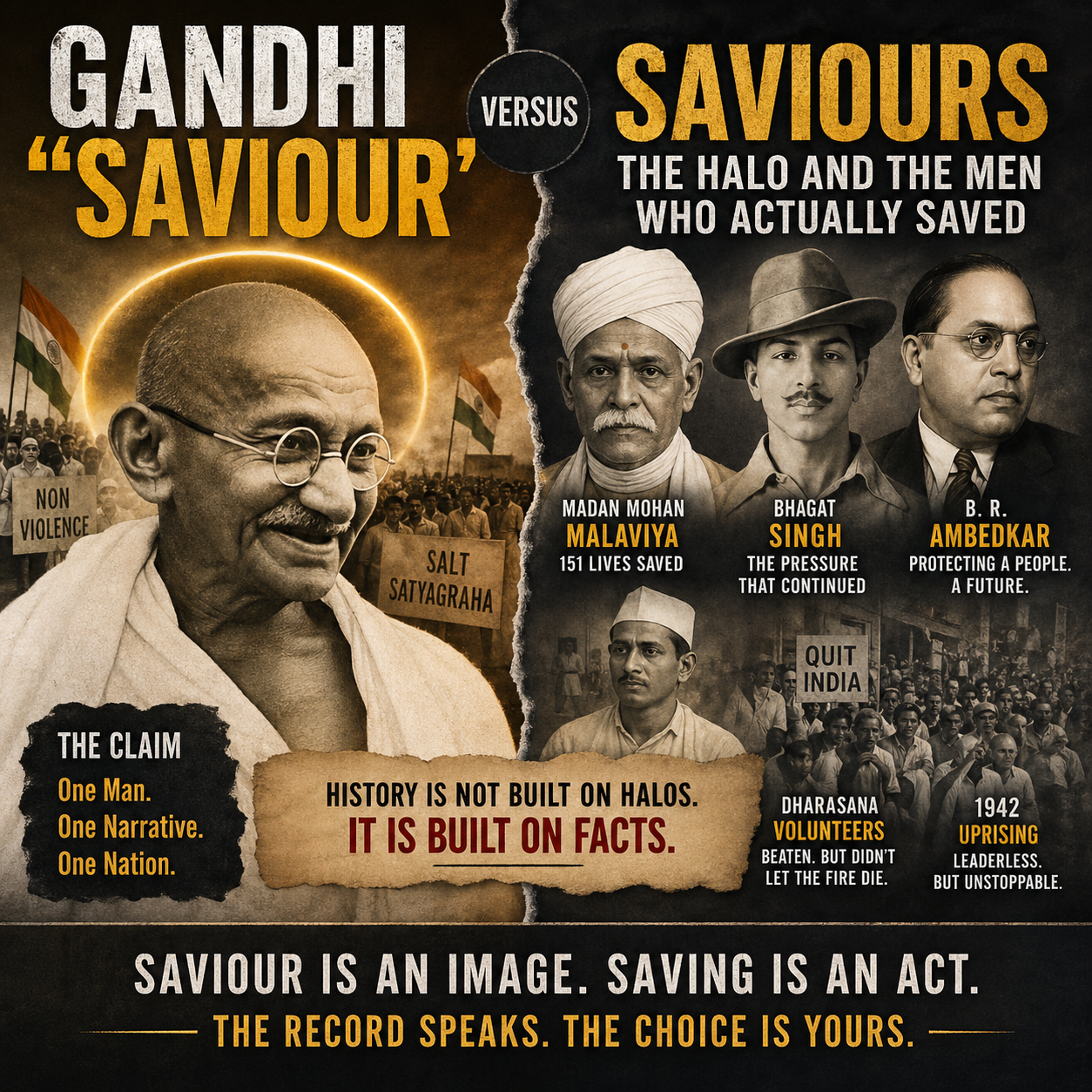
The Suspension Arc has documented twelve specific consequences of Gandhi’s consistent choices — the signal, the counterfactual, the licence, the torch, the ledger, the accounting, the unled crowd, the forgotten lawyer, the perpetual debt, the cost beyond 1947, the 1942 proof, and the mask. This post steps back from the specific and places the pattern against the claim. Gandhi was called the Saviour of India. This post asks who actually did the saving — and places the documented record of both columns before the reader. No conspiracy theory. No assertion of motive. The historical facts, presented.
Thank you for reading this post, don't forget to subscribe!The Action Taken: The official nationalist narrative centralized one individual as the sole author of Indian independence, while minimizing independent interveners who achieved concrete physical rescues.
Who Paid the Price: Independent political leaders (Malaviya, Ambedkar, revolutionary formations, naval ratings) whose contributions were marginalized in official historiography.
The Alternative Bypassed: A pluralistic nationalist historical record acknowledging multiple independent strategies of resistance.
Why This Matters: Documents the consolidation of an unchallengeable saint-image that retroactively credited non-violence with achievements secured by independent political and legal actors.
The Claim That Requires Testing
Gandhi the “Saviour” is not a neutral description. It is a claim — constructed systematically, institutionalised through the Congress machinery and the British narrative building, embedded in the independence movement’s moral framework, and carried into post-independence historiography as though it required no examination.
The claim has two components.
- First: that Gandhi saved India from British colonial rule.
- Second: that the costs his methods imposed on Indians were justified by the salvation they produced.
This series examines the second component in detail across its full run. This post examines the first — not by disputing that independence eventually arrived, but by placing next to the “Saviour” column a second column that the standard historiography does not carry the tag of: the Saviours. The people who actually did specific acts of saving — documented, dated, named — while Gandhi built the authority that the “Saviour” title required.
The two columns are not equal in length. The “Saviour” column carries a constructed image assembled over decades, or about a century, by now. The Saviours column carries specific acts from the documented record. The series places both before the reader.
The “Saviour” — What the Claim Rests On
Gandhi the “Saviour” rests on three pillars.
The first is the Mahatma title — awarded, as this series documented in Blog 23, not organically but through a specific political act, carried into international currency through Congress machinery, and eventually institutionalised to the point where questioning it required explanation.
The second is the independence movement’s mass participation — the genuine sacrifice of millions of Indians across three decades of resistance. Gandhi was at the head of this movement. Its achievements were attributed to his leadership. That attribution is not entirely false — he organised, he mobilised, he gave the movement a moral vocabulary that made it internationally legible. But attribution of a collective achievement to one man’s leadership is not the same as documentation of specific acts of saving.
The third is the departure of the British in 1947. Gandhi was alive when the British left. The causal chain between his campaigns and their departure is the foundation of the “Saviour” claim.
This series has documented that the British departure was shaped by factors Gandhi did not control — the Second World War, Britain’s economic exhaustion, American pressure, the Royal Indian Navy Mutiny of 1946, and the Attlee government’s political calculations. Gandhi was one factor. He was not the only one.
The Saviours — What the Record Carries
Against the “Saviour” column, the series places five documented Saviours — people who performed specific acts of rescue, protection, or resistance that the standard historiography has minimised or erased because the Gandhi-Congress framework could not accommodate them.
Madan Mohan Malaviya — 151 Chauri Chaura Defendants
Blog 37 documented this in full. In 1923, Malaviya returned to court after ten years away, argued for four consecutive days in the Allahabad High Court, and saved 151 people from the gallows. Gandhi was in Yerwada Jail. He did not ask Malaviya to go. Malaviya went because the people were there and someone had to speak for them and he believed they were his people. The Chief Justice thanked him on the record. The Bharat Ratna came ninety-one years later — from a government the Congress-Gandhi historiography did not control.
Gandhi the “Saviour” saved none of the 178 (6 died in custody). Malaviya saved 151.
Bhagat Singh and the Revolutionary Movement
The revolutionary movement — Bhagat Singh, Sukhdev, Rajguru, Chandrasekhar Azad — kept pressure on the British during the years when Gandhi’s movements were suspended or negotiated into settlement. The series has documented that Gandhi’s public distance from the revolutionary movement masked a calculated strategic reliance on it. In his 1930 memorandum to Lord Irwin, Gandhi explicitly cited the ‘growing party of violence’ as the alternative to his leadership. He did not merely advocate for non-violence; he presented it as the British Empire’s sole insurance policy against a leaderless, volatile uprising. By positioning himself as the only force capable of restraining this tide, he converted the pressure generated by the revolutionaries into his own bargaining power—securing a seat at a table to which the actual men of action were never invited. The Irwin Pact was signed on March 5, 1931. Bhagat Singh was hanged on March 23, 1931—eighteen days later. Gandhi did not fast for Bhagat Singh. He did not call satyagraha. He moved on.
The revolutionary movement saved nothing that can be counted in individual lives. What it preserved was the political cost of British rule at moments when Gandhi’s movements had dissolved. That cost — maintained by people who knew they would be hanged for maintaining it — is not in the “Saviour” column of standard historiography. It is in the Saviours column of this series.
B.R. Ambedkar — The Dalit Political Claim
Ambedkar spent his life building a legal and political framework to protect Dalit political rights against the combined weight of caste Hinduism and Congress nationalism. The Communal Award of 1932 gave Dalits a separate electorate — a formal political protection the British government had instituted. Gandhi fasted unto death to abolish it. Ambedkar capitulated under the pressure of Gandhi’s threatened death, signing the Poona Pact, surrendering the separate electorate. Gandhi’s authority — unelected, unaccountable — was deployed against the one man who had spent decades building political protection for the most vulnerable Indians. Ambedkar saved Dalits’ political claim for decades. Gandhi’s fast ended it in six days.
The Dharasana Volunteers — 1930
Blog 32 documented Dharasana in full. The volunteers who walked forward into lathi charges, fell, and were replaced by the next column — without raising their arms, without fighting back, without breaking — maintained the moral pressure of the Civil Disobedience Movement at the moment when Gandhi had been arrested and the movement had no head. They did this knowing, from 1922, that Gandhi’s ceiling was known to the British and that the columns would keep walking and falling until Gandhi negotiated a settlement.
Gandhi’s Irwin Pact settlement came eleven months later. Not one of the eleven demands had been met in full — nor to any measurable or enforceable extent. The Dharasana volunteers had maintained the pressure that produced the settlement. The settlement did not deliver what their suffering had earned.
The 1942 Uprising — The Leaderless Resistance
The Quit India uprising of August 1942 — spontaneous, leaderless, the most violent mass uprising since 1857 — was crushed with over a thousand deaths. Gandhi was in jail. The uprising had no Gandhian discipline, no ceiling the British recognised, no organised satyagraha framework.
The 1942 uprising demonstrated to the British that India without Gandhi’s ‘ceiling’ was ungovernable. The British claim that Gandhi was released in May 1944 for ‘medical reasons’—specifically malaria—is a narrative that collapses under the weight of the documented record. Were the thousands of other malaria patients in British jails released? They were not; they died in the shadows of Nabha and Yerwada, their deaths serving only as a deterrent. Gandhi’s release was a strategic extraction.
The British administration, haunted by the leaderless fire of 1942, feared that his death in custody would hand the moral and physical mandate of the movement to the ‘party of violence.’
The malaria diagnosis was the legal fiction required to return the ‘reservoir’ to the field, ensuring the revolution remained within manageable, Gandhian floodgates.
What the Two Columns Show
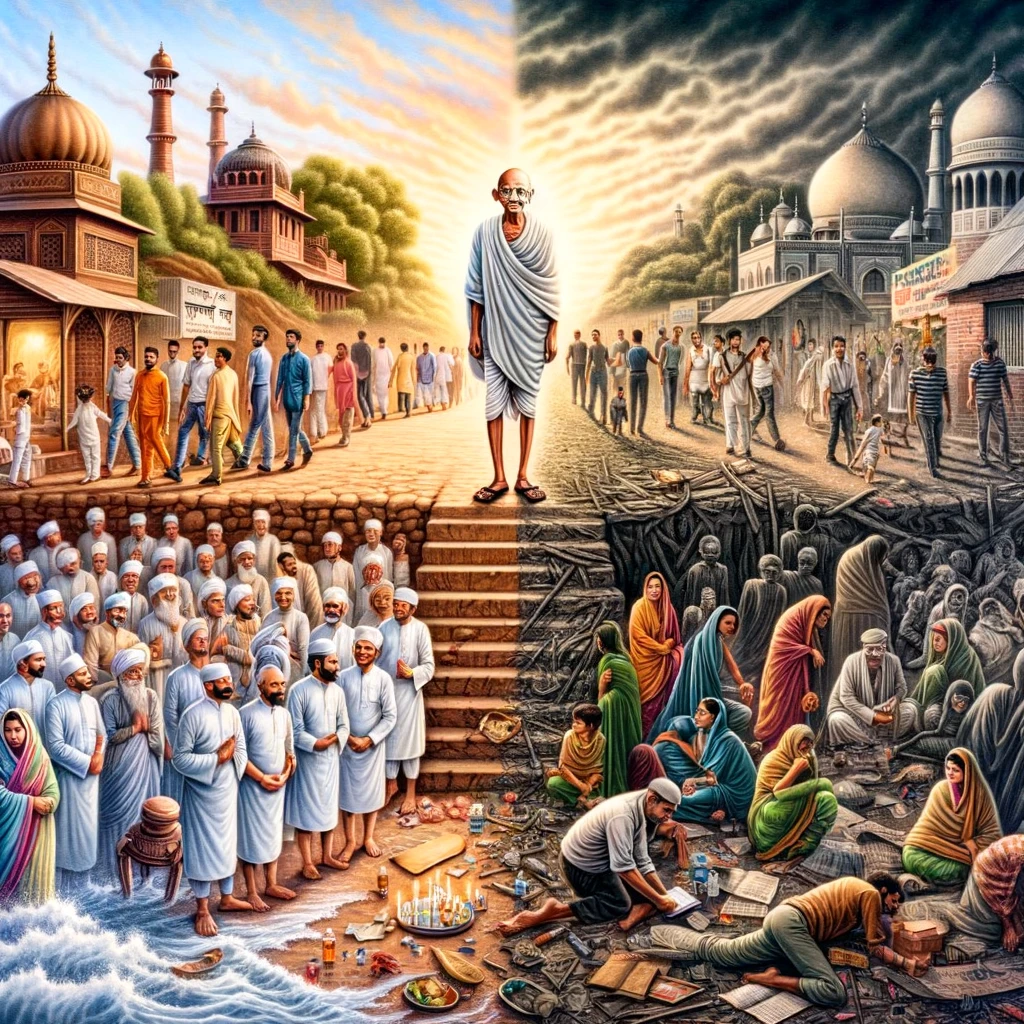
Gandhi the “Saviour” versus the Saviours is not a competition between Gandhi and individual actors. It is a structural observation about how the independence movement’s record was assembled — and what it left out.
The “Saviour” column was assembled by a historiography that required one man at the centre of India’s liberation. That requirement produced a record that attributed collective achievement to individual leadership, minimised actors whose independence of thought complicated the Gandhi-Congress framework, and deleted from the canon anyone whose saving acts exposed the gap between what Gandhi claimed to stand for and what the documented record shows he did.
Malaviya was deleted because he saved 151 people Gandhi left behind and did it with an independent political philosophy the Congress could not accommodate. Ambedkar was reduced to a supporting actor because his most significant political act was to resist Gandhi’s coercion — and ultimately fail to resist it. Bhagat Singh was distanced because his method exposed Gandhi’s as insufficient for the task. The 1942 dead have no names in the standard account because they died without Gandhi’s direction.
The Saviours column is not empty. It is simply the column the “Saviour” framework was designed to prevent the reader from seeing.
The Prosecution’s Position
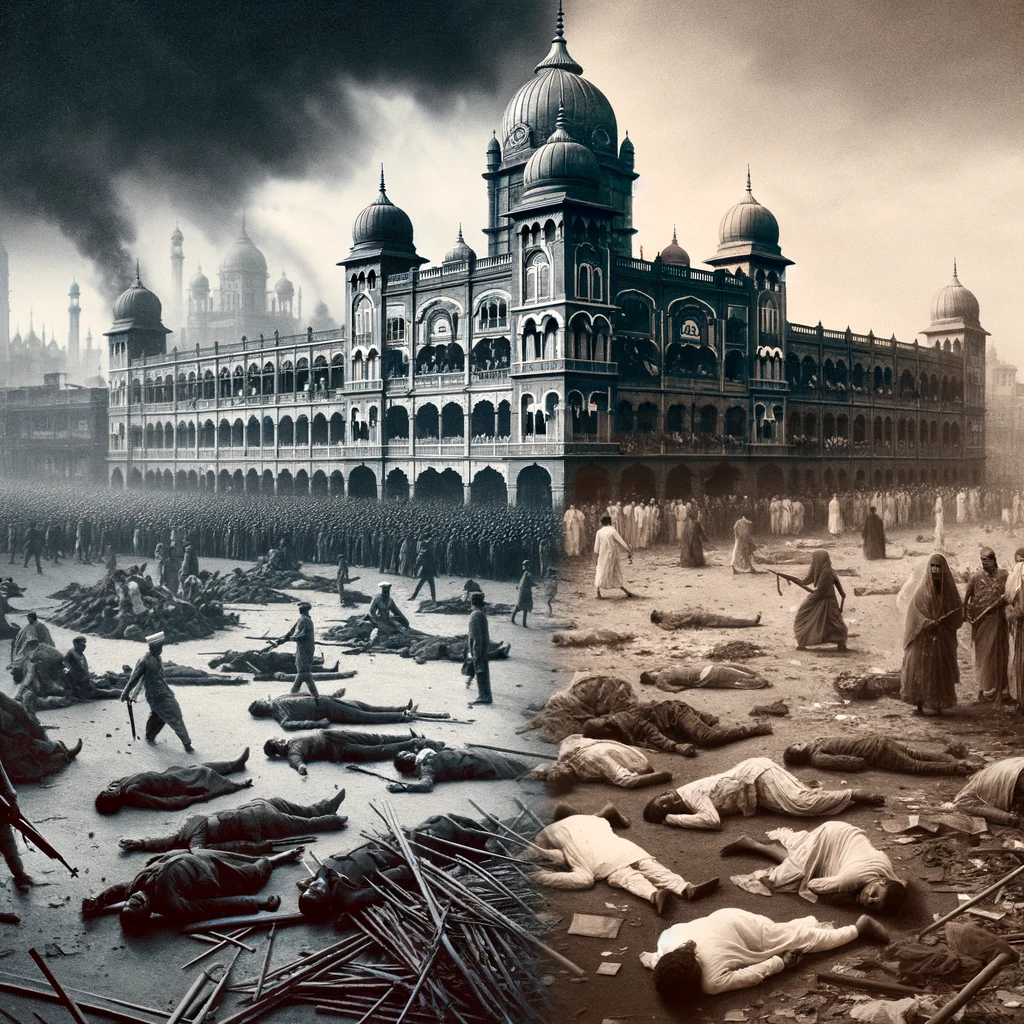
The reader has now seen both columns. Malaviya saved 151 from the gallows — Gandhi was in Yerwada Jail. Bhagat Singh maintained the pressure Gandhi distanced himself from — and was hanged eighteen days after the pact Gandhi signed. Ambedkar built Dalit political protection for decades — Gandhi’s fast destroyed it in six days. The 1942 dead demonstrated what India without Gandhi’s ceiling cost — the British read that demonstration, suppressed the uprising with maximum force, and released Gandhi before his sentence ended.
The “Saviour” title was not earned in a courtroom in 1923. It was constructed in the decades that followed, by a historiography that needed one man at the centre and found the Saviours inconvenient — because the Saviours showed what saving actually required, and the distance between that and what Gandhi did was not comfortable.
Gandhi the “Saviour” versus the Saviours is not a contest. It is not a conspiracy theory. It is a mirror — held up to a constructed image by a documented record. The British transferred power through his framework. They called him the greatest citizen of India.
The reader has seen both columns. The reader will supply the word.
The “Saviour” title was not earned in a courtroom in 1923. Malaviya earned something in that courtroom — 151 people came home from the gallows. The “Saviour” title was constructed in the decades that followed, by a historiography that needed one man at the centre and found the Saviours inconvenient. Gandhi the “Saviour” versus the Saviours is not a contest. It is a mirror. The reader decides which reflection is accurate. The next blog will discuss how Gandhi worked as the reservoir as well as the floodgates of the reservoir, the destructive human force.
Feature Image: Click here to view the image.
Videos
Glossary of Terms
- “Saviour” Claim (Gandhi Context): The historiographical assertion that Mahatma Gandhi was the primary figure responsible for India’s independence and its moral direction.
- Saviours (Series Usage): A term coined in this series to denote individuals or groups who performed specific, documented acts of protection, resistance, or intervention, distinct from attributed symbolic leadership.
- Historiography: The study and construction of historical narratives, including how events, figures, and interpretations are recorded and prioritised over time.
- Congress Machinery: The organisational, political, and narrative-building apparatus associated with the Indian National Congress during the independence movement.
- Mahatma Title Construction: The process, discussed in the series, through which the honorific “Mahatma” became institutionalised and widely accepted in political and public discourse.
- Chauri Chaura Case (1922–23): A legal case following the Chauri Chaura incident where Madan Mohan Malaviya defended accused individuals, saving 151 from capital punishment.
- Revolutionary Movement (India): Armed resistance groups and individuals such as Bhagat Singh and associates who challenged British rule through militant actions.
- Irwin Pact (1931): An agreement between Gandhi and Lord Irwin marking a temporary truce between the British government and the Indian National Congress.
- Communal Award (1932): A British decision granting separate electorates to various communities, including Dalits, later opposed by Gandhi.
- Poona Pact (1932): An agreement between B. R. Ambedkar and Gandhi that replaced separate electorates for Dalits with reserved seats in joint electorates.
- Dharasana Satyagraha (1930): A nonviolent protest against British salt laws where volunteers faced brutal repression to sustain movement pressure.
- Quit India Movement (1942): A mass uprising demanding an end to British rule, marked by widespread unrest and suppression.
- Leaderless Resistance (Series Usage): A term describing movements or uprisings that continued without central leadership, particularly during Gandhi’s imprisonment.
- “Ceiling” (Gandhian Strategy Context): A term used in the series to describe perceived limits within Gandhi’s protest methods that the British administration could anticipate or manage.
- Two Columns Framework: The analytical structure used in this blog to compare the symbolic “Saviour” narrative with documented acts by multiple “Saviours.”
#Gandhi #IndianHistory #FreedomStruggle #BhagatSingh #Ambedkar #Congress #Independence #HistoryDebate #India #HinduinfoPedia