
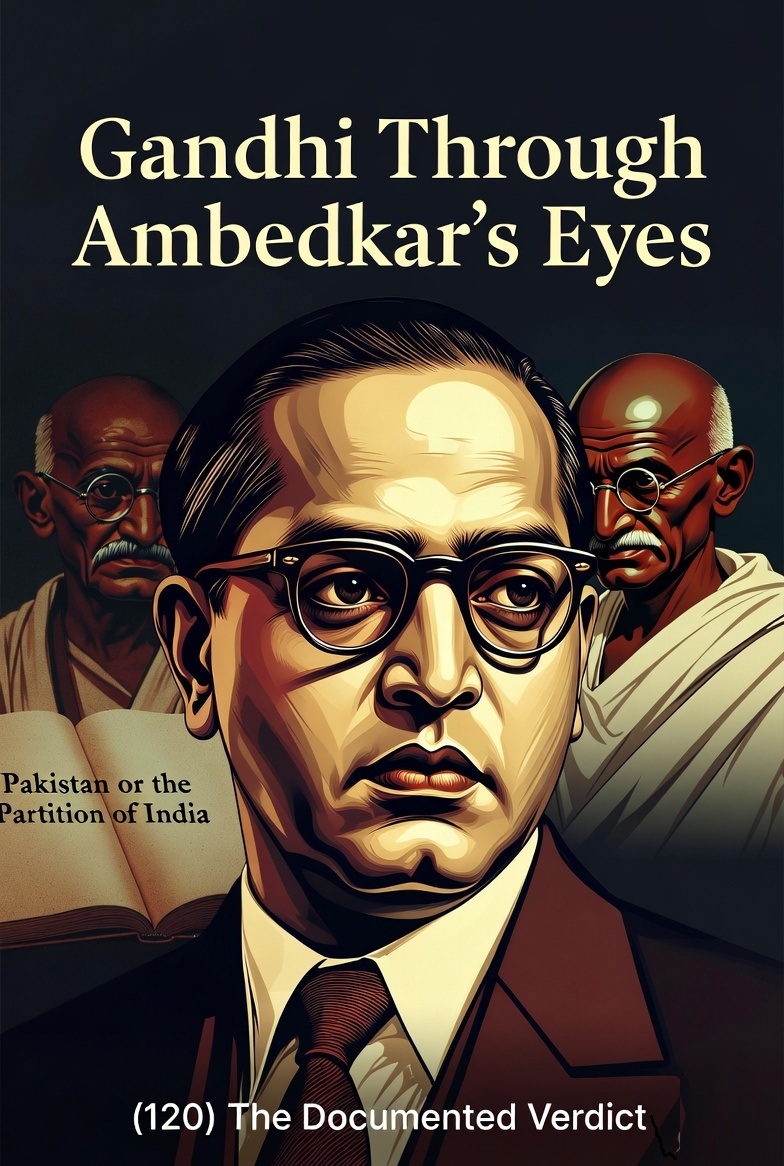
Gandhi Through Ambedkar’s Eyes: The Established Pattern of Gandhi’s Framings (120)
भारत / GB
Part 120: Mahatma Gandhi’s Peace Efforts | Series Index
Blogs 102-119 placed the Khilafat experiment’s documented record before the reader in full — the cause, the experiment, the admission, the dispensation, the language pattern. This post places a single documented source before the reader: B.R. Ambedkar’s systematic characterisation of Gandhi’s documented pattern toward Muslim violence against Hindus — placed against what makes Ambedkar’s documented testimony the most significant independent corroboration in the series.
Thank you for reading this post, don't forget to subscribe!The Action Taken: Gandhi minimized the targeted arson and violence during Muharram at Saharanpur, framing the clashes as local misunderstandings rather than the product of organized religious radicalization.
Who Paid the Price: The victims whose properties and lives were destroyed, and whose accurate reporting was dismissed to protect political alliance optics.
The Alternative Bypassed: Objective fact-finding that held local political and religious organizers publicly accountable.
Why This Matters: The systematic whitewashing method: violence was consistently stripped of its ideological and religious motivations, ensuring that the structures driving the riots were never confronted.
Who Ambedkar Was — The Source Identity
Gandhi Through Ambedkar’s Eyes places the identity of the source before the reader first. This is the series’ standing practice for primary sources of exceptional weight.
B.R. Ambedkar: Dalit. Constitutional lawyer. Social reformer. The documented architect of India’s Constitution. A man Gandhi had publicly opposed on separate electorates — Gandhi’s documented fast unto death in 1932 coerced Ambedkar into signing the Poona Pact, surrendering the documented separate electorates the British had granted to the Dalit community. The man whose documented political future Gandhi’s fast foreclosed still placed Gandhi’s documented pattern on the written record — accurately and systematically — in Pakistan or the Partition of India (1940).
Gandhi Through Ambedkar’s Eyes places one documented observation before the reader: Ambedkar had every documented reason to characterise Gandhi’s conduct in the harshest possible terms. He chose instead to document a specific, precise, evidenced pattern — not a general indictment but a documented systematic characterisation grounded in named events and named conduct.
Ambedkar’s Documented Systematic Characterisation
Gandhi Through Ambedkar’s Eyes places Ambedkar’s primary source verdict before the reader. Pakistan or the Partition of India, franpritchett.com:
“Gandhi has never called the Muslims to account even when they have been guilty of gross crimes against Hindus.”
The prosecution places the documented word “never” before the reader. Not “rarely.” Not “insufficiently.” Never. Ambedkar’s documented systematic characterisation — placed on the written record in 1940, during Gandhi’s lifetime, from a man whose documented political future Gandhi’s documented fast had foreclosed — is “never.”
What Ambedkar Named — The Documented Evidence Behind the Verdict
Gandhi Through Ambedkar’s Eyes places the documented evidence Ambedkar cited alongside his verdict. Ambedkar did not assert the pattern without documentation. He placed named events on the record.
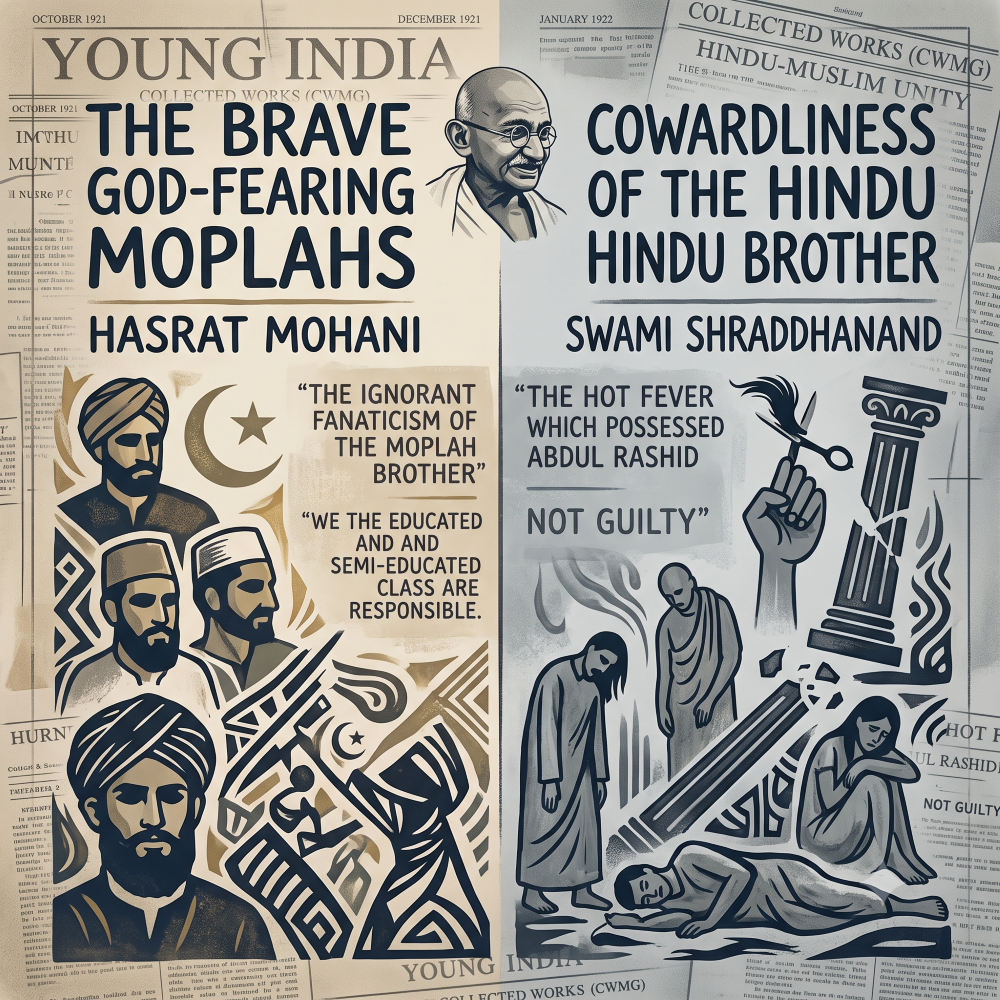
The Moplah rebellion: Ambedkar documented Gandhi “was so much obsessed by the necessity of establishing Hindu-Muslim unity that he was prepared to make light of the doings of the Moplas… He spoke of the Mappilas as the ‘brave God-fearing Moplahs.’ Gandhi blamed Hindus rather than holding Muslims accountable.” The documented language pattern placed before the reader across Blogs 117 and 119 of this series is the documented evidence Ambedkar cited.
The Shraddhanand murder: Gandhi’s documented “my brother Abdul Rashid, I do not even regard him as guilty” — established in Blog 118 of this series, CWMG Vol. 32, pp. 461-62 — is the documented conduct Ambedkar placed within his systematic characterisation. Gandhi called the murderer of a Hindu leader his brother. Ambedkar documented this as part of the pattern of never calling Muslims to account.
The Congress Working Committee Moplah resolution: The documented CWC resolution — established in this series — expressed “deep regret over the deeds of violence” while calling upon “every Congress and Khilafat worker to spread the message of non-violence.” Ambedkar documented: “The resolution passed by the Congress Working Committee on the Moplah Riots shows how natural sympathy for the sufferers was suppressed.” The institutional suppression of Hindu grievance within Congress — not merely Gandhi’s personal conduct — is what Ambedkar placed on the documented record.
The Weight of the Source
Gandhi Through Ambedkar’s Eyes places the documented source weight before the reader precisely. Four documented reasons why Ambedkar’s verdict carries exceptional prosecutorial weight in this series:
First — contemporaneous: Ambedkar documented this pattern in 1940 — during Gandhi’s lifetime, not in retrospect. He was not writing post-partition history. He was writing documented contemporary analysis of a documented living leader’s documented conduct.
Second — independent: Ambedkar was not a Hindu nationalist critic of Gandhi. He was a documented Congress contemporary, a constitutionalist, a man whose documented intellectual framework was grounded in evidence and law rather than communal sentiment.
Third — adversarial to the prosecution’s cause: Ambedkar had documented personal reason to characterise Gandhi harshly — Gandhi’s documented fast had coerced Ambedkar into surrendering separate electorates. He chose instead to document a precise, evidenced pattern. The adversarial relationship makes the documented accuracy of his characterisation more significant, not less.
Fourth — the Poona Pact seeming irony: Gandhi’s documented fast unto death in 1932 was deployed against the documented secular constitutional mechanism the British had granted Dalits. The man whose documented constitutional rights Gandhi’s documented fast foreclosed placed the documented evidence for “Gandhi has never called the Muslims to account” on the written record eight years later. The prosecution places this documented irony before the reader without characterisation.
The Prosecution’s Position
Gandhi Through Ambedkar’s Eyes places three questions before the reader.
- Did B.R. Ambedkar — the documented architect of India’s Constitution, the man whose documented political future Gandhi’s documented 1932 fast foreclosed, writing in 1940 during Gandhi’s lifetime — place on primary source record the systematic characterisation: “Gandhi has never called the Muslims to account even when they have been guilty of gross crimes against Hindus”?
- Did Ambedkar ground this documented systematic characterisation in named documented events — the Moplah rebellion, the Shraddhanand murder, the CWC resolution — that constitute the documented evidence behind the verdict “never,” rather than a general assertion without named evidence?
- Does the documented source weight — contemporaneous, independent, adversarial to the prosecution’s cause, written by the man whose constitutional rights Gandhi’s fast foreclosed — place Ambedkar’s documented verdict in a category of prosecutorial weight that the prosecution places before the reader as distinct from any other secondary characterisation?
The series does not answer. Gandhi Through Ambedkar’s Eyes places the documented source identity, the documented systematic characterisation, the documented named evidence behind it, and the documented source weight before the reader in sequence. The reader will examine what the man Gandhi coerced documented about Gandhi’s pattern — and complete the sentence.
Invitation To Defence
The floor belongs to the defense. We now invite them to present their exhibits and challenge the narrative established by the prosecution.
1940. B.R. Ambedkar. Documented architect of India’s Constitution. The man whose separate electorates Gandhi’s 1932 documented fast foreclosed. Writing during Gandhi’s lifetime: “Gandhi has never called the Muslims to account even when they have been guilty of gross crimes against Hindus.” Named evidence: Moplah — “brave God-fearing Moplahs,” Hindus blamed. Shraddhanand — murderer called “my brother, not guilty.” CWC resolution — “natural sympathy for the sufferers was suppressed.” The prosecution places the documented verdict of the man Gandhi coerced before the reader. The reader will complete the sentence.
Feature Image: Click here to view the image.
Videos
Glossary of Terms
1) Glossary of Terms
- Gandhi Through Ambedkar’s Eyes: The key phrase of this blog describing Gandhi’s documented conduct as examined through Dr. B.R. Ambedkar’s writings.
- B.R. Ambedkar: Principal architect of the Constitution of India, constitutional lawyer, social reformer, and author of Pakistan or the Partition of India.
- Pakistan or the Partition of India: Ambedkar’s 1940 book analysing Hindu-Muslim relations, Partition, and political leadership.
- Systematic Characterisation: A documented assessment based on consistent evidence from multiple recorded events rather than isolated opinions.
- Primary Source: Original contemporary evidence created by individuals directly connected with the events being discussed.
- Prosecution: The analytical framework of this series that presents documented evidence before readers without claiming judicial authority.
- Moplah Rebellion: The 1921 uprising in Malabar examined in this series for Gandhi’s public statements and political responses.
- Shraddhanand Murder: The 1926 assassination of Swami Shraddhanand, cited by Ambedkar as part of Gandhi’s documented conduct.
- Congress Working Committee (CWC): The highest executive body of the Indian National Congress responsible for major policy resolutions.
- CWMG: Collected Works of Mahatma Gandhi, the official compilation of Gandhi’s speeches, letters, writings, and statements.
- Poona Pact: The 1932 agreement between Gandhi and Ambedkar replacing separate electorates for the Depressed Classes with reserved seats.
- Separate Electorates: A constitutional electoral arrangement allowing specific communities to elect their own representatives independently.
- Independent Corroboration: Evidence from a source whose conclusions are reached independently of the argument being examined.
- Prosecutorial Weight: A unique term in this series referring to the evidentiary strength and significance assigned to a documented source.
- Documented Pattern: A recurring sequence of recorded statements or actions supported by contemporaneous documentary evidence rather than opinion.
#Gandhi #Ambedkar #History #India #Partition #Congress #Constitution #Politics #Khilafat #Moplah #PoonaPact #CWMG #FreedomMovement #HinduinfoPedia
Gandhi’s Peace Efforts: The Questions Before the Mahatma (0)