
Gandhi’s Khilafat Non-Cooperation — the Commissioned Programme (180)
भारत / GB
Part 180: Mahatma Gandhi’s Peace Efforts | Series Index
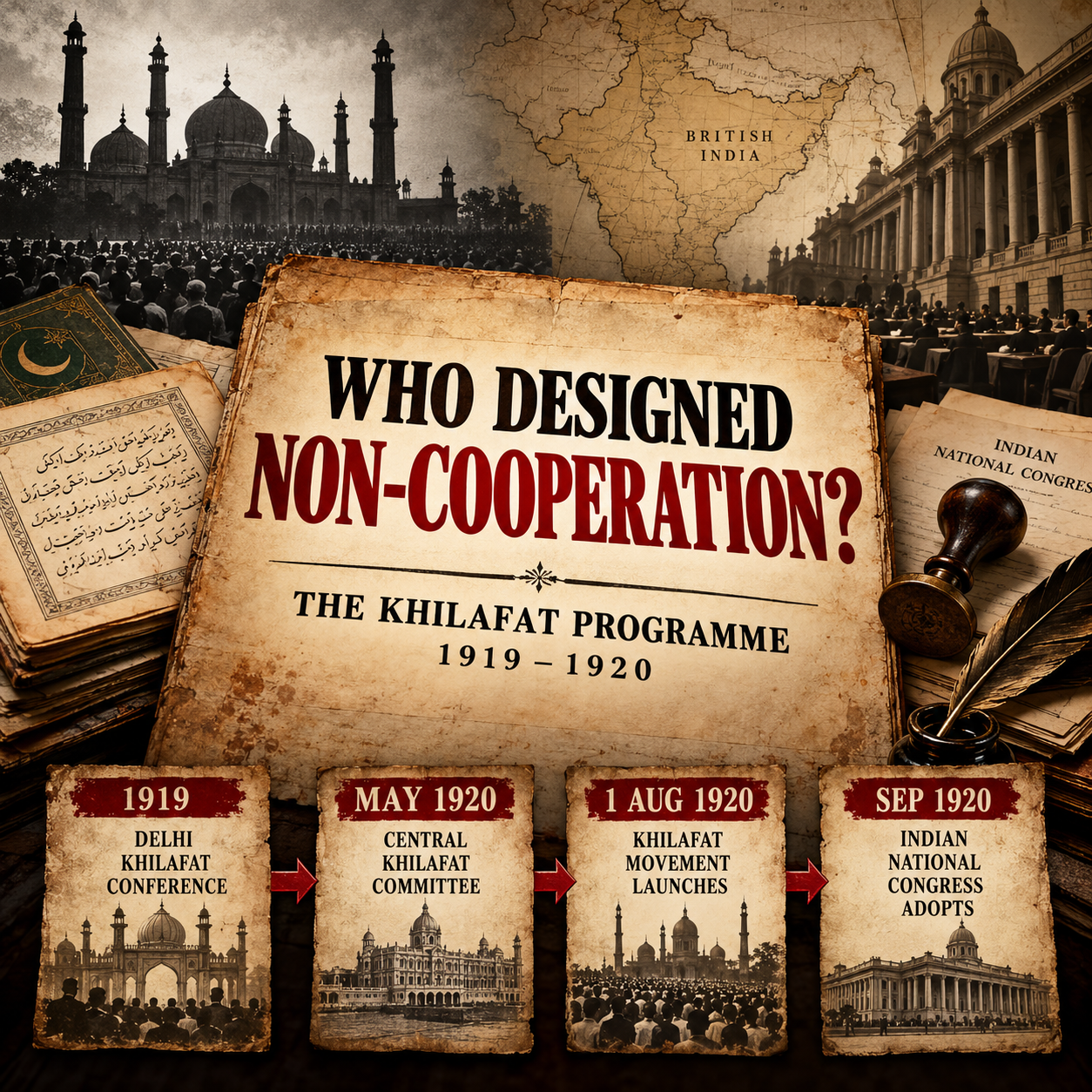
The previous blog placed before the reader the seven-month pivot — the five sequential steps by which Gandhi rebuilt from political isolation to the presidency of the All-India Khilafat Conference on 23 November 1919. Step Five documented the transaction: Gandhi offered a complete operational doctrine to a deadlocked conference and walked out as its president. Gandhi’s Khilafat Non-Cooperation — the commissioned programme — places before the reader what that doctrine actually was, where it came from, and who owned it. The standard account teaches that the Congress launched Non-Cooperation and the Khilafat movement merged with it. The chronological paper trail proves the reverse. The Khilafat Committee drafted and christened the programme. The Congress ratified it months later. Gandhi was the translator. The Congress was the retail distributor. The prosecution places the chain of custody before the reader.
Thank you for reading this post, don't forget to subscribe!THE HISTORICAL RECORD — THE COMMISSIONED PROGRAMME
The Pattern: In standard historiography the sequence is taught as: Congress launches Non-Cooperation → Khilafat merges with it. The chronological paper trail inverts that sequence entirely. The programme was born at the Delhi Khilafat Conference in November 1919, codified by the Central Khilafat Committee in May–June 1920, launched by the Khilafat movement on 1 August 1920, and only then adopted by the Indian National Congress at the Calcutta Special Session in September 1920. Gandhi’s Khilafat Non-Cooperation — the commissioned programme — documents three structural arguments: the nomenclature is the chain of custody; the four stages were not Gandhian satyagraha but Islamic juridical doctrine translated into English; and the Congress old guard was not persuaded but coerced — by an apparatus that had already signed the contract before the Congress was called to vote on it.
The Lethal Exhibit: On 23 November 1919, Gandhi was elected president of the All-India Khilafat Conference after proposing a complete four-stage programme of Non-Cooperation to break an internal deadlock over Hasrat Mohani’s goods boycott proposal. The Central Khilafat Committee formally adopted Gandhi’s four-stage programme at Bombay in May 1920 and at Allahabad in June 1920. The Jamiat-ul-Ulama Hind formalised it as a religious decree — Tark-e-Mawalat — carrying the authority of Islamic jurisprudence. The Khilafat movement launched the programme on 1 August 1920. The Indian National Congress met at Calcutta in September 1920 and voted to adopt the identical programme. The Congress did not commission Non-Cooperation. It inherited a programme already in operation, already named, already ratified by a fatwa, and already running.
Why it matters: The prosecution does not assert that Gandhi plagiarised an Islamic doctrine. It places before the reader the documented sequence of adoption and the documented structural identity of the two programmes — stage by stage, action by action, obligation by obligation — and asks whether the claim that Non-Cooperation was an indigenous Gandhian contribution to world political thought survives contact with the chain of custody. Gandhi’s Khilafat Non-Cooperation — the commissioned programme — is the forensic brief. The next blog places before the reader the theological engine the programme ran on.
The Nomenclature is the Chain of Custody
The name “Non-Cooperation” did not originate in Gandhi’s Gujarati ethical tradition, in Thoreau’s civil disobedience, or in the Bhagavad Gita. It originated at the All-India Khilafat Conference in Delhi on 23 November 1919, where Gandhi proposed the doctrine to outbid Hasrat Mohani’s call for an economic boycott of British goods.
The Islamic juridical term for the identical concept is Tark-e-Mawalat — the severing of all cooperative association with an inimical non-believing power when physical Jihad is militarily constrained and Hijrat (emigration) is impractical. The doctrine had a precise juridical pedigree in Sunni jurisprudence and a defined operational sequence: renunciation of titles and honours granted by the inimical power; withdrawal from its educational institutions and courts; boycott of its legislative bodies; and refusal of civil and military service under its authority.
Gandhi’s four-stage Non-Cooperation programme presented to the Delhi Khilafat Conference on 23 November 1919 was structurally identical:
- The surrender of imperial titles and honours.
- The boycott of government schools and law courts.
- The boycott of reformed legislative councils.
- The refusal of civil and military service.
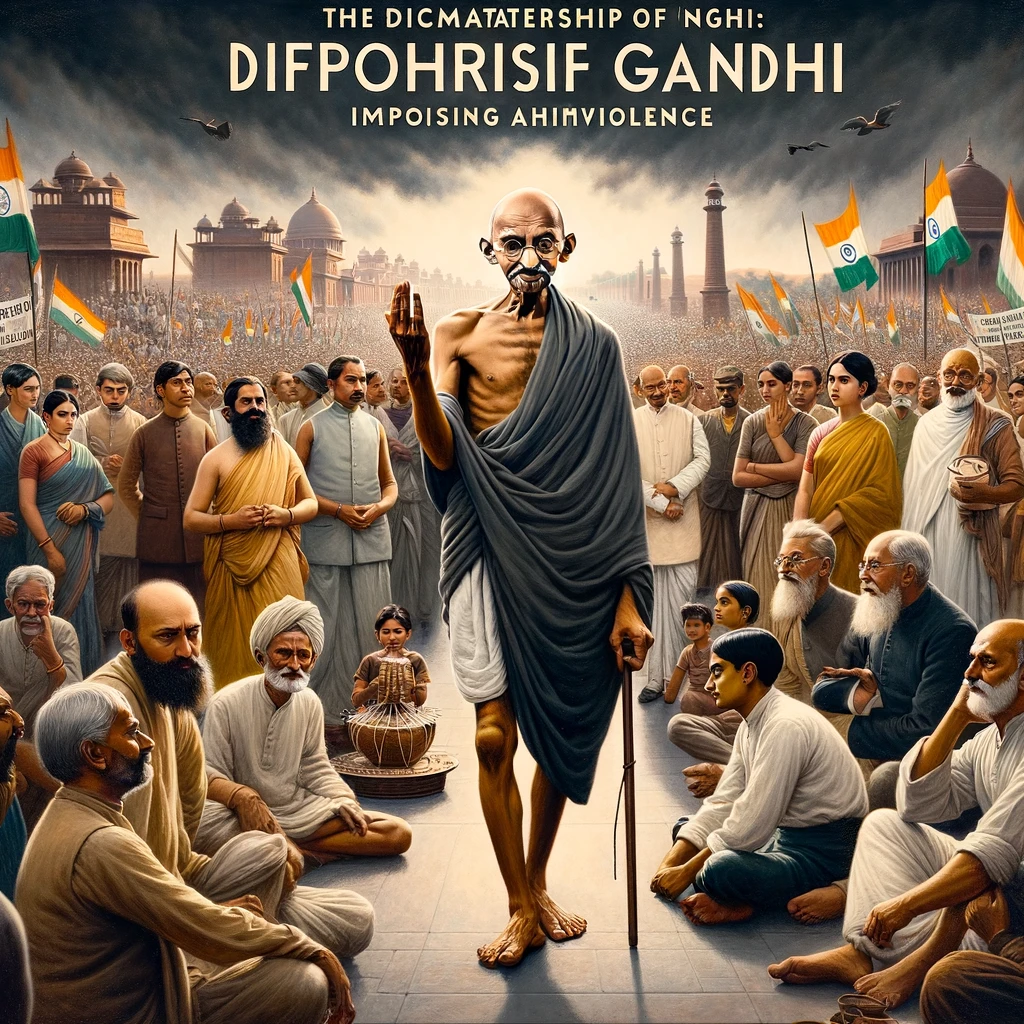
The prosecution places the two frameworks side by side as a primary exhibit. The Islamic decree (Tark-e-Mawalat) and the Congress programme (Non-Cooperation) shared the same architect — Gandhi — and were functionally identical stage by stage, action by action. On the Congress floor Gandhi presented the programme in the language of constitutional nationalism and Gandhian ethics. In the mosques, the Jamiat-ul-Ulama Hind presented the identical programme as a mandatory Shariat obligation. Two languages. Two audiences. One programme. One origin.
Gandhi’s Khilafat Non-Cooperation — the commissioned programme — places the nomenclature before the reader as the first exhibit: not an aesthetic label but proof of where operational command originated.
The Adoption Sequence: Who Signed First
The standard account collapses the adoption sequence into a single event — the Calcutta Congress of September 1920 — and presents the Khilafat alignment as Gandhi bringing Muslim support into an indigenous national movement. The dated paper trail does not support that account.
The sequence of formal adoption is documented:
23 November 1919 — Delhi: Gandhi proposes the four-stage Non-Cooperation doctrine at the All-India Khilafat Conference. The conference adopts it and elects Gandhi president. This is ten months before the Congress votes.
January–February 1920: Gandhi, now president of the Khilafat Conference, circulates the Non-Cooperation programme among Muslim leadership as the operational response to British policy on the Ottoman Caliphate.
May 1920 — Bombay: The Central Khilafat Committee formally adopts Gandhi’s four-stage Non-Cooperation programme at its Bombay meeting. The Congress has not yet been convened to debate it.
June 1920 — Allahabad: A joint conference of leaders formally ratifies the programme. The Khilafatists serve notice on Viceroy Chelmsford that the movement will launch on 1 August. The Congress has not yet voted.
1 August 1920: The Khilafat movement formally launches Non-Cooperation. Gandhi surrenders his Kaisar-i-Hind, Zulu War, and Boer War medals to Viceroy Chelmsford on the designated launch date. The primary justification in his accompanying letter is not the Punjab wrongs, not the demand for Swaraj — it is the British breach of faith concerning the Ottoman Caliphate. The Jamiat-ul-Ulama Hind formalises the programme as a religious decree of Tark-e-Mawalat, prompting thousands of Muslims to leave government posts and withdraw students from government schools.
September 1920 — Calcutta: Only after the Khilafatists have launched the campaign does the Indian National Congress meet at its Special Session to debate and adopt the Non-Cooperation programme. The Congress expands the stated objectives to include “the Punjab wrongs” alongside “the Khilafat wrong” and the demand for Swaraj — framing that presents the Congress adoption as a broadening of an indigenous nationalist agenda rather than a ratification of an already-running Khilafat programme.
The prosecution places this sequence before the reader as the second exhibit. Gandhi’s Khilafat Non-Cooperation — the commissioned programme — was not adopted by the Khilafat. It was commissioned by it. The Congress did not nationalise a Gandhian doctrine. It ratified, months late, a programme already in operation under the authority of a fatwa.
The adoption sequence matters because it explains what happened at Calcutta in September 1920 in terms the standard account cannot.
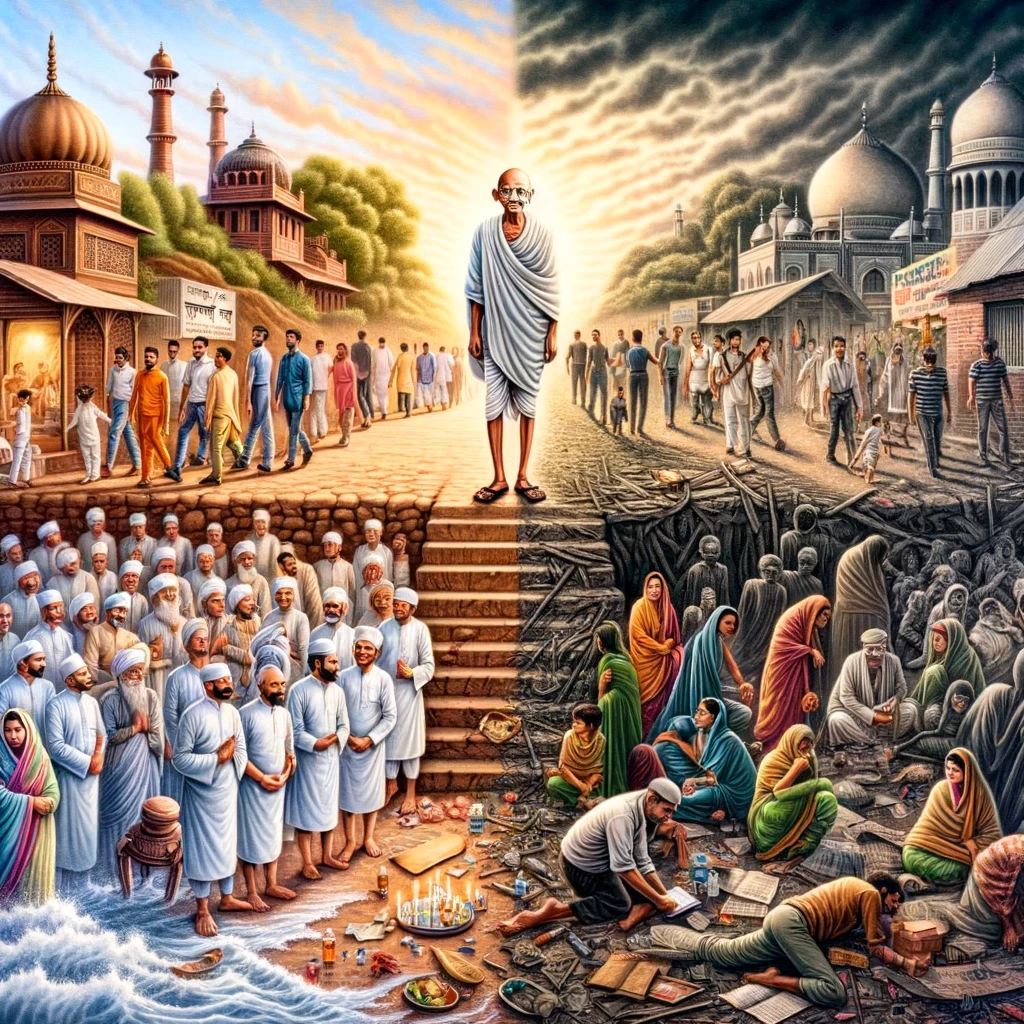
When Gandhi brought the Non-Cooperation resolution to the Calcutta Special Congress, the old guard — Lala Lajpat Rai, C.R. Das, Bipin Chandra Pal, Annie Besant — opposed it. Their opposition was not irrational. They were being asked to adopt a programme that had already been launched by an external organisation, already ratified as a religious obligation by the Jamiat-ul-Ulama Hind, and already running in the field — a programme the Congress had played no part in designing, had not been consulted on, and whose theological foundations the constitutional leadership regarded as incompatible with secular democratic politics.

Had Non-Cooperation been an indigenous Congress movement, the old guard would have debated it, diluted it, or defeated it through the provincial machinery they controlled. They did not defeat it because Gandhi arrived at Calcutta holding an already-signed contract with the Khilafat leadership — a contract whose signatories had already transported thousands of delegates to the venue on Chotani’s treasury, had already packed the open session with a bloc whose mandate rested not on provincial Congress membership but on alignment with the Khilafat programme, and had already demonstrated through the 1 August launch that the programme was operational with or without Congress endorsement.
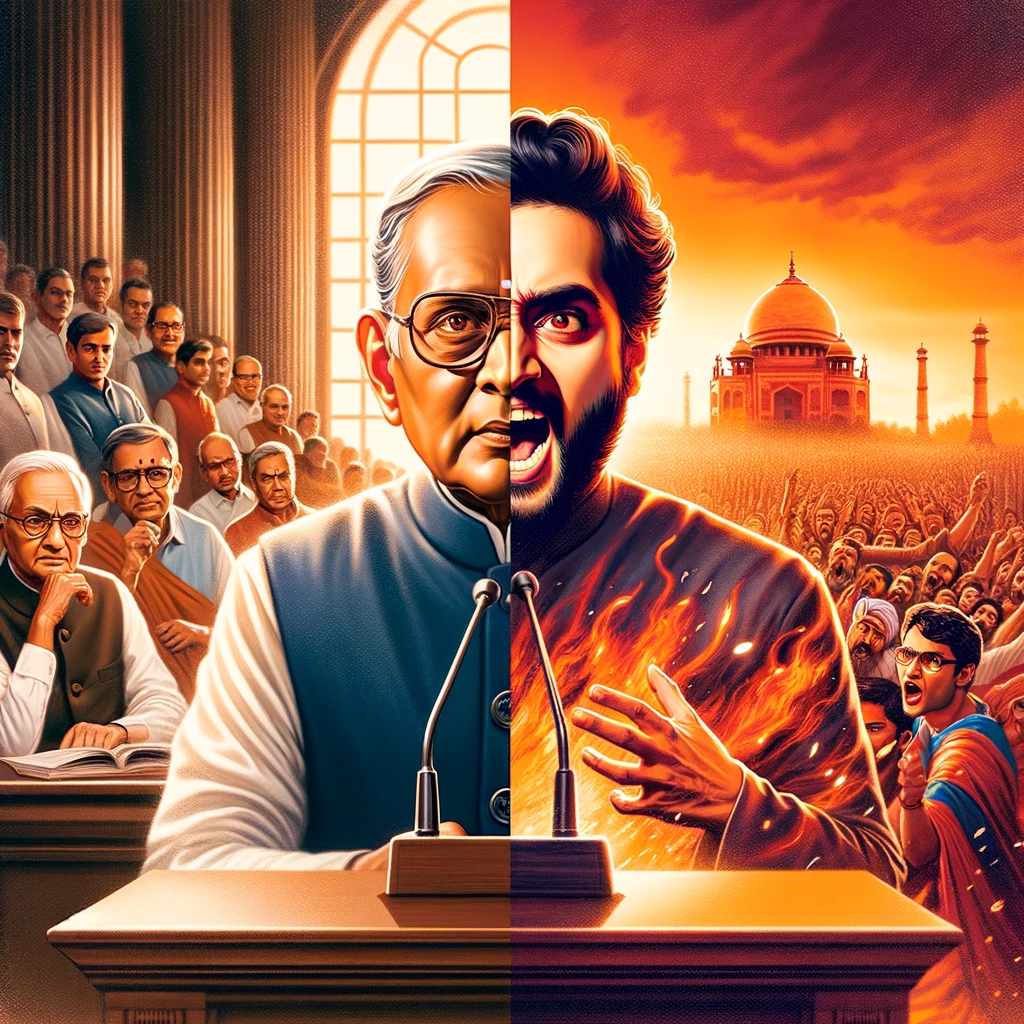
The Subjects Committee — the party machinery, the seasoned provincial leadership in closed session — recorded a margin of roughly seven votes. The open session recorded 1,886 to 884. Gandhi’s Khilafat Non-Cooperation — the commissioned programme — explains that arithmetic. The open-session majority was not a democratic mandate of the Indian national movement. It was the enforcement mechanism of an already-executed contract.
The Prosecution’s Position
Three questions now stand before the reader.
- Does the documented adoption sequence — Non-Cooperation proposed at the Delhi Khilafat Conference in November 1919, adopted by the CKC in May 1920, ratified as Tark-e-Mawalat by fatwa, launched by the Khilafat movement on 1 August 1920, and only then adopted by the Congress in September 1920 — constitute an exhibit the reader places alongside the claim that Non-Cooperation was an indigenous Gandhian contribution to nationalist politics that the Khilafat movement later joined?
- Does the structural identity of the two programmes — Tark-e-Mawalat and Non-Cooperation, stage by stage, action by action, identical in sequence and obligation — with Gandhi as the sole common architect, presented in Islamic juridical language to the ulema and in constitutional English to the Congress floor, constitute an exhibit the reader places alongside the claim that Gandhi derived his programme from Gujarati ethical traditions, Thoreau, or the Bhagavad Gita rather than from Islamic jurisprudence?
- Does the fact that Gandhi surrendered his medals on 1 August 1920 with the Caliphate wrong — not the Punjab wrongs, not Swaraj — as the primary stated justification, constitute an exhibit the reader places alongside the key phrase: Gandhi’s Khilafat Non-Cooperation — the commissioned programme?
The series does not answer. This blog places the chain of custody before the reader: the nomenclature, the adoption sequence, and the coercion of the old guard.
Invitation To Defence
The floor belongs to the defence. We now invite them to present their exhibits and challenge the narrative established by the prosecution.
Non-Cooperation was proposed at the Delhi Khilafat Conference in November 1919. The Central Khilafat Committee adopted it in May 1920. The Jamiat-ul-Ulama Hind ratified it as Tark-e-Mawalat — a mandatory Shariat obligation. The Khilafat movement launched it on 1 August 1920. Gandhi surrendered his medals that day citing the Caliphate wrong above all else. The Congress voted in September 1920. The four stages of Non-Cooperation and the four directives of Tark-e-Mawalat are identical. Gandhi’s Khilafat Non-Cooperation — the commissioned programme — places the chain of custody before the reader. The reader will name the author.
Feature Image: Click here to view the image.
Videos
Glossary of Terms
1. Non-Cooperation Movement: A political movement associated with Mahatma Gandhi that called for Indians to withdraw cooperation from British colonial institutions, including government schools, courts, legislative councils, and official services.
2. Commissioned Programme: A distinctive phrase used in this blog to argue that the Non-Cooperation programme originated within the Khilafat movement’s organisational framework before the Indian National Congress formally adopted it.
3. Khilafat Movement: A political movement launched in India to oppose British policies concerning the Ottoman Caliphate and to defend the position of the Ottoman Caliph after the First World War.
4. All-India Khilafat Conference: A gathering held in Delhi on twenty-third November nineteen hundred nineteen at which Gandhi proposed a four-stage Non-Cooperation programme and was elected president.
5. Central Khilafat Committee (CKC): The organisation that formally adopted the four-stage Non-Cooperation programme in Bombay in May nineteen hundred twenty, according to the blog.
6. Tark-e-Mawalat: An Islamic juridical concept described in the blog as severing cooperative relations with an inimical non-believing power under specified circumstances. The article presents it as the religious framework corresponding to the four-stage Non-Cooperation programme.
7. Islamic Jurisprudence: The interpretation and application of Islamic legal principles, referred to in the blog in connection with the religious justification for the Non-Cooperation programme.
8. Fatwa: A religious legal opinion or ruling issued by a qualified Islamic scholar or authority. The blog uses this term when discussing the religious endorsement of the programme.
9. Ottoman Caliphate: The institution of the Ottoman ruler as Caliph, whose position and future became a major concern of the Khilafat movement following the First World War.
10. Swaraj: Self-government or political independence, a central demand of the Indian nationalist movement during the struggle against British rule.
11. Chain of Custody: A forensic and legal expression referring to the documented continuity and traceability of evidence. The blog uses it metaphorically to connect the programme’s naming, adoption, religious endorsement, and implementation.
12. Subjects Committee: The Congress committee responsible for considering resolutions before they were presented to the wider session. The blog contrasts its close-session voting figures with those of the open session at Calcutta in September nineteen hundred twenty.
13. Old Guard: A phrase referring to established Congress leaders, including Lala Lajpat Rai, C. R. Das, Bipin Chandra Pal, and Annie Besant, who opposed the Non-Cooperation resolution at the Calcutta Special Session.
14. Forensic Brief: A document structured as an examination of evidence and arguments. The blog uses this phrase to describe its presentation of the chronology and organisational origins of the Non-Cooperation programme.
15. Nomenclature: The system or choice of names used for a concept or programme. In this blog, it refers to the significance attributed to the name “Non-Cooperation” in establishing the programme’s historical origins.
#Gandhi #NonCooperation #Khilafat #IndianHistory #MahatmaGandhi #FreedomStruggle #IndianPolitics #Swaraj #Congress #HinduinfoPedia
Scan Through The Entire Series at