

Gandhi’s African Lesson: Gandhi’s Learnings and Use of the Learning (136)
भारत / GB
Part 136: Mahatma Gandhi’s Peace Efforts | Series Index
In the previous set of blogs beginning with Blog 130 we have analysed the pros and cons of unilateral suspension of Non-cooperation Movement in 1922 that ended up discussing how fit leader Mahatma Gandhi rated himself during the Indian freedom struggle. This is the first of six blogs in the DAM ARC — examining Gandhi’s South Africa years as the documented laboratory in which he learned what moved the British, what did not, and what he did with that knowledge when he returned to India. This post places the starting lesson before the reader.
Thank you for reading this post, don't forget to subscribe!The Action Taken: South Africa showed petitions and war service produced no political return, while organised structural pressure extracted recorded concessions.
Who Paid the Price: Indian labour and stretcher units who supplied both the service and the strike pressure.
The Alternative Bypassed: Carrying only the petition-and-loyalty method into India after the strike record had already spoken.
Why This Matters: Records the South Africa lesson; it is not the council-entry veto.
The Ant Analogy — The Starting Point
Gandhi’s African Lesson places one documented observation before the reader at the outset — not from Gandhi’s writings, but from the logic of the environment he worked in for twenty-one years.
Consider a kind-hearted man who discovers an anthill in the path of a canal. His intent is protective. His motive is pious. He tries to shift the anthill. The ants attack him anyway.
The ants are not malicious. They are not responding to the man’s intent or his motive. They are responding to the disturbance of their structure — instinct, not intelligence. The man’s kindness is irrelevant to the ants because the ants cannot perceive kindness. They perceive only threat and disturbance.
Gandhi’s African Lesson places the analogy before the reader and then immediately qualifies it: the British were not ants. They were intelligent. They had policy, strategy, calculation, and documented awareness of Indian political organisation. But in one documented respect, the British and the ants produced identical outcomes — they did not respond to moral appeal, pious intent, or protective motive. They responded to structural threat.
Intelligence without empathy, in the documented South Africa record, produced the same outcome as instinct without intelligence. The man’s kindness was as irrelevant to the British colonial apparatus as it was to the ants — not because the British could not perceive it, but because they had calculated that they did not need to respond to it.
What Gandhi Tried in South Africa — The Documented Record
Gandhi’s African Lesson places the documented sequence of methods Gandhi deployed in South Africa before the reader. Each method is documented. Each outcome is documented.
Petitions: Gandhi’s first documented method — formal written petitions to the British colonial administration presenting the legal and moral case for Indian rights. The documented outcome: petitions were received, acknowledged, and not acted upon. The Natal Legislative Assembly passed the Natal Indian Disfranchisement Bill in 1896 despite Gandhi’s petitions. The documented lesson: the British colonial apparatus did not respond to moral argument presented through constitutional petition.
War service: Gandhi’s documented second method — demonstrating Indian loyalty and fitness for equal treatment by serving the British in the Boer War (1899-1900) and the Zulu Rebellion (1906). Gandhi raised the Indian Ambulance Corps and the Indian Stretcher-Bearer Corps, serving under dangerous conditions. The documented outcome: the Transvaal government introduced the Asiatic Registration Act (the Black Act) in 1906 — requiring all Indians to register with fingerprints — two years after the documented war service. The documented lesson: demonstrated loyalty did not produce documented reciprocity from the colonial apparatus.
Organised structural pressure: Gandhi’s documented third method — the Satyagraha campaign against the Black Act from 1907, the documented burning of registration certificates, the documented strikes of Indian mine workers in 1913. The documented outcome: the Smuts-Gandhi Agreement of 1914, in which General Smuts made documented concessions including the recognition of Indian marriages and the abolition of the three-pound tax on indentured labourers.
The Documented Lesson
Gandhi’s African Lesson places the documented learning from the South Africa sequence before the reader precisely.
Petitions: no documented movement.
War service: no documented reciprocity.
Organised structural pressure — documented mines strike, documented mass non-compliance: documented concessions.
The documented lesson Gandhi carried from South Africa to India was specific: the British colonial apparatus did not respond to moral appeal or demonstrated loyalty. It responded to organised structural threat — the documented disruption of the economic and administrative machinery it depended upon.
The Prosecution’s Question
Gandhi’s African Lesson places one documented question before the reader. The lesson from South Africa was clear, documented across twenty-one years of Gandhi’s own experience, and confirmed by the documented outcomes of three distinct methods.
Gandhi returned to India in 1915 with this documented lesson. The prosecution places the documented subsequent record before the reader — established across this series in Blogs 1 through 135 — and asks the reader to examine one question:
Did Gandhi apply the documented South Africa lesson — that the British respond to organised structural threat, not to moral appeal — consistently and without exception in India? Or did the documented Indian record show Gandhi repeatedly deploying the method the South Africa sequence had already documented as ineffective?
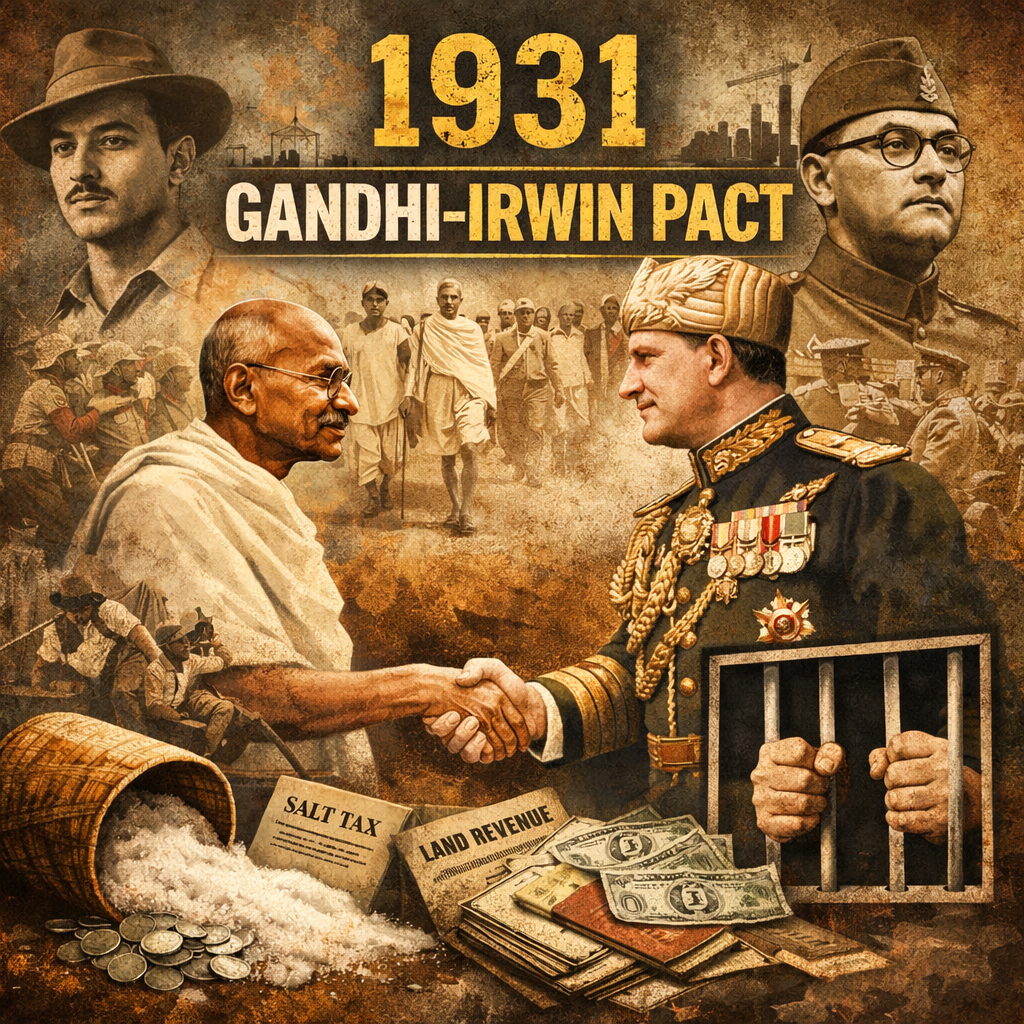
The Irwin Pact of 1931 — established in Blogs 17-20 of this series — placed the documented answer before the reader. Gandhi negotiated a settlement through moral authority and personal relationship — Gandhi-Irwin. Not one demand met in full. Not one fulfilled that can be called as significant. Not one structural change delivered.
The series does not characterise. Gandhi’s African Lesson places the documented South Africa learning and the documented Indian application before the reader. The reader will examine what the documented lesson established about the documented subsequent choices — and complete the sentence.
The Prosecution’s Position
Gandhi’s African Lesson places three questions before the reader.
- Did the documented South Africa sequence — petitions produced no movement, war service produced no reciprocity, organised structural pressure produced documented concessions — establish a specific lesson about what moved the British colonial apparatus: not moral appeal, not demonstrated loyalty, but organised structural threat?
- Did Gandhi carry this documented lesson from South Africa to India in 1915 — and does the documented Indian record, established across Blogs 1-135 of this series, show consistent application of the structural pressure method, or repeated deployment of the moral appeal method the South Africa sequence had already documented as ineffective?
- Does the gap — between the documented South Africa lesson and the documented Indian application — belong before the reader as an exhibit about the choices Gandhi made with the knowledge he had documented across twenty-one years in South Africa?
The series does not answer. Gandhi’s African Lesson places the documented learning and the documented question before the reader. The reader will examine what twenty-one years in South Africa established — and what the subsequent documented record shows Gandhi did with it — and complete the sentence.
Invitation To Defence
The floor belongs to the defense. We now invite them to present their exhibits and challenge the narrative established by the prosecution.
South Africa: petitions — no movement. War service — no reciprocity. Organised structural pressure — documented concessions. The lesson: the British respond to structural threat, not moral appeal. Gandhi carried this lesson to India in 1915. The prosecution places the documented South Africa learning alongside the documented Indian application — established across 135 blogs. The reader will examine what Gandhi did with the lesson he had documented across twenty-one years — and complete the sentence.
Feature Image: Click here to view the image.
Videos
Glossary of Terms
- Gandhi’s African Lesson: The central phrase of the blog referring to the documented lesson Gandhi derived from his twenty-one years in South Africa about what methods influenced the British colonial apparatus.
- Structural Pressure: Organised pressure that disrupts or threatens the economic or administrative machinery on which a governing authority depends.
- Structural Threat: A pressure arising from organised action that directly challenges or disrupts an authority’s underlying economic or administrative structure.
- Moral Appeal: An attempt to influence an authority through ethical reasoning, moral argument, goodwill, or an appeal to conscience rather than through structural pressure.
- Moral Authority: Influence derived from perceived ethical standing, credibility, or moral legitimacy rather than from institutional or material power.
- Petitions: Formal written representations submitted to an authority to present grievances, legal claims, or demands and seek official action.
- War Service: Gandhi’s documented support for British military efforts through Indian medical and stretcher-bearing organisations during the Boer War and Zulu Rebellion.
- Organised Structural Pressure: The blog’s description of collective action, including strikes and mass non-compliance, that created pressure on the colonial administrative and economic system.
- Satyagraha: Gandhi’s method of organised resistance based on non-compliance and sustained pressure against an authority or policy considered unjust.
- Black Act: The common name used for the Asiatic Registration Act of 1906 in the Transvaal, which required Indians to register and provide fingerprints.
- Smuts-Gandhi Agreement: The 1914 settlement between General Jan Smuts and Gandhi that included concessions concerning Indian marriages and the three-pound tax on indentured labourers.
- Gandhi-Irwin Pact: The 1931 settlement negotiated between Gandhi and Lord Irwin, presented in the blog as an example of negotiation through moral authority and personal relationship rather than structural pressure.
- Documented Lesson: A recurring phrase in the blog referring to the conclusion drawn from the recorded South African sequence: petitions produced no movement, war service produced no reciprocity, while organised structural pressure produced concessions.
- Prosecution’s Position: The analytical position adopted by the blog’s prosecution framework, which asks whether Gandhi consistently applied in India the lesson he had documented through his South African experience.
- Invitation to Defence: The series device through which the defence is invited to present evidence and challenge the interpretation established by the prosecution.
#Gandhi #SouthAfrica #India #Satyagraha #BritishRaj #FreedomStruggle #IndianHistory #GandhiStudies #IrwinPact #HinduinfoPedia
Gandhi’s Peace Efforts: The Questions Before the Mahatma (0)