
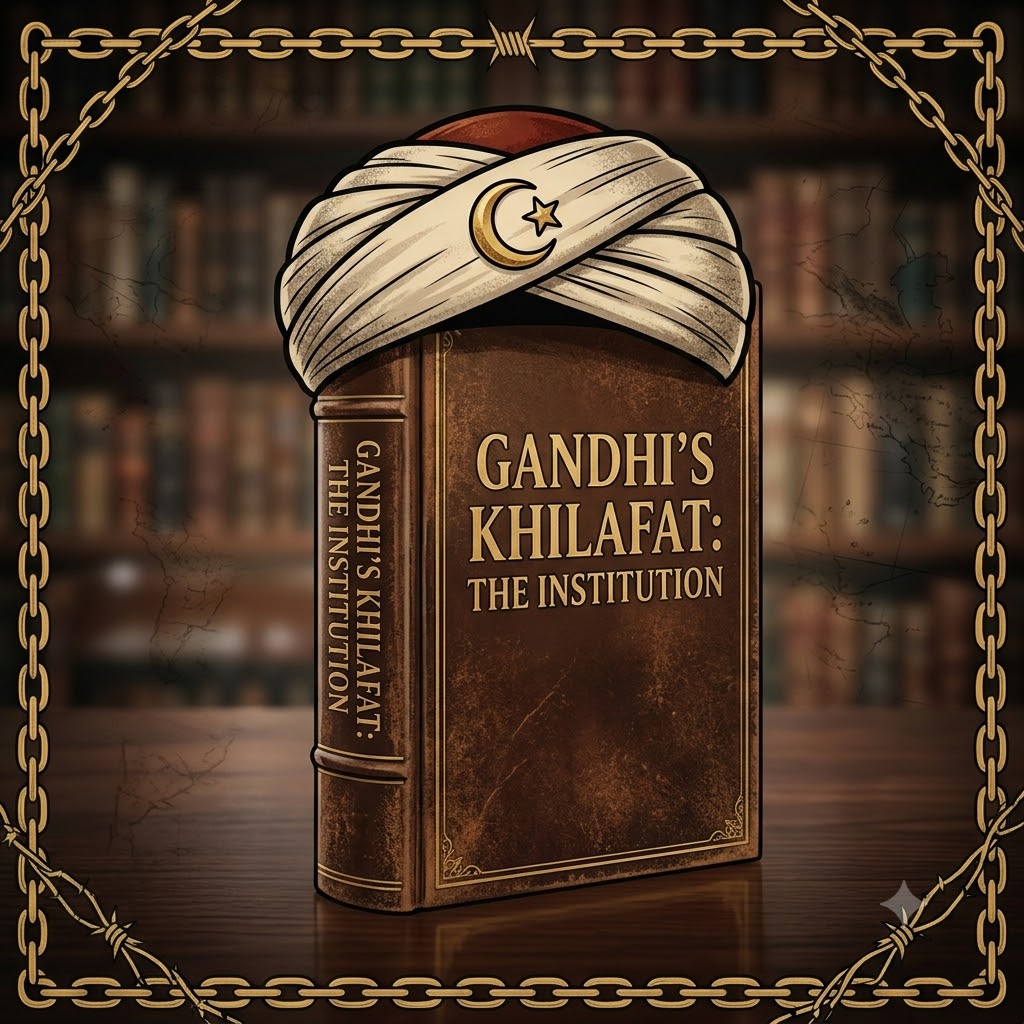
Gandhi’s Cause: Was Support to Khilafat Just and Reasonable? (115)
भारत / GB
Part 115: Mahatma Gandhi’s Peace Efforts | Series Index
Blog 114 placed Gandhi’s documented February 1920 announcement before the reader — Punjab wrongs and constitutional advance had been overshadowed by the Khilafat question. The defence’s documented rationale was also placed before the reader: Hindu-Muslim unity was Gandhi’s documented prerequisite for Swaraj, and standing by the Muslim community in their hour of need would cement that unity. Analysis of “Gandhi’s Cause” does not contest that rationale. It places the documented character of the specific cause Gandhi chose to stand by before the reader — and asks whether that cause meets Gandhi’s own documented standard for what deserved Hindu-Muslim solidarity.
Thank you for reading this post, don't forget to subscribe!The Action Taken: In November 1922, the Turkish Grand National Assembly under Mustafa Kemal abolished the Ottoman Sultanate, retaining only a titular, powerless Caliphate before abolishing it entirely.
Who Paid the Price: The Indian nationalist movement, which had subordinated its own strategy to preserve an imperial throne that the Turkish people themselves rejected.
The Alternative Bypassed: Aligning with the anti-imperialist, modernization struggles of Middle Eastern nations rather than supporting traditional theological dynasties.
Why This Matters: Documents the geopolitical absurdity: Indian satyagrahis were filling colonial jails for a medieval imperial institution that Turkish secular reformers were dismantling.
Gandhi’s Own Documented Standard
Gandhi’s Cause places Gandhi’s own documented framework before the reader first. Gandhi’s documented position — stated across his writings of this period — was that Hindu-Muslim unity around a just and reasonable cause was both possible and necessary. Unity was the documented goal. The cause around which that unity was to be built was the documented instrument.
The prosecution places one documented question before the reader: was the Khilafat demand just and reasonable — by Gandhi’s own documented standard?
What the Khilafat Demands Actually Were
Gandhi’s Cause places the documented character of the Khilafat demands before the reader. Blog 102 of this series established the institutional structure: the Ottoman Sultan held temporal power; the Caliph held religious authority. The British had defeated the Sultan as a wartime military enemy — not attacked the Caliphate as a religious institution.
The documented Khilafat demands were territorial: the return of Arabia, Syria, Iraq, and Palestine to Ottoman sovereignty, and the preservation of the Sultan-Caliph’s position over the holy places of Islam. These were not demands for religious freedom. They were not demands for the protection of Muslim worship. They were demands for the territorial restoration of a defeated empire’s sovereignty over lands it had ruled as a military power.
The Ottoman Empire entered the First World War as a documented military aggressor — allied with Germany and Austria-Hungary against Britain, France, and Russia. It chose to fight. It lost. The territorial consequences documented in the Treaty of Sèvres (August 1920) were the result of a war the Ottoman state had chosen to enter and had lost on the battlefield.
Gandhi’s Cause: Standard Applied
Gandhi’s Cause places Gandhi’s own documented framework alongside the documented character of the Khilafat demands. Gandhi documented that Hindu-Muslim unity should be built around just and reasonable causes — causes that could be defended on their merits, not merely on the grounds of communal solidarity.
The prosecution places the documented Khilafat demands against that standard: demanding that Britain restore to a defeated military aggressor the territories that aggressor had lost in a war it started. The same Gandhi who placed the Khilafat cause above Punjab’s documented dead — at least 489 documented victims at Jallianwala Bagh, April 13 1919 — and above India’s constitutional advance, chose as the primary instrument of Hindu-Muslim unity a demand whose documented character was the territorial restoration of a defeated foreign empire’s sovereignty.
Gandhi’s Cause places one further documented observation before the reader: Gandhi’s own documented position on just causes was not applied symmetrically. When the Royal Indian Navy Mutiny of 1946 produced the closest documented moment to an armed indigenous liberation — Indian sailors rising against British officers with documented mass public support — Gandhi called it an “unholy combination” and condemned it. The documented cause Gandhi chose to place above Swaraj was a defeated foreign empire’s territorial demand. The documented cause Gandhi chose to condemn as unholy was Indian sailors rising against colonial authority.
The Turkish Verdict on Their Own Cause
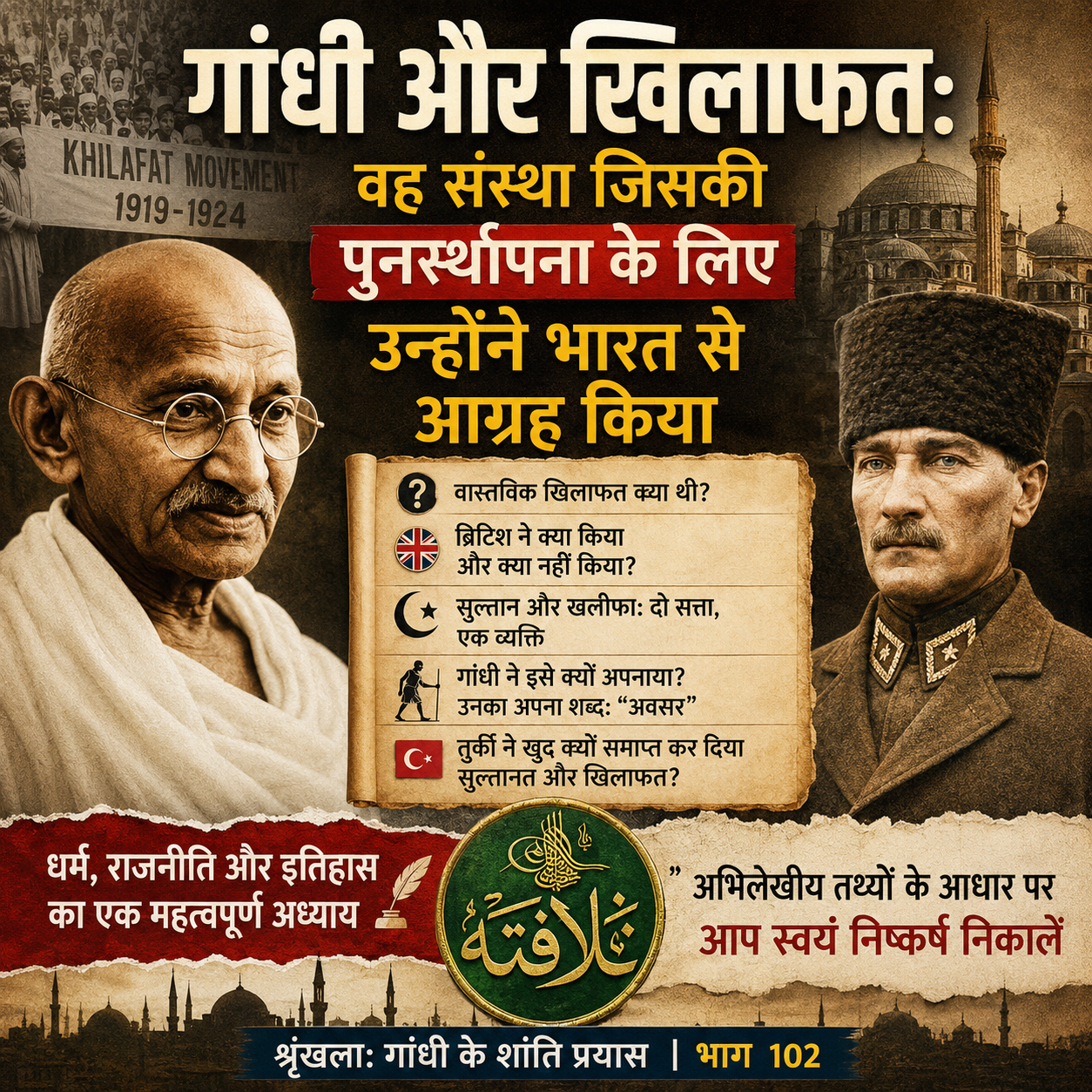
Gandhi’s Cause places the most precise documented exhibit before the reader. The Turks themselves — the documented people whose cause Gandhi had adopted — abolished the Sultanate in November 1922 and the Caliphate in March 1924. Mustafa Kemal Atatürk’s documented position: the Caliphate was an obstacle to Turkish modernisation, not an institution worth preserving.
The Indian Khilafat movement’s leadership — the Ali brothers, Hasrat Mohani, the Deobandi clergy — wanted something the Turkish Muslims themselves documented as obsolete. Gandhi placed Punjab’s documented dead and India’s constitutional future beneath a cause that the cause’s own documented people had abandoned before Gandhi’s own 1924 admission of what the experiment had produced.
The prosecution places this documented sequence before the reader: Gandhi adopted the cause in 1920. The Turks abolished the Sultanate in 1922. The Turks abolished the Caliphate in March 1924. Gandhi wrote his “no regret” position in Young India in May 1924 — two months after the Caliphate had been abolished by the Turks themselves. The cause Gandhi had placed above Swaraj no longer existed when Gandhi documented that he did not regret placing it there.
The Prosecution’s Position
Gandhi’s Cause places three questions before the reader.
- Did Gandhi’s own documented framework establish that Hindu-Muslim unity should be built around just and reasonable causes — and does the documented character of the Khilafat demands (territorial restoration of a defeated military aggressor’s empire) meet that documented standard on its own terms?
- Did Gandhi place Punjab’s documented dead and India’s constitutional future beneath a cause whose documented character was the territorial restoration of a foreign empire’s sovereignty over lands lost in a war that empire chose to fight and lost — and does that documented priority belong before the reader alongside Gandhi’s own documented standard for just causes?
- Did the Turks themselves abolish the Sultanate in 1922 and the Caliphate in March 1924 — and does Gandhi’s documented “no regret” position of May 1924, written two months after the cause’s own people had abandoned it, belong before the reader alongside the documented character of the cause he placed above Swaraj?
The series does not answer. Gandhi’s Cause places Gandhi’s own documented standard, the documented character of the Khilafat demands, and the Turks’ own documented verdict on their cause before the reader in sequence. The reader will examine whether the cause Gandhi chose to place above Swaraj meets the standard Gandhi himself documented — and complete the sentence.
Invitation To Defence
The floor belongs to the defense. We now invite them to present their exhibits and challenge the narrative established by the prosecution.
Gandhi’s documented standard: Hindu-Muslim unity around a just and reasonable cause. The Khilafat demands: territorial restoration of a defeated military aggressor’s sovereignty over Arabia, Syria, Iraq, and Palestine. Placed above Punjab’s 489 documented dead. Placed above India’s constitutional advance. Placed above Swaraj. The Turks abolished the Sultanate 1922, the Caliphate March 1924. Gandhi’s documented position May 1924: no regret. The cause the Turks themselves had abandoned. The prosecution places Gandhi’s own documented standard alongside the documented character of the cause he chose. The reader will complete the sentence.
Feature Image: Click here to view the image.
Videos
Glossary of Terms
- Khilafat Movement: A political and religious movement launched in British India after the First World War to support the continuation of the Ottoman Caliphate.
- Caliphate: The institution claiming religious leadership of the global Muslim community after Prophet Muhammad, abolished by Türkiye in March 1924.
- Ottoman Empire: The Turkish empire that ruled large parts of West Asia, Southeast Europe, and North Africa until its defeat in the First World War.
- Sultanate: The institution of the Ottoman Sultan, who exercised temporal and political authority until its abolition in 1922.
- Treaty of Sèvres: The 1920 peace treaty that dismantled much of the Ottoman Empire after its defeat in the First World War.
- Mustafa Kemal Atatürk: Founder of modern Türkiye who abolished both the Sultanate and the Caliphate during constitutional reforms.
- Young India: The weekly journal edited by Mahatma Gandhi in which many of his political views and public statements were published.
- Royal Indian Navy Mutiny: The 1946 uprising by Indian naval ratings against British colonial authority, supported by large sections of the public.
- Jallianwala Bagh Massacre: The killing of hundreds of unarmed civilians by British troops at Amritsar on 13 April 1919.
- Constitutional Advance: The gradual expansion of representative self-government in British India through constitutional reforms.
- Territorial Restoration: The demand to return lost territories to a defeated state or empire after war.
- Hindu-Muslim Unity: Gandhi’s political principle that cooperation between Hindus and Muslims was essential for achieving Swaraj.
- Just and Reasonable Cause: Gandhi’s documented standard that political unity should rest upon causes that are morally and logically defensible.
- Gandhi’s Cause: A key analytical phrase in this series examining whether Gandhi’s support for the Khilafat movement satisfied his own declared standard of a just and reasonable cause.
- Documented Standard: A recurring analytical phrase in this series referring to conclusions drawn directly from Gandhi’s published writings, speeches, correspondence, and other historical records rather than later interpretations.
#Gandhi #Khilafat #Caliphate #Ottoman #Swaraj #Ataturk #Jallianwala #History #India #Congress #Freedom #HinduinfoPedia
Gandhi’s Peace Efforts: The Questions Before the Mahatma (0)