
Gandhi’s Cleared Field: How Gandhi Removed Every Alternative Voice Before 1947 (165)
भारत / GB
Part 165: Mahatma Gandhi’s Peace Efforts | Series Index
Blog 164 placed before the reader the causation engine across seven documented arcs — the operational pattern by which Gandhi’s choices produced outcomes measurable in the historical record. This post opens The Terminal Record, the series’ closing arc. It places before the reader a structural observation that the prior 164 blogs make possible: by the time the terminal decisions arrived in 1946 and 1947, Gandhi had spent twenty-six years ensuring that no one with the authority to choose differently remained in a position to do so. The cleared field was not an accident. It was the precondition for everything that followed.
Thank you for reading this post, don't forget to subscribe!THE HISTORICAL RECORD block (Pillar depth)
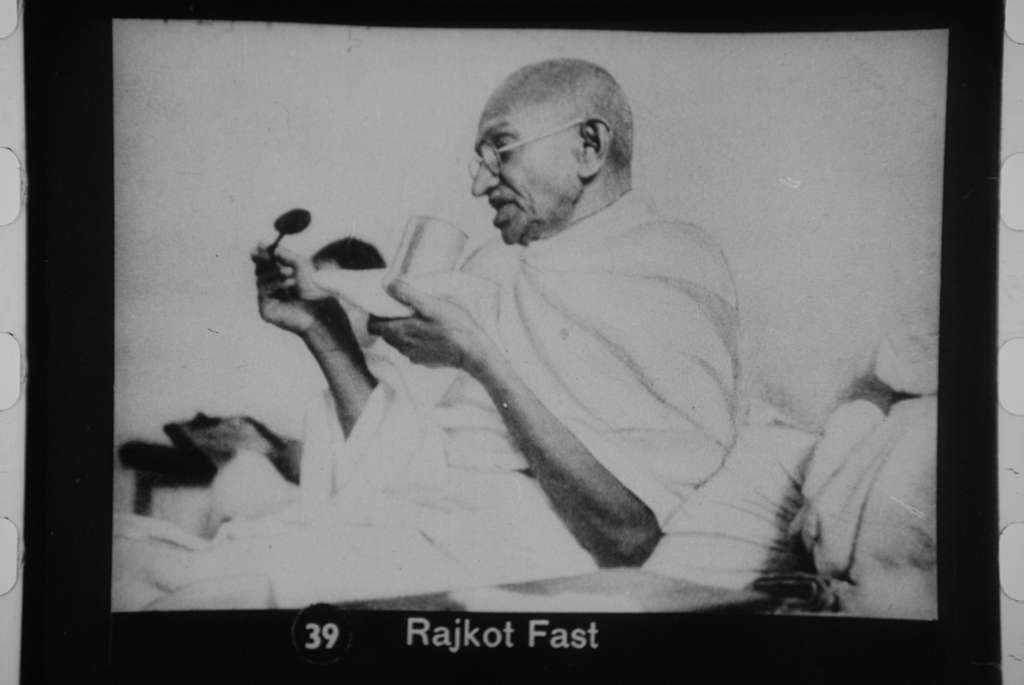
The Action Taken: Across 1920–1939 Gandhi constructed an organizational environment in which the principal figures capable of exercising independent judgment at later terminal junctures were sequentially removed from positions of authority—by immediate exploitation of Tilak’s natural death window (Calcutta/Nagpur restructuring, 4-anna membership dilution), procedural outflanking of Jinnah at Nagpur (shouted down; subsequent resignation), coercive pressure on Ambedkar via the Yerwada fast (Poona Pact exchange of separate electorates for reserved seats), and systematic withdrawal of working-committee support after Bose’s documented presidential election victory (1,580–1,375).
Who Paid the Price: The institutional capacity of the Congress to generate or protect alternative political judgment; the Muslim constitutional compact that a Jinnah remaining inside the organization might have continued to advance; the independent political leverage of Scheduled Castes under separate electorates; and the only Congress president who had defeated Gandhi’s chosen candidate while combining mass Hindu nationalist appeal with a militant anti-British framework.
The Alternative Bypassed: Maintenance of a Congress capable of producing a Tilak-style constitutional compact, a Jinnah-style internal Muslim representation framework, Ambedkar’s separate-electorate instrument, or a Bose-style working committee that retained the ability to override the extra-constitutional moral authority.
Why This Matters: Established the cleared field that was the documented precondition for the 1946–1947 terminal decisions. By August 1947 the remaining leadership structure (Nehru, Patel, Gandhi) possessed no institutional muscle memory for overriding the personal judgment that had shaped the organization for its entire operational life.
The Structural Argument
A verdict requires a record. The record across 164 exhibits establishes what Gandhi chose at each juncture. This post establishes something prior to those choices: the architecture that made them uncontestable.
Gandhi did not merely make wrong choices at seven critical junctures between 1920 and 1948. He constructed, over the same period, an organizational environment in which the people most likely to make different choices were sequentially removed from positions where their judgment could have operated. By August 1947, when the terminal decisions about partition, population transfer, and communal violence required the broadest possible range of experienced political judgment, the Congress was a Gandhi instrument. The alternatives had been cleared.
The prosecution places four figures before the reader — three removed through Gandhi’s direct organizational choices, one through the deliberate exploitation of natural death — each a figure whose presence at the terminal juncture would have altered the available options.
Tilak: The Removal That Was Not Gandhi’s Doing — And What He Did With It
Bal Gangadhar Tilak died on August 1, 1920 — six weeks before the Calcutta Special Session that Gandhi used to push through non-cooperation as binding Congress policy.
Tilak’s death was not Gandhi’s action. What Gandhi did with it is the exhibit.
Tilak’s documented method was the Lucknow Pact framework — direct Hindu-Muslim political compact through legislative representation, incremental self-governance through the councils, constitutional negotiation as the instrument of nationalist advance. The Lucknow Pact of 1916, which Tilak negotiated, addressed Muslim political representation through constitutional formula: defined seats, defined provinces, defined legislative ratios. It was the primary organizational alternative to Gandhi’s mass emotional mobilisation framework — institutional rather than devotional, negotiated rather than demanded.
Gandhi moved within weeks of Tilak’s death. The Calcutta resolution, the Nagpur constitution, the 4-anna membership structure that diluted the English-educated base — all documented in the Congress session proceedings of 1920 — were pushed through in the eighteen months following August 1920. The Congress that emerged from Nagpur was structurally incapable of producing a Tilak. It was structured around one man.
The prosecution does not claim Gandhi caused Tilak’s death. It places before the reader the speed with which Gandhi acted in the window that death created, and asks what that speed establishes about the preparation that preceded it.
Jinnah: Outflanked, Not Defeated
Muhammad Ali Jinnah left the Congress not over ideology but over procedure. At the Nagpur session of December 1920, Jinnah rose to oppose Gandhi’s non-cooperation resolution, addressing Gandhi as “Mr. Gandhi” rather than Mahatma. He was shouted down by the assembled delegates. He resigned from the Congress the following year.
Jinnah’s position at that moment was not separatist. He had spent fifteen years inside the Congress building a constitutional framework for Muslim political representation within a united India. His Fourteen Points of 1929 — his last formal constitutional offer — proposed a federal structure with Muslim-majority provinces retaining full autonomy and residual powers at the provincial level, Muslim representation in the central legislature at one-third, and Sindh as a separate province.
Gandhi did not engage the Fourteen Points. The Congress under Gandhi’s organizational supremacy treated the document as a League demand rather than a constitutional proposal.
Jinnah drew the conclusion the documented record supports: that inside a Gandhi-dominated Congress, Muslim constitutional interests would always be subordinated to Gandhi’s mass mobilisation framework. He spent the following decade building an alternative platform. The Pakistan demand followed in 1940 — twenty years after the Nagpur session at which Jinnah had been shouted down.
The prosecution places one question before the reader: what was available at the 1946–1947 partition negotiations that a Jinnah who had remained inside the Congress might have produced? The question has no documentary answer. It has a structural one: the man who might have brokered the Muslim constitutional compact from inside the organisation had been outflanked out of it in 1920.
Ambedkar: The Coercive Exclusion of 1932
The Poona Pact of September 1932 is documented in Blog 159 of this series. The prosecution places its structural consequence before the reader here.
B.R. Ambedkar had secured, through the Communal Award of August 1932, separate electorates for Scheduled Castes — the mechanism by which Dalit political representation would operate independently of Hindu majority structures. Gandhi announced a fast unto death against the separate electorate from Yerwada Prison. Ambedkar, under documented duress — with Gandhi’s life publicly contingent on Ambedkar’s capitulation — signed the Poona Pact, exchanging the separate electorate for reserved seats within joint electorates.
Ambedkar drew the correct conclusion from the transaction: that inside a Gandhi-dominated political structure, Dalit political leverage would always be subordinated to Hindu consolidation. He wrote in *What Congress and Gandhi Have Done to the Untouchables* (1945) that the Poona Pact had permanently damaged the independent political standing of 60 million people.
By 1947, Ambedkar was outside the Congress, building an alternative platform with no power over the partition decision. The 60 million Dalits had no independent seat at the transfer-of-power table. Their political representative had been coerced out of his constitutional instrument in 1932 by the threatened death of one man.
Bose: The Expulsion of 1939
Bose resigned in April 1939. He was subsequently placed under house arrest by the British in 1940, escaped, and eventually formed the Indian National Army. He died in August 1945 in circumstances that remain disputed.
The prosecution places one structural observation before the reader: Bose was the only figure inside the Congress who combined mass Hindu nationalist appeal — he carried Bengal — with a militant anti-British framework that would not have accepted the terms on which partition was eventually negotiated. Whether that combination would have produced a better outcome is not the prosecution’s claim. The prosecution’s claim rests on the documented sequence: Gandhi engineered the removal of the one Congress president who had defeated his chosen candidate, using organizational withdrawal rather than argument — a sequence traceable through Gandhi’s own correspondence and the Congress Working Committee minutes of April 1939. The cleared field included the man who had won the vote.
The Field at the Terminal Moment
By August 1947, the Congress leadership consisted of Jawaharlal Nehru as Prime Minister, Sardar Vallabhbhai Patel as Deputy Prime Minister, and Gandhi as the extra-constitutional moral authority whose approval was required for all consequential decisions and whose disapproval was sufficient to prevent them.
Tilak was twenty-seven years dead. Jinnah was across the border, the head of a new state whose creation the Congress had accepted. Ambedkar was outside the Congress, serving as Law Minister — appointed by Nehru in a gesture of inclusion that gave him no power over the decisions that had produced the crisis. Bose was dead.
The men who might have produced different outcomes at the seven terminal junctures had been cleared from the field over twenty-six years. What remained was a leadership structure that had been shaped around Gandhi’s authority for its entire operational life and that possessed no institutional muscle memory for overriding him.
Nehru rejected the Cabinet Mission Plan in 1946 — his press statement of July 10, 1946 is the documented exhibit. Gandhi did not countermand the rejection. The plan that might have kept India united without partition was refused by the organizational machine Gandhi had built and never structurally altered to allow independent judgment to operate.
The Prosecution’s Position
Gandhi’s Causation Engine places one structural observation before the reader.
The seven junctures at which different choices would have produced different outcomes — the seven moments the Terminal Record will examine across the next several posts — did not occur in a vacuum. They occurred in an organizational environment that had been systematically shaped, over twenty-six years, to make Gandhi’s judgment the terminal judgment. The people most likely to have exercised different judgment at those moments had been cleared from positions of organizational authority — through the structural exploitation of natural death (Tilak, 1920), procedural outflanking (Jinnah, 1920), coercive pressure (Ambedkar, 1932), and organizational withdrawal (Bose, 1939).
The prosecution does not claim that Gandhi intended partition. It places before the reader the documented organizational record of what he built, whom he removed, and what remained when the terminal decisions arrived. The cleared field was not the crisis. It was the documented precondition under which the crisis became unresolvable.
Invitation To Defence
The floor belongs to the defense. We now invite them to present their exhibits and challenge the narrative established by the prosecution.
By August 1947, Gandhi had spent twenty-six years as the dominant force in Indian nationalist politics. In that period, the four figures most likely to have brokered different outcomes at the terminal junctures — Tilak, Jinnah, Ambedkar, Bose — had been cleared from positions where their judgment could have operated: one by natural death whose organizational window Gandhi moved immediately to exploit, one by procedural outflanking at Nagpur, one by coercive fast, one by organized withdrawal of support after a democratic defeat. The defence is invited to place on record what independent organizational check on Gandhi’s judgment remained operational in August 1947 — and to identify the mechanism by which it could have been exercised.
Feature Image: Click here to view the image.
Videos
Glossary of Terms
- 1. Gandhi’s Cleared Field: A phrase coined for this blog to describe the political situation in which alternative leaders and independent decision-making capacity had been reduced before the decisive crises of 1946–1947.
- 2. Organizational Control: The ability to influence an organization’s leadership, working methods, decisions, and available political choices.
- 3. Alternative Leadership: Political leaders who could propose different strategies, challenge prevailing decisions, or pursue different outcomes during a national crisis.
- 4. Constitutional Politics: The pursuit of political objectives through constitutional arrangements, representative institutions, negotiated agreements, and established legal procedures.
- 5. Lucknow Pact: The 1916 agreement between the Indian National Congress and the All-India Muslim League concerning constitutional reforms and political representation.
- 6. Jinnah’s Fourteen Points: A set of constitutional demands formulated by Muhammad Ali Jinnah in 1929, including federal arrangements, provincial autonomy, and safeguards for Muslim representation.
- 7. Separate Electorates: An electoral arrangement under which members of a particular community elect their own representatives rather than relying exclusively on a common electorate.
- 8. Poona Pact: The 1932 agreement between B. R. Ambedkar and representatives of the Hindu community, reached after Gandhi’s fast against separate electorates for the Depressed Classes. It provided reserved seats within joint electorates.
- 9. Organizational Isolation: The process through which a political leader loses institutional support, influence, or the ability to shape decisions within an organization.
- 10. Congress Presidential Election of 1939: The election in which Subhas Chandra Bose defeated Pattabhi Sitaramayya, the candidate preferred by Gandhi, followed by a serious organizational conflict.
- 11. Cabinet Mission Plan: The 1946 British proposal intended to facilitate the transfer of power while preserving a united India through a proposed constitutional arrangement.
- 12. Institutional Accountability: The requirement that leaders exercise authority within structures that permit scrutiny, challenge, and responsibility for their decisions.
- 13. Terminal Moment: A term used in the series for the decisive historical period when long-term organizational arrangements shaped the choices available during the final transfer of power and Partition.
- 14. The Prosecution’s Position: The series’ analytical framework that presents documented events, decisions, and evidence for readers to examine, rather than treating its interpretation as an established judicial verdict.
#Gandhi #IndianHistory #Partition #Congress #Jinnah #Ambedkar #SubhasBose #Tilak #History #HinduinfoPedia
Scan Through The Entire Series at
Gandhi’s Peace Efforts: The Questions Before the Mahatma (0)