
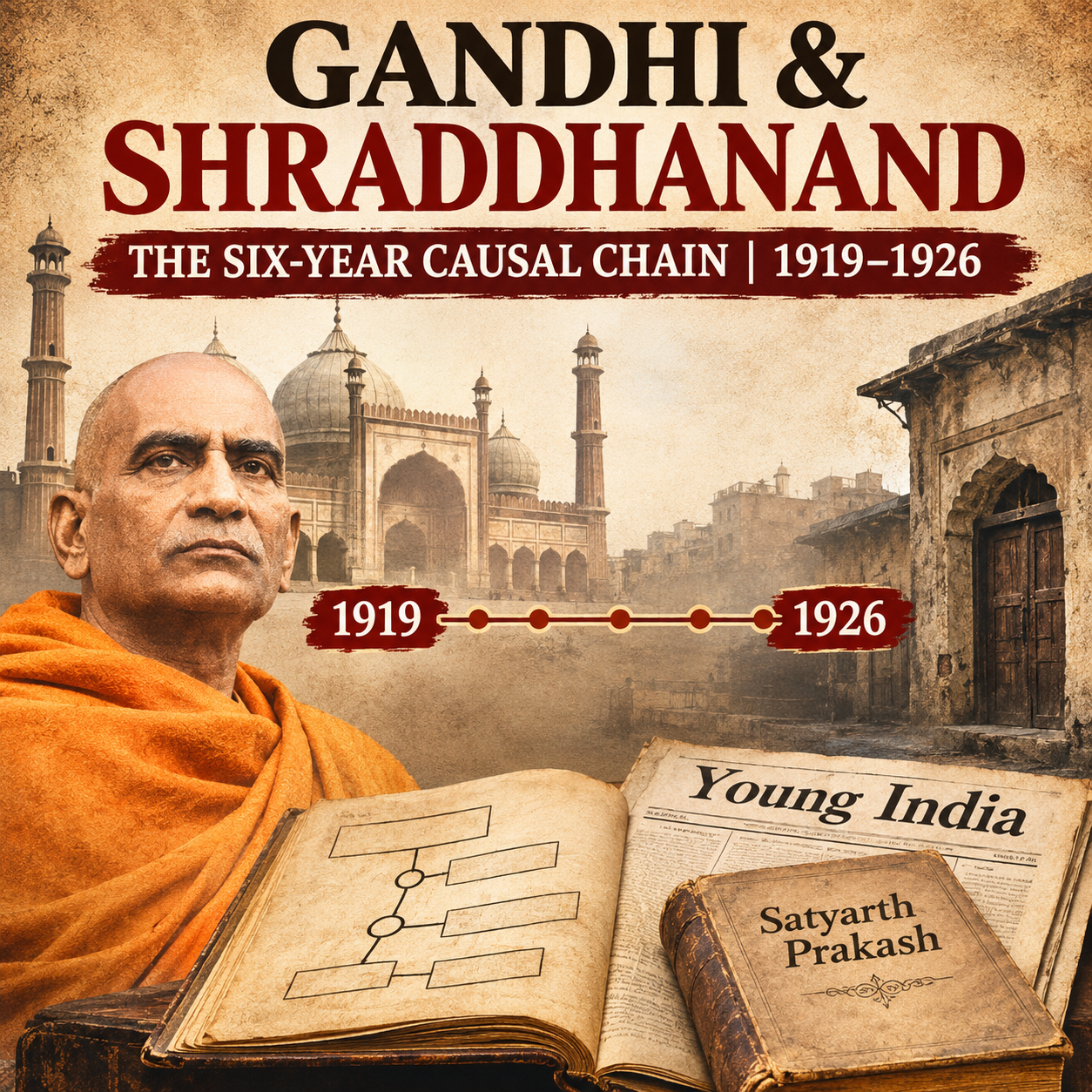
Gandhi’s Role in Shraddhanand’s Murder: The Six-Year Causal Chain (222)
भारत / GB
Part 222: Mahatma Gandhi’s Peace Efforts (Replication Wave + Financial Audit) | Series Index
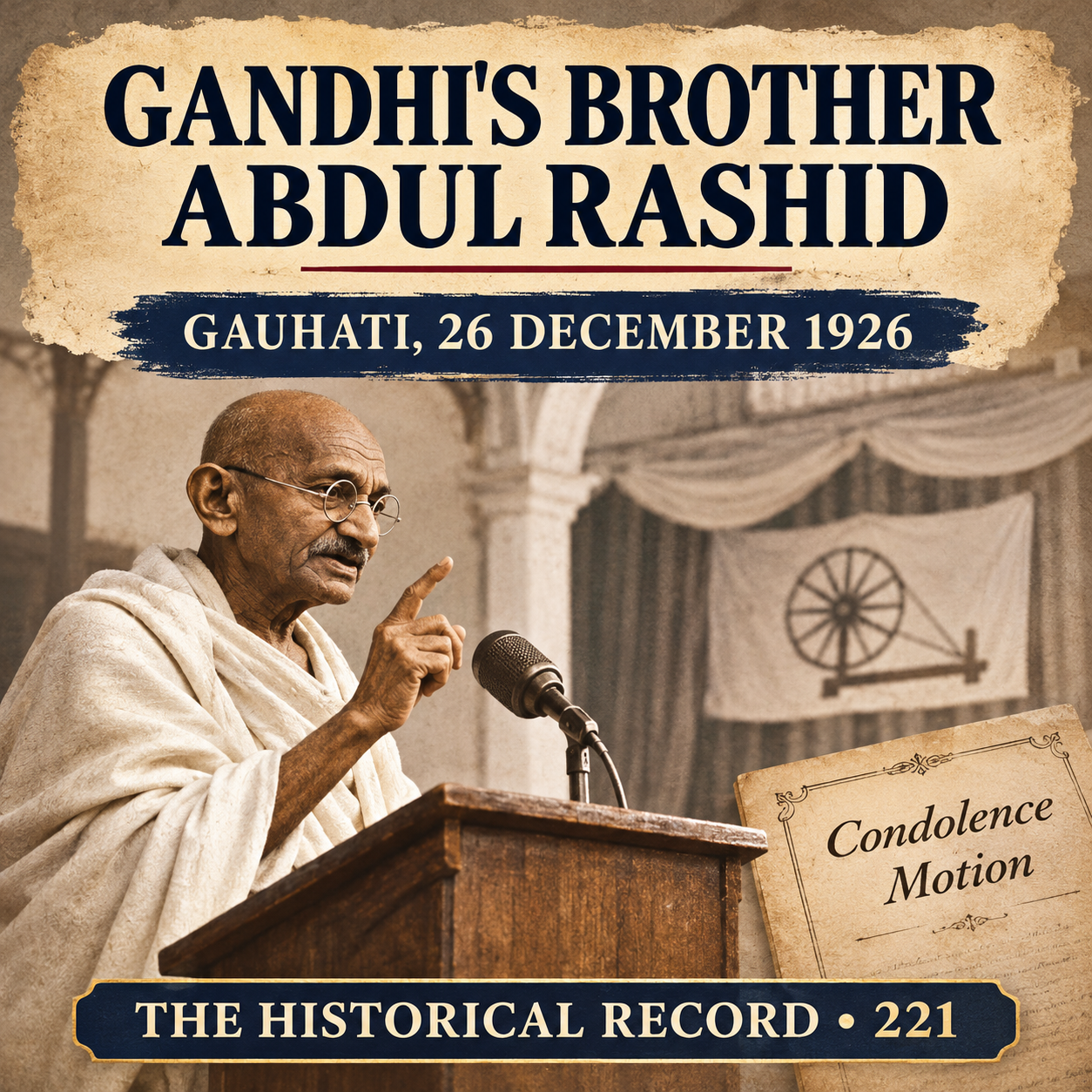
In Blog 220, we recorded the sickbed assassination of Swami Shraddhanand on 23 December 1926; in Blog 221, we documented Gandhi’s Gauhati speech three days later calling the assassin “Brother Abdul Rashid” and declaring him not guilty. Those two instalments established the bullet and the post-murder absolution. This instalment compresses the eleven-link causal chain of Gandhi’s role in Shraddhanand’s murder — tracing how a Vedic sannyasi loved by Hindus and Muslims alike at the Jama Masjid in April 1919 was isolated, stripped of protection, and left to a sickbed assassin by December 1926.
Thank you for reading this post, don't forget to subscribe!THE ELEVEN-LINK CAUSAL CHAIN: FROM JAMA MASJID (1919) TO NAYA BAZAR (1926)
The Action Taken: Between 1919 and 1926, Gandhi’s direct and indirect choices dismantled a working Hindu–Muslim civic bond and constructed the exact ideological and political trap that claimed Swami Shraddhanand’s life. After witnessing Khilafat clerics invoke Quran 9:5 at Nagpur in December 1920, Gandhi ignored warnings from Shraddhanand, dozens of Congress leaders, constitutional Muslims, and classical Hanafi jurists; pushed a false Dar-ul-Harb agitation across the North-West Frontier; practised wilful blindness toward both the Hijrat ruin of tens of thousands of Muslims and the Malabar massacre of Hindus; victim-shamed Hindu sufferers while passing the buck to the British; attacked Satyarth Prakash in Young India (May 1924) while legitimising Tabligh and Tanzim campaigns; and left Shraddhanand exposed to open death threats.
Who Paid the Price: Swami Shraddhanand (1856–1926) — the Arya Samaj sannyasi loved by Hindus and Muslims alike who had been invited by Delhi’s Muslim congregation to preach from the Jama Masjid pulpit on 4 April 1919 — was transformed from a revered national symbol into an isolated target shot dead on his sickbed on 23 December 1926.
Why This Matters: Abdul Rashid fired the gun, but the target was painted over seven years of documented editorial strikes, wilful blindness, and asymmetric impunity in Young India and the Collected Works of Mahatma Gandhi.
1. What Changed Between April 1919 and 1923? The Rupture of Civic Trust
In April 1919, Swami Shraddhanand stood at the pinnacle of authentic Hindu–Muslim affection. Yet within four years, the very society that had welcomed him into its central mosque was locked in bitter Shuddhi–Tabligh conflict. The documented chain of what changed between 1919 and 1923 runs through six deliberate turning points:
- The 4 April 1919 Jama Masjid Baseline: Loved by Hindus and Muslims alike, Shraddhanand — an orthodox Vedic sannyasi running Gurukul Kangri for seventeen years — was voluntarily invited by Delhi’s Muslim congregation to address Friday prayers from the Jama Masjid pulpit, proving organic cohesion existed before Gandhi’s Khilafat intervention.
- The December 1920 Nagpur Quran 9:5 Alarm: On the shared Nagpur Congress platform attended by both Gandhi and Shraddhanand, Khilafat clerics openly invoked Quranic injunctions against polytheists (including Surah At-Tawbah 9:5) while Gandhi packaged the alliance in English as peaceful Non-Cooperation (Blog 218).
- Gandhi Ignored Shraddhanand’s Direct Warnings: Having witnessed that clerical radicalisation firsthand at Nagpur, Shraddhanand repeatedly warned Gandhi in person and in writing where theological mobilisation was leading; Gandhi brushed aside every warning.
- Gandhi Ignored Dozens of Congress and Muslim Leaders: Simultaneously, Gandhi sidelined warnings from constitutional Congress leaders (Jinnah, Annie Besant, C.R. Das, Lala Lajpat Rai) and classical Islamic jurists (Ahmed Raza Khan of Bareilly) who proved that British India was not Dar-ul-Harb (Blog 216).
- Understanding Islamic Texts Yet Ignoring the Consequences: Despite studying Islamic scripture and classical jurisprudence cited by both Khilafat firebrands and Barelvi dissenters, Gandhi chose to validate the wrong definition of Dar-ul-Harb and Tark-e-Mawalat.
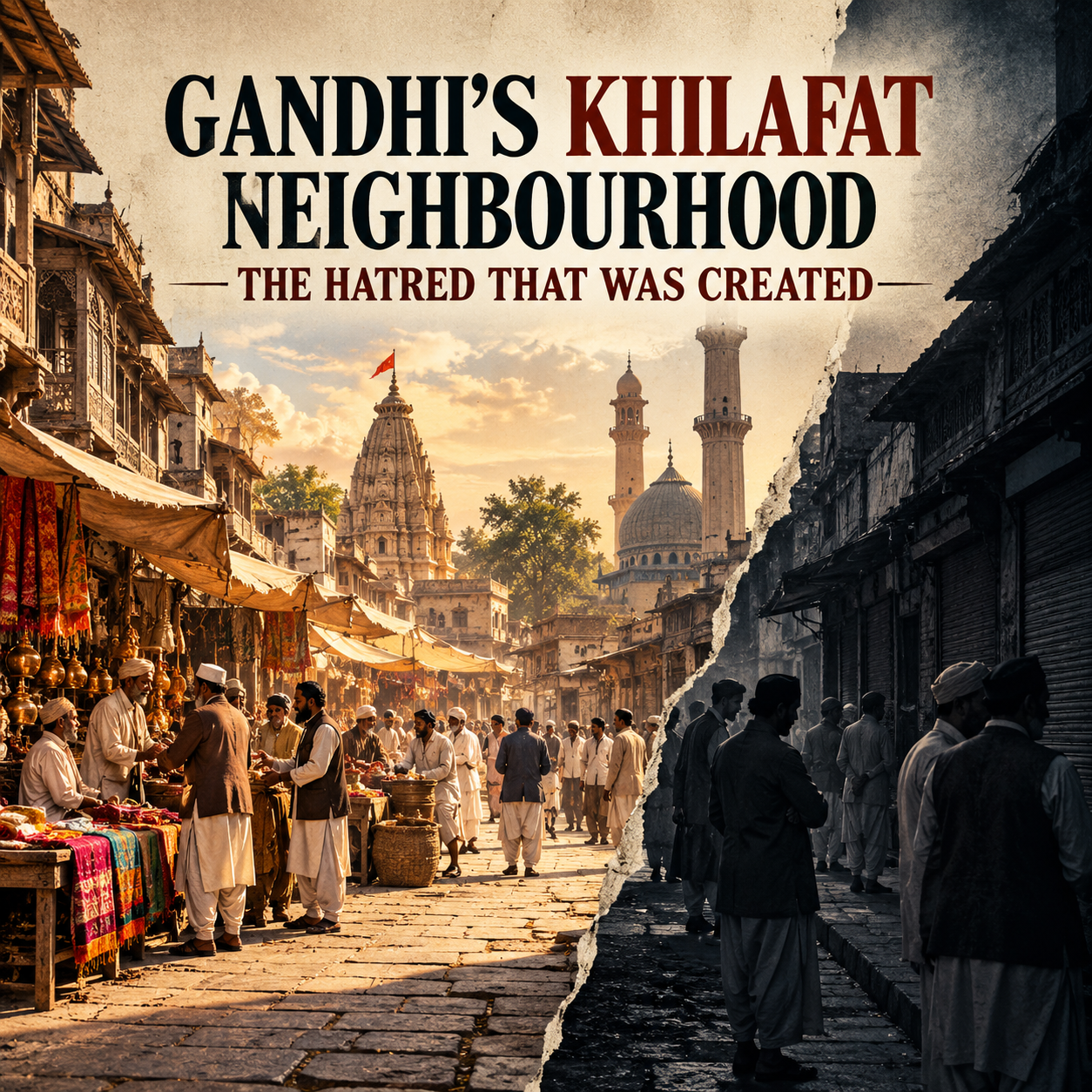
- Severing Everyday Commerce in Chandni Chowk and Agra–Mathura: As documented in Blog 183, Khilafat preachers enforced Tark-e-Mawalat across Delhi’s Chandni Chowk and the Agra–Mathura belt — breaking multi-generational Hindu–Muslim credit networks, shared bazaars, and neighbourhood trust and replacing daily commerce with sectarian boycotts.
This deliberate substitution of clerical separatism for the organic civic trust of April 1919 forms the structural foundation of Gandhi’s role in Shraddhanand’s murder.
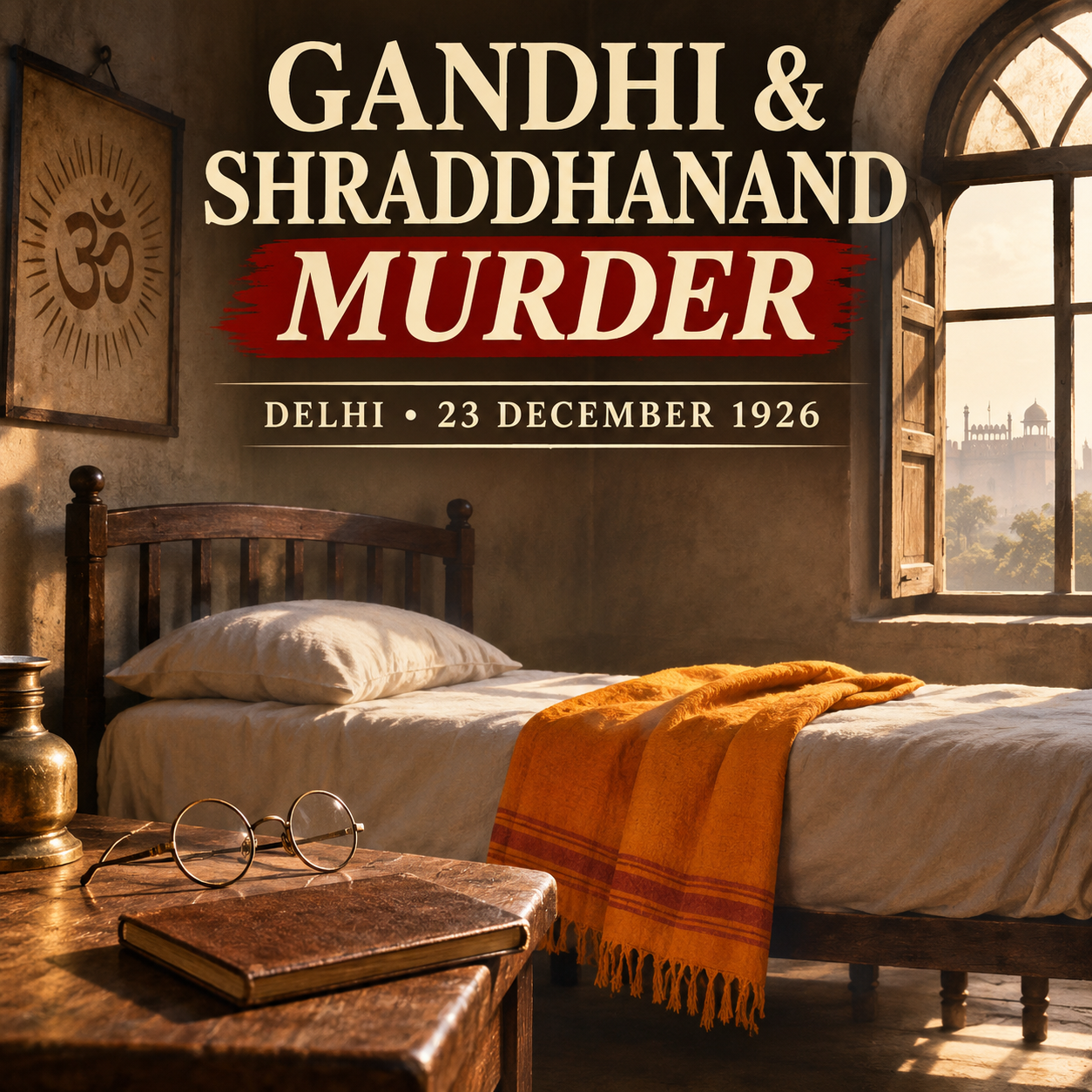
2. Indirect Causes: Wilful Blindness, Hijrat Ruin, and Malabar Victim-Shaming (1920–1923)
Once Gandhi unleashed the Khilafat agitation across north India and the North-West Frontier, he practised wilful blindness toward the human wreckage it inflicted on both Muslims and Hindus — leaving Shraddhanand alone to rescue the victims:
- Wilfully Turned a Blind Eye to the Hijrat Suffering of Tens of Thousands of Muslims: After touring the North-West Frontier and Sindh alongside the Ali Brothers to spread the false Dar-ul-Harb doctrine (Blog 215), Gandhi wilfully looked away when tens of thousands of impoverished Muslims sold their lands and perished or returned destitute from the Afghan border in August 1920.
- Wilful Blindness During the Malabar Massacre and Forced Conversions (1921): When the same Khilafat mobilisation detonated in Malabar in August 1921 — resulting in the slaughter and sword-point forced conversion of thousands of Hindus — Gandhi refused to visit the victims or halt the alliance.
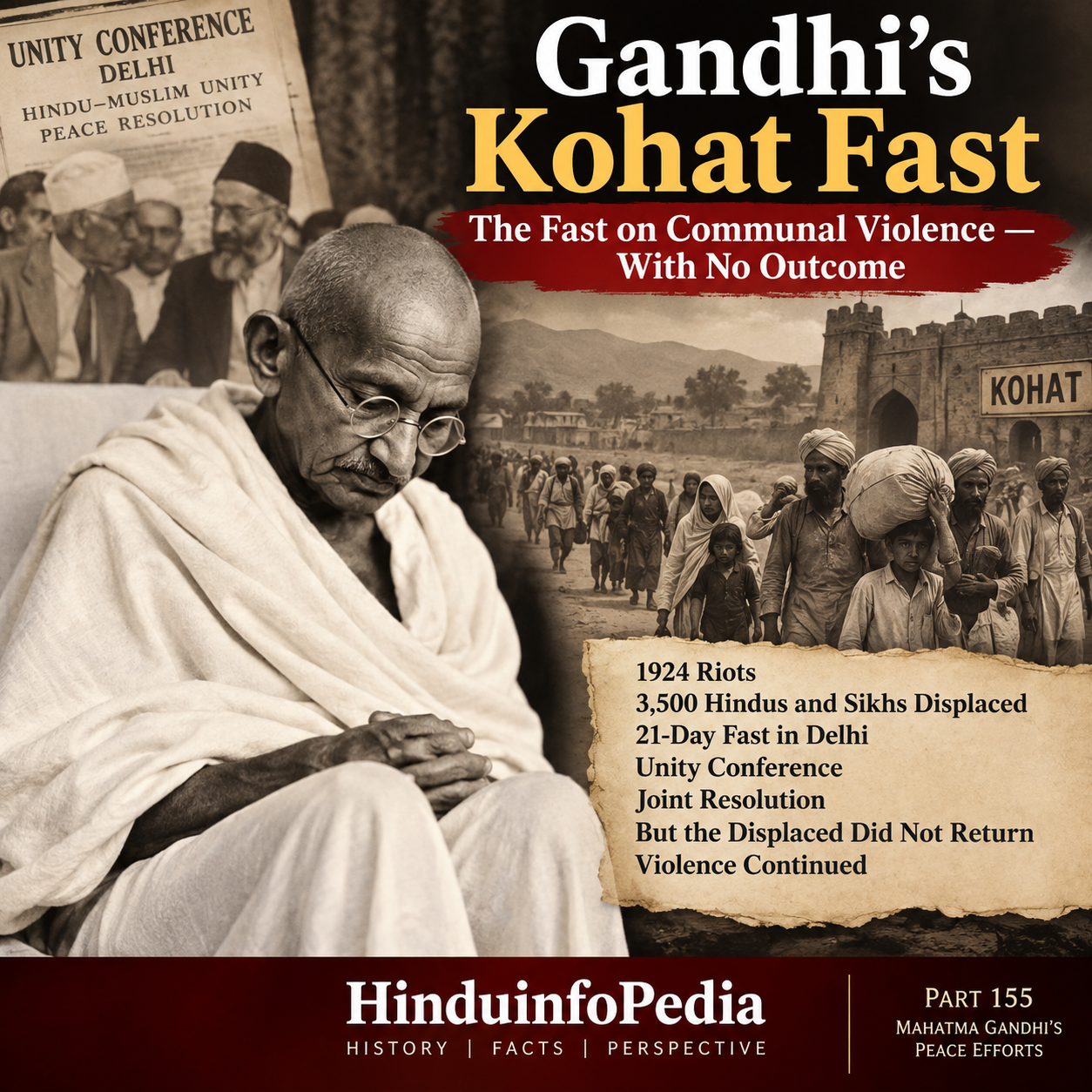
- Victim-Shaming Hindus and Passing the Buck to the British: Rather than holding Khilafat inciters accountable for Malabar, Multan (1922), and Kohat (1924), Gandhi blamed British divide-and-rule and shamed Hindu victims for “cowardice” while praising the Mappilas’ “bravery” in Young India.
- Congress Refusal to Rehabilitate Forced Converts: While Tilak Swaraj Fund money flowed to Khilafat bodies, Gandhi and the Congress Working Committee refused to organize or fund the reclamation of forcibly converted Malabar Hindus — forcing Shraddhanand to resign from Congress sub-committees in 1922 and expand the 1923 Shuddhi campaign alone.
By forcing Shraddhanand into the Shuddhi rescue mission while excusing the perpetrators of forced conversions, these indirect actions placed Shraddhanand squarely in the path of the Tabligh counter-mobilisation — completing the second layer of Gandhi’s role in Shraddhanand’s murder.
3. Direct Strike 1: Gandhi’s May 1924 Young India Attack on Satyarth Prakash and Arya Samaj
In May 1924, Gandhi moved from indirect neglect to a direct editorial strike against Shraddhanand’s movement in Young India (29 May 1924, “Hindu–Muslim Tension: Its Cause and Cure”, CWMG Vol. 24) — establishing an asymmetric standard between Hindu self-defence and pan-Islamic proselytisation:
- Publicly Attacking Rishi Dayanand’s Satyarth Prakash: Gandhi singled out the foundational text of the Arya Samaj as “disappointing” and branded Arya Samaj reformers narrow polemicists responsible for exciting communal friction.
- Delegitimising Shuddhi and Sangathan While Legitimising Tabligh and Tanzim: In that same period, Gandhi portrayed Hindu Shuddhi reconversion and Sangathan community organisation as irritants to peace, while simultaneously defending Islamic proselytisation in principle as a historical religious mandate, praising Khwaja Hasan Nizami (whose Urdu tract Da’i-i-Islam actively targeted Shraddhanand), and treating Dr. Saifuddin Kitchlew’s militant Tanzim consolidation drive as a legitimate internal Muslim movement rather than a sectarian threat.
- Stripping Arya Samaj Workers of National Legitimacy: Shraddhanand wrote to Gandhi in anguish warning that a public indictment of the Arya Samaj from the Mahatma’s pen legitimised street hostility against Shuddhi reformers; Gandhi refused to retract a single word.
- Institutionalising a Permanent Double Standard on Scripture and Self-Defence: Far from an isolated lapse, the May 1924 editorial codified the broader asymmetric rule of Gandhi’s public life — subjecting Hindu texts, institutions, and civic self-organisation to relentless moral scrutiny while insulating Islamic texts, clerical fatwas, and proselytising networks from critical accountability.
That direct editorial blow is the sharpest documented exhibit of Gandhi’s role in Shraddhanand’s murder: it publicly painted Shraddhanand’s reform movement as the aggressor while legitimising the proselytising mandate of his ideological adversaries — in effect licensing those adversaries to take whatever action they deemed fit with the assurance that Gandhi would not object to them.
4. Direct Strike 2: Unchecked Tabligh–Tanzim Radicalisation and Ignored Death Threats (1924–1926)
After Gandhi’s May 1924 editorial, anti-Shuddhi literature named Swami Shraddhanand specifically. Hostile Urdu tracts and mosque sermons treated him as an enemy of Islam, and death threats reached his Naya Bazar residence in Delhi — yet Congress leadership left those networks completely unchecked:
- Named Targeting Following the 1924 Censure: Following his 1924 treatise Hindu Sangathan: Saviour of the Dying Race (Blog 223) and his leadership of the Delhi Shuddhi Sabha, hostile Urdu tracts and sermons singled out Shraddhanand by name as an enemy of Islam, and repeated death threats reached Naya Bazar.
- Total Silence on Threats (1924–1926): Neither Gandhi nor the Congress Working Committee issued a public statement holding the Tabligh or Tanzim leadership accountable for those threats or for Shraddhanand’s safety — even as Gandhi continued censuring Hindu Shuddhi and Sangathan in Young India.
- Post-Facto Absolution at Gauhati (26 December 1926): Three days after Abdul Rashid shot Shraddhanand dead on his sickbed, Gandhi’s Gauhati formulation applied the exact same asymmetric standard in the open: the assassin was called “Brother Abdul Rashid” and declared “not guilty,” while those who had “excited feelings of hatred” — a category that included the victim’s own writings and organisational work — were assigned responsibility (Blog 221).
That three-step sequence — public censure in 1924, silence on threats in 1924–1926, and post-facto absolution in December 1926 — forms the core of the direct-strike indictment and seals the evidentiary record of Gandhi’s role in Shraddhanand’s murder.
Modern Parallel
The machinery behind Gandhi’s role in Shraddhanand’s murder — a dominant authority publicly stigmatising a targeted speaker’s words as “provocative” while ignoring the violent incitement networks issuing death threats, thereby stripping the victim of institutional protection — recurred with stark clarity in July 2022 when a Supreme Court bench blamed Nupur Sharma’s “loose tongue” for setting the entire country on fire and demanded that she apologise on national television. Even as armed street mobs chanted beheading slogans across Indian cities and assassins murdered Kanhaiya Lal in Udaipur and Umesh Kolhe in Amravati, the highest institutional authority turned its moral censure onto the isolated target rather than the inciters — replicating Gandhi’s May 1924 Young India censure of Swami Dayanand’s Satyarth Prakash while Tabligh agitators hunted Swami Shraddhanand.
Auditing the primary record of 1920–1926 leaves no room for the comforting myth that Abdul Rashid acted in a vacuum. Through seven years of wilful blindness, editorial strikes against Satyarth Prakash while legitimising Tabligh proselytisation, and institutional silence in the face of death threats, the archive establishes Gandhi’s role in Shraddhanand’s murder long before the first shot rang out in Naya Bazar on 23 December 1926.
Invitation To Defence
Swami Shraddhanand’s 4 April 1919 Jama Masjid address, the December 1920 Nagpur Congress proceedings, Gandhi’s 29 May 1924 Young India article (CWMG Vol. 24), his 1922–1926 correspondence with Shraddhanand, and his 26 December 1926 Gauhati speech (CWMG Vol. 32) are all established public records. The defence is invited to produce any document between 1920 and December 1926 in which Gandhi heeded Shraddhanand’s warnings, funded the reclamation of forcibly converted Malabar Hindus, retracted his public censure of Satyarth Prakash, or warned Tabligh and Tanzim leaders to halt the death threats against Swami Shraddhanand.
In April 1919, Swami Shraddhanand was loved by Hindus and Muslims alike and invited to preach from Delhi’s Jama Masjid pulpit. Seven years later, after Gandhi ignored warnings from Shraddhanand, Congress leaders, and Muslim jurists, practised wilful blindness toward Hijrat and Malabar suffering, victim-shamed Hindus, attacked Satyarth Prakash in Young India while legitimising Tabligh and Tanzim, and ignored open death threats, Shraddhanand lay dead in his sickroom — proving Gandhi’s role in Shraddhanand’s murder across every link of the chain.
Feature Image: Click here to view the image.
Videos
Glossary of Terms
1. Gandhi’s Role in Shraddhanand’s Murder: The central analytical phrase of this blog, examining Gandhi’s political decisions, public statements, editorial positions and institutional responses between 1919 and 1926 that, according to the blog’s argument, contributed to the isolation and vulnerability of Swami Shraddhanand before his assassination.
2. Six-Year Causal Chain: A term used in this blog to describe the connected sequence of political, ideological and social developments traced from Swami Shraddhanand’s appearance at Jama Masjid in April 1919 to his assassination in December 1926.
3. Jama Masjid: The historic mosque in Delhi from whose pulpit Swami Shraddhanand was invited to address Friday prayers on 4 April 1919, an event presented as evidence of Hindu-Muslim civic cooperation.
4. Khilafat Movement: A political and religious mobilisation launched by Indian Muslims following the First World War to defend the Ottoman Caliphate. Gandhi supported the movement and linked it with the Non-Cooperation Movement.
5. Dar-ul-Harb: An Islamic jurisprudential term meaning a territory classified as a domain of war. Its interpretation became controversial during the Khilafat agitation, particularly concerning whether British India qualified for this classification.
6. Hijrat: Migration undertaken for religious reasons. In the 1920 episode discussed in the blog, thousands of impoverished Muslims migrated towards Afghanistan following appeals based on the belief that British India was Dar-ul-Harb.
7. Tark-e-Mawalat: A term referring to the withdrawal of social, commercial and other forms of association. The blog discusses its use in religiously motivated boycotts that disrupted established Hindu-Muslim commercial relationships.
8. Shuddhi: An Arya Samaj purification and reconversion movement associated with bringing individuals who had converted away from Hinduism back into the Hindu fold. Swami Shraddhanand became a prominent organiser of this movement.
9. Tabligh: Islamic religious propagation and preaching intended to communicate and spread Islamic teachings. The blog examines its relationship with the Shuddhi movement during the communal tensions of the 1920s.
10. Tanzim: An organisational movement involving Muslim community consolidation and mobilisation. The blog discusses its role in the political and religious tensions surrounding Shuddhi and Sangathan.
11. Sangathan: Meaning organisation or consolidation, this term refers to efforts towards Hindu community organisation, unity and collective preparedness during the communal tensions of the 1920s.
12. Satyarth Prakash: The foundational religious and philosophical work of Swami Dayanand Saraswati, founder of Arya Samaj. Gandhi’s criticism of this publication in Young India in May 1924 is an important subject of the blog.
13. Young India: Gandhi’s English-language journal in which he published political and social commentary. The blog examines his article of 29 May 1924, titled “Hindu-Muslim Tension: Its Cause and Cure.”
14. CWMG (Collected Works of Mahatma Gandhi): The published collection of Gandhi’s writings, speeches, letters and other documents. The blog refers particularly to Volumes 24 and 32 as documentary sources.
15. Post-Facto Absolution: A phrase used in the blog to describe Gandhi’s 26 December 1926 Gauhati speech, delivered three days after Shraddhanand’s assassination, in which Gandhi called the assassin “Brother Abdul Rashid” and declared him not guilty.
#Gandhi #Shraddhanand #IndianHistory #GandhiHistory #Khilafat #AryaSamaj #HinduHistory #Congress #YoungIndia #Shuddhi #Tabligh #HinduMuslimRelations #HinduinfoPedia
Scan Through The Entire Series at
Refer to Various Arks Referred to in the Blog
Gandhi’s Role in Shraddhanand’s Murder: The Six-Year Causal Chain (222)