Gandhi’s Uninvited Precedent: The Man Who Never Needed an Invitation — Until Malabar (63)
भारत / GB
Part 63: Mahatma Gandhi’s Peace Efforts | Series Index
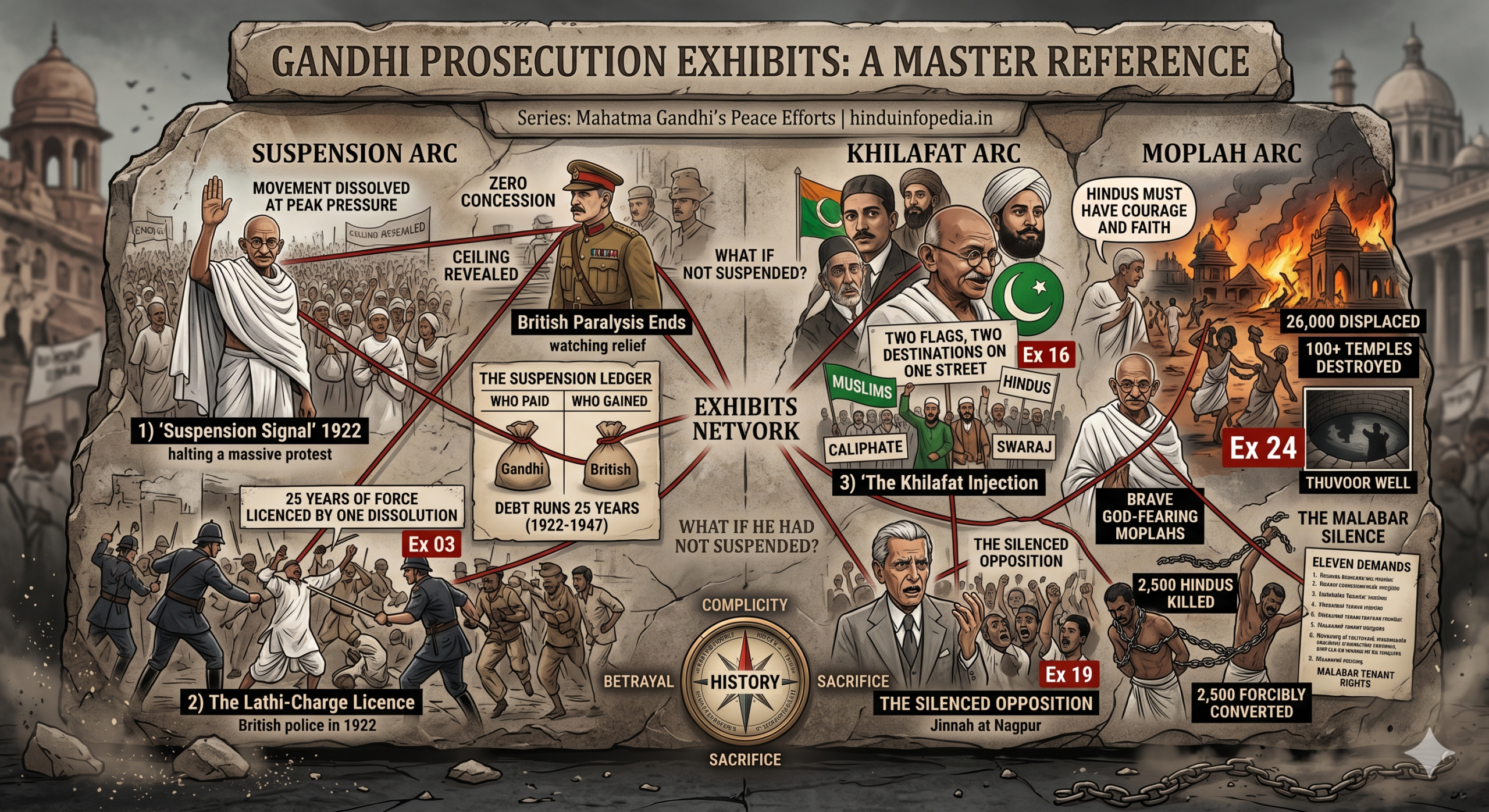
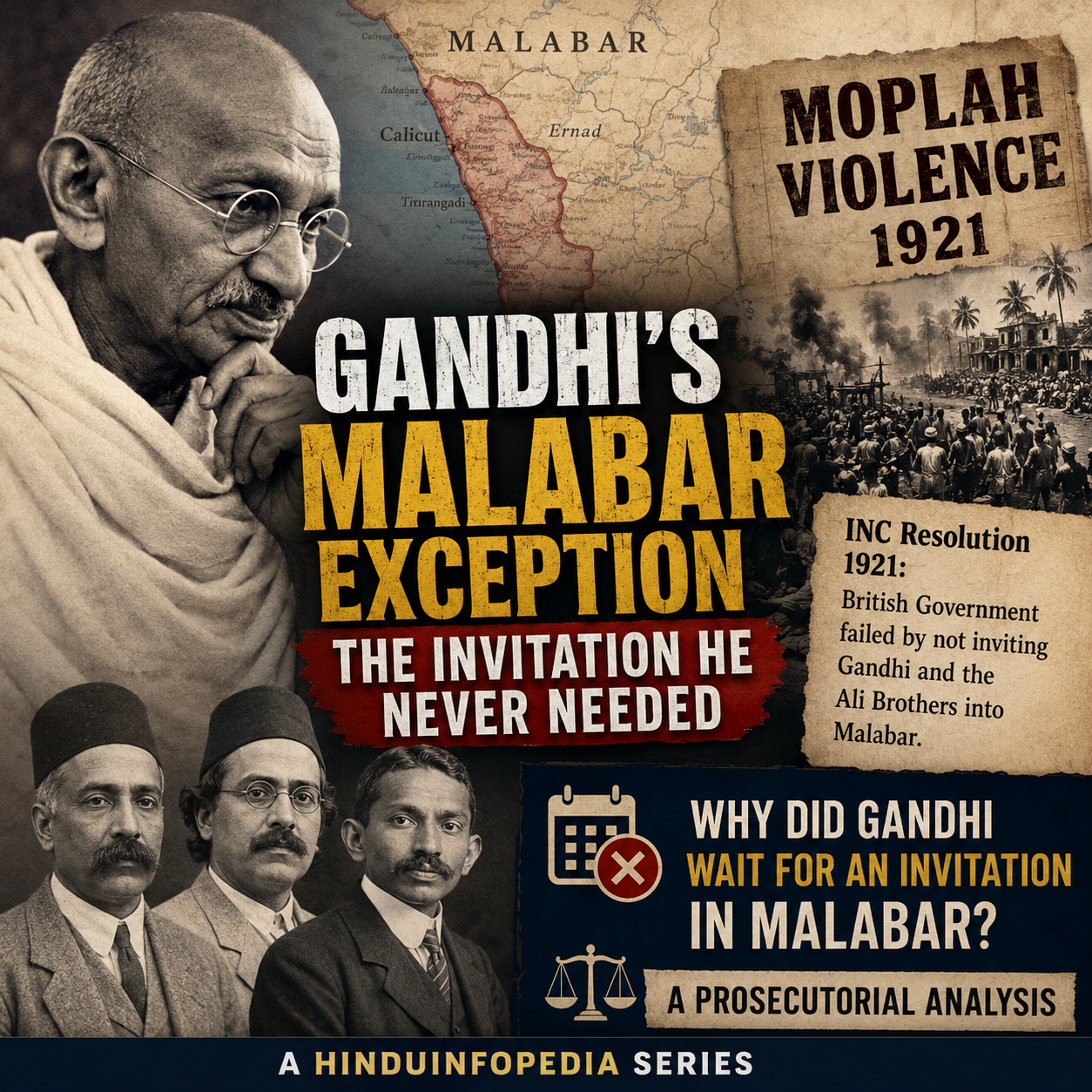
Blog 62 documented the cluster of Gandhi’s statements around the Moplah massacre — the “but” that negated the condemnation, the admiration prescribed for the killers, the pre-determined verdict of Hindu blame. This post examines Statement Five from Blog 59 in full — Gandhi’s documented claim that the British Government bore responsibility for the massacre because they had failed to invite him and the Ali Brothers to enter Malabar and restore calm.
Thank you for reading this post, don't forget to subscribe!The Action Taken: While Gandhi had entered sensitive conflict zones without government permission throughout his career, he publicly cited the absence of a British invitation as his justification for not visiting Malabar during the massacres.
Who Paid the Price: The terrorized populations of Ernad and Walluvanad, who were denied immediate intervention, physical verification, or relief organization from the national leadership.
The Alternative Bypassed: Entering Malabar directly under civil disobedience defiance to personally confront the violence and inspect the refugee camps.
Why This Matters: Exposes an unforced operational evasion: invoking colonial procedural protocol to avoid confronting the direct human consequences of the Khilafat alliance.
The Statement — Placed Precisely
Gandhi’s Uninvited Precedent begins with the documented INC resolution on the Moplah massacre — passed at the Ahmedabad Congress session in December 1921:
“The Congress expresses its firm conviction that the Moplah disturbance was not due to the Non-Co-operation or the Khilafat movement… and that the outbreak would not have occurred had the message of non-violence been allowed to reach them. Nevertheless, this Congress is of the opinion that the disturbance in Malabar could have been prevented by the Government of Madras accepting the proffered assistance of Maulana Yakub Hassan…”
The argument documented in Gandhi’s Calicut speech and the Congress resolution is precise: the massacre could have been prevented. The British government failed to accept the proffered assistance. Therefore the responsibility for the massacre lies with the British government for refusing the invitation Gandhi and the Khilafat leadership were prepared to offer.
The prosecution places this argument alongside one documented question: when, in Gandhi’s four-decade career, had he ever required a British invitation before acting?
The Uninvited Career — Documented
Gandhi’s Uninvited Precedent maps his documented career against the invitation requirement he applied exclusively to Malabar.
South Africa 1894: Gandhi was not invited to stay and fight racial discrimination. He had booked a return ticket. He stayed. He founded the Natal Indian Congress. No British invitation.
India 1915: Gandhi returned from South Africa to enter Indian politics. The British government did not invite his return or his political activity — and neither Bal Gangadhar Tilak nor Gopal Krishna Gokhale, who mentored Gandhi’s entry into Indian politics, constituted a British invitation.
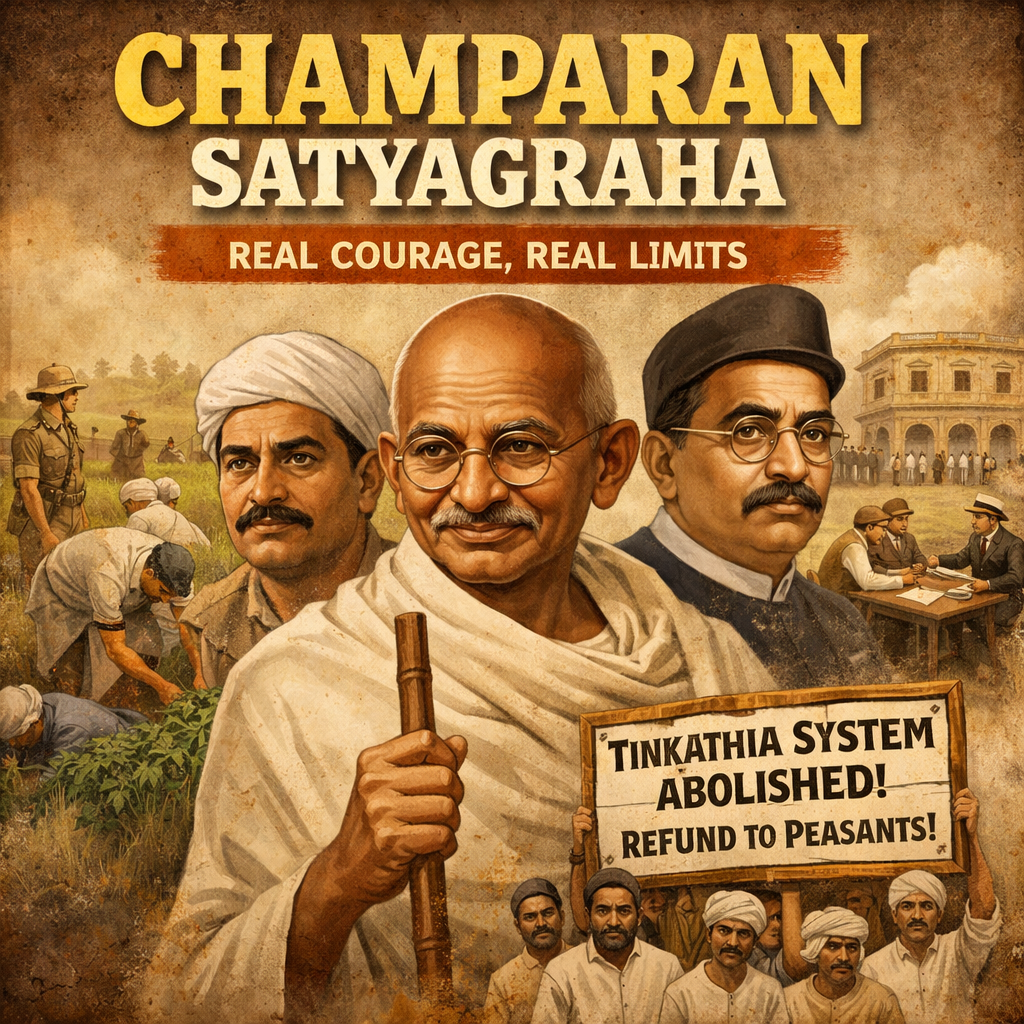
Champaran 1917: The British administration in Champaran did not invite Gandhi to investigate the indigo planters’ treatment of peasants. He arrived uninvited. He investigated uninvited. He negotiated with the British administration without their invitation. He secured a settlement. Blog 5 documented this precisely.
Rowlatt Satyagraha 1919: Gandhi launched the satyagraha against the Rowlatt Act without British invitation. The British did not invite him to organise mass resistance to their legislation.
Non-Cooperation Movement 1920: Gandhi launched Non-Cooperation without British invitation — indeed, directly against British wishes. The movement that brought the British administration to documented alarm was launched without any invitation from the administration it alarmed.
Salt March 1930: Gandhi walked 241 miles to Dandi without British invitation. The British did not invite him to break the salt laws. He went.
Civil Disobedience 1932: Launched without British invitation.
Quit India 1942: Launched without British invitation.
The documented record across four decades: Gandhi required no British invitation for any act of his career. He went where he chose, launched what he chose, negotiated with whom he chose — without waiting for British permission or invitation.
What the Malabar Statement Reveals
Gandhi’s Uninvited Precedent places the Malabar statement against this documented career and asks the reader to examine the gap.
The INC resolution stated that the massacre could have been prevented had the British accepted the proffered assistance of the Khilafat leadership. Gandhi’s position — documented — was that his presence and the Ali Brothers’ presence could have restored calm.
He did not go.
The Champaran precedent was available — Gandhi had demonstrated that he could enter a conflict zone, address its grievance, and produce a settlement without British invitation. He had done it in 1917. The method was documented and proven. It was available in 1921.
Gandhi did not apply it. He waited for an invitation that did not come — and when it did not come, placed the responsibility for the massacre on the British government’s failure to issue it.
The Accidental Confession
Gandhi’s Uninvited Precedent identifies what the statement reveals beyond what Gandhi intended it to reveal.
By stating that his presence and the Ali Brothers’ presence could have prevented the massacre — Gandhi confirmed the causal chain the series has documented across the Moplah arc. The Ali Brothers held authority over Moplah Muslim conduct. Gandhi held authority alongside them. This authority came from the Khilafat alliance. Gandhi’s own statement confirms that the alliance he had built held the operational key to the violence the alliance had produced.
The statement was intended to place responsibility on the British government. What it placed on the record was Gandhi’s own knowledge of the causal chain — he knew the instrument he had deployed had produced the massacre, he knew the Ali Brothers and he held the key to stopping it, and he chose not to use that key without a British invitation.
What Entering Malabar Would Have Cost
Gandhi’s Uninvited Precedent asks one further question — why did the man who never needed an invitation choose to require one in Malabar?
Entering Malabar without invitation — as Gandhi had entered Champaran, as he had entered every previous conflict — would have required him to confront the Khilafat leadership whose alliance he was maintaining. It would have required him to demand that the Ali Brothers condemn the massacre. It would have required him to withdraw the independence movement’s moral authority from the Moplah uprising. It would have required him to act in ways that would have cost him the Khilafat alliance — the Muslim numerical support his movements required.
The invitation requirement appeared exactly once in Gandhi’s documented career. It appeared when acting without invitation would have cost him the alliance that the series has documented was his primary political instrument.
The Prosecution’s Position
Gandhi’s Uninvited Precedent does not claim Gandhi wanted the massacre to happen. It places his documented career alongside his documented Malabar statement and asks the reader to examine what the gap between them means.
- Did Gandhi demonstrate across four decades that British invitation was not required for him to enter a conflict zone and address its grievance?
- Did he claim, in the case of Malabar, that British failure to invite him bore responsibility for the massacre?
- Was the method he had demonstrated at Champaran available for Malabar in 1921?
- Did the one situation in his career that required a British invitation happen to be the situation where acting without invitation would have cost him his primary political alliance?
The series does not answer. The documented career is the evidence. The Malabar statement is the evidence. The reader will examine both and identify what the gap between them constitutes.
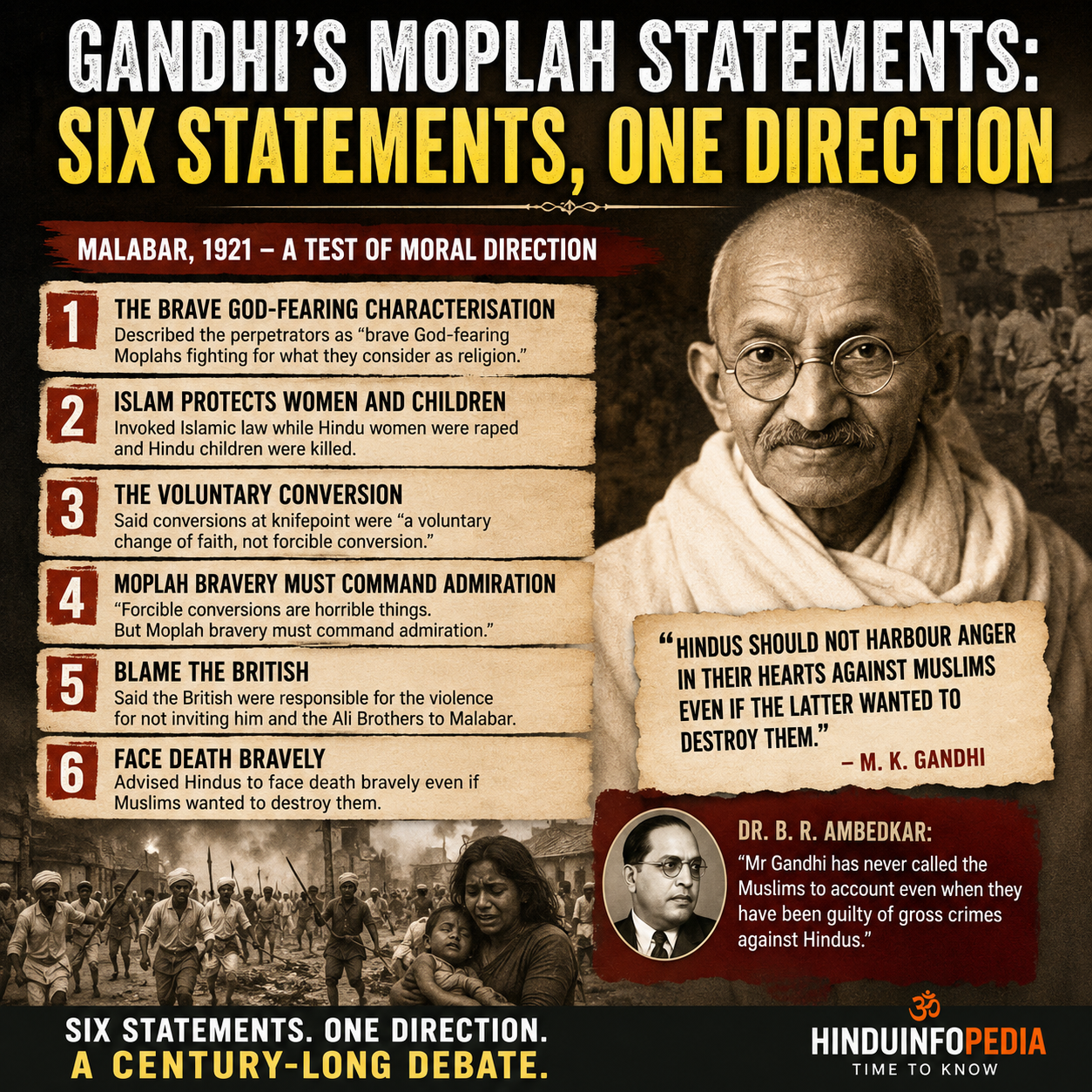
Gandhi went to Champaran uninvited. He launched Non-Cooperation uninvited. He marched to Dandi uninvited. He required no British invitation for any act of his four-decade career. The one situation that required an invitation was Malabar — where 2,500 Hindus were being killed by the downstream of his own alliance. He did not go. He blamed the British for not inviting him. The prosecution places the documented career and the documented statement before the reader. The reader will identify what the gap between them means.
Feature Image: Click here to view the image.
Videos
Glossary of Terms
- Moplah Massacre: The 1921 Malabar violence in British India involving sections of the Moplah Muslim community, marked by killings, forced conversions, and attacks on Hindus during the Khilafat and Non-Cooperation period.
- Malabar: A region in present-day Kerala that became the center of the 1921 Moplah uprising and subsequent communal violence.
- Khilafat Movement: A pan-Islamic political movement launched after World War I to preserve the Ottoman Caliphate, supported in India by several Muslim leaders and politically aligned with Gandhi during the Non-Cooperation Movement.
- Ali Brothers: Maulana Mohammad Ali and Maulana Shaukat Ali, influential Khilafat leaders who worked closely with Gandhi during the early 1920s mass mobilization campaigns.
- Non-Cooperation Movement: Gandhi-led anti-colonial movement launched in 1920 encouraging Indians to boycott British institutions, goods, and administration.
- Champaran Method: A key phrase in this series referring to Gandhi’s practice of entering conflict zones without official invitation, investigating grievances, negotiating with authorities, and mobilizing public pressure.
- Gandhi’s Uninvited Precedent: A series-coined phrase describing Gandhi’s long-established pattern of intervening politically without seeking British permission, contrasted against his stance during the Malabar violence.
- Ahmedabad Congress Session (1921): Indian National Congress session where resolutions concerning the Moplah disturbances and Khilafat-related positions were discussed and adopted.
- INC: Abbreviation for Indian National Congress, the principal political organization leading India’s anti-colonial movement during the British period.
- Calicut Speech: Gandhi’s documented speech connected to the Moplah violence debate, referenced in the series to analyze responsibility, intervention, and political positioning.
- Rowlatt Satyagraha: Gandhi-led nationwide protest movement launched in 1919 against the British Rowlatt Act, which expanded detention and emergency powers.
- Salt March: Gandhi’s 1930 civil disobedience campaign against British salt taxation, symbolized by the march to Dandi.
- Quit India Movement: Gandhi-led 1942 movement demanding immediate British withdrawal from India during World War II.
- Prosecution’s Position: A recurring series phrase indicating that the article presents documented evidence and contradictions in a prosecutorial analytical framework while leaving conclusions to the reader.
- Behavioral Contradiction Framework: A series-defined analytical approach comparing Gandhi’s documented conduct across different crises to identify departures, inconsistencies, or selective exceptions.
#Gandhi #Moplah #Khilafat #Malabar #Congress #History #India #Kerala #FreedomStruggle #Hindu #Colonialism #Caliphate #NonCooperation #HinduinfoPedia
Scan Through The Entire Series
Gandhi’s Peace Efforts: The Questions Before the Mahatma (0)