
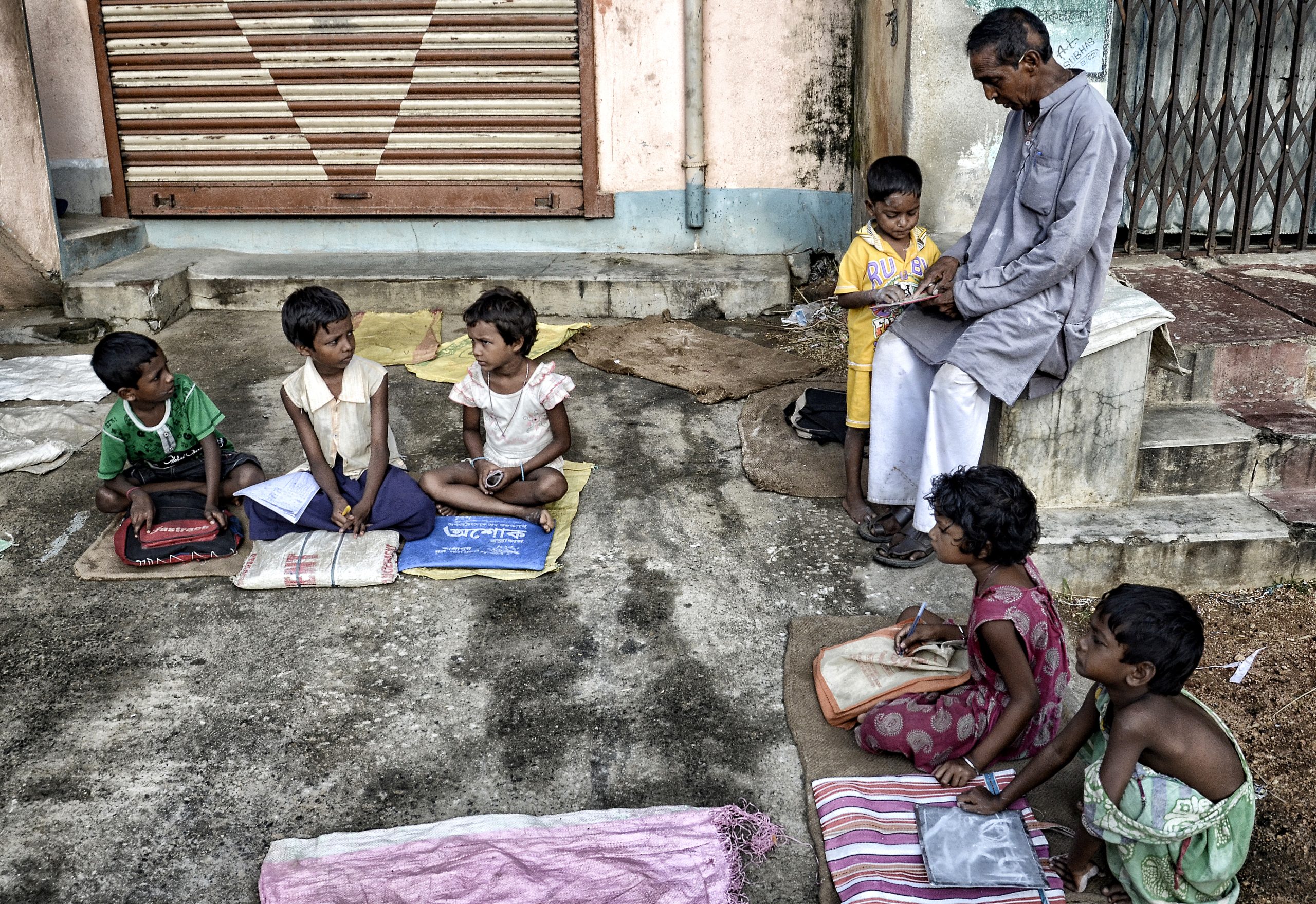
Impact of Nehru’s Policies: The Faultlines and The Impact
Table of Contents
ToggleA Critical View of Impact of Nehru’s Policies
When I visited New York recently, standing amid skyscrapers built on efficiency, accountability, and decentralised governance, one thought became sharper than ever: India is still living inside the architecture created by Jawaharlal Nehru. Part–1 of this series examined the strategic and geopolitical impact of Nehru’s policies—from defense miscalculations to foreign policy misadventures.
Thank you for reading this post, don't forget to subscribe!But the deeper, more enduring consequences lie within India itself—in the economy, the bureaucracy, the education system, the social structure, and the very institutions that shape public life.
Those internal consequences are the subject of this blog.
These five sections explore the impact of Nehru’s policies on the internal foundations of the Indian state—faultlines that still define our daily lived reality.
Economic Blueprint: Socialist Idealism That Delayed India’s Rise
My reflections in New York—where innovation flows freely, entrepreneurship is celebrated, and efficiency is institutional—stand in stark contrast to the economic ecosystem India inherited in 1947. Much of the impact of Nehru’s policies on India’s economic trajectory came from his uncritical embrace of Fabian Socialism, imported from British intellectual parlors and transplanted onto a largely agrarian, resource-constrained economy.
Nehru believed that a state-controlled economy would ensure equality and modernization. Instead, it produced the opposite:
Birth of the License–Permit–Quota Raj
The state became the primary gatekeeper of opportunity. Every factory, every machine, every import, every expansion required a web of permissions.
The impact of Nehru’s policies here was profound: it created a bureaucratic fortress around economic activity, turning innovation into a privilege rather than a natural process.
Public Sector Monopoly Mindset
Instead of enabling private Indian entrepreneurs, Nehru preferred the state to run everything—from steel to hotels. This mindset delayed India’s economic take-off by decades.
We lost crucial time while countries like Japan, Korea, and later China surged ahead.
Missed Global Opportunities
The world was industrializing at blistering speed, but India was busy filling files.
The impact of Nehru’s policies became visible in long-term stagnation, slow job creation, and an economy trapped under its own weight.
Nehru’s intentions may have been noble, but the structure he built ensured that India remained a low-growth economy for nearly 40 years.
These structural economic weaknesses were mirrored in rural India, where policy choices created even deeper long-term distortions.
Agrarian India Forgotten: Policies Detached from Ground Reality
One of the biggest surprises during my New York trip was how deeply America honours its farm economy—scientific research, subsidies, logistics, and technology. It immediately brought to mind the impact of Nehru’s policies on India’s agriculture, where the rural economy was treated almost as an afterthought.
Land Reforms: Good Intent, Weak Execution
The Zamindari abolition aimed to empower peasants, but in reality, it created fragmented land holdings and inconsistent state-level implementation.
The impact of Nehru’s policies was that India remained stuck with a land structure that was neither consolidated nor market-friendly.
Food Shortages and Import Dependency
India’s inability to produce enough food led to humiliating dependence on PL-480 wheat imports from the US.
This was the direct impact of Nehru’s policies, which heavily favoured heavy industry while neglecting irrigation, seeds, fertilizers, and farm research.
Delayed Green Revolution
It was only after Nehru that the urgency was recognised.
The very fact that we needed a “revolution” shows how deep the neglect ran.
The agrarian side of India—its majority population—paid the price for a leadership that believed steel plants were more important than farms.
A similar disconnect between vision and ground realities also shaped India’s early education policy.
Education: Macaulay 2.0, Structural Gaps, and Systemic Distortions
The landscape of education in India has been continuously evolving since the country gained independence in 1947. During the tenure of Jawaharlal Nehru as the first Prime Minister, there was a concerted effort to lay the foundations of an education system that would serve a newly sovereign, diverse, and populous nation. While Nehru’s government took significant steps towards creating a network of higher education institutions and promoting scientific research, there were several flaws and gaps in the education policies of the time, which have had lasting impacts on the system.
A deeper structural flaw lay in the civilizational disconnect of Nehru’s education vision, which continued the Macaulay-era mindset rather than rebuilding India’s indigenous knowledge systems. Instead of drawing from Bharatiya epistemology—mathematics, logic, astronomy, philosophy—the system reinforced a colonial worldview that distanced education from India’s civilizational roots.
Scientific Study and Outcome
As per J.P. Naik, former Member-Secretary, Indian Council of Social Science Research, New Delhi lecture at SAMBALPUR UNIVERSITY, SAMBALPUR, 1974
The rise in enrollment of various categories of students from 1950 and 1973 is as under
Elementary education (6-14 Years): 22.3 Mn to 73.8 Mn, 3.31 times with annual compounding growth of 5.34%
Secondary Education: 1.21 Mn to 8.5 Mn, 8.85 times with annual compounding growth of 8.85%
Higher Education: 0.33 Mn to 3.4 Mn. 14.61 times with annual compounding growth of 14.61%
With this background let us review the Education Policies of Nehru soon after Independence
Focus on Higher Education at the Expense of Primary Education:
This mirrored what later became evident in the broader Nehruvian pattern—prioritizing elite institutions such as IITs while foundational schooling collapsed, creating an education pyramid inverted at its base.
One of the major criticisms of the education policy during Nehru’s era was its disproportionate emphasis on higher education. The establishment of institutions like the Indian Institutes of Technology (IITs) and the Indian Institutes of Management (IIMs) was indeed visionary, aiming to create centers of excellence that could provide India with a highly skilled workforce. However, this focus on tertiary education often came at the expense of primary and secondary education. Many parts of the country continued to suffer from low literacy rates, poor educational infrastructure, and high dropout rates at the primary level.
Urban-Centric and Elite-Oriented Approach:
The education policy of Nehru’s government has been critiqued for being urban-centric and catering primarily to the elite. The prestigious institutions were mostly established in major cities and were accessible to a small section of society that could afford higher education. This urban focus left rural areas with sparse educational facilities, perpetuating disparities in educational access based on geography and socioeconomic status.
Compounding this was the rise of an English-speaking administrative elite, which became gatekeepers of knowledge and power. This produced a two-tier society—one group aligned with colonial linguistic privilege, and the majority left outside institutional influence.
Neglect of Vocational and Technical Education:
While Nehru’s era did see the beginning of technical education with the IITs, there was a significant neglect of vocational education in the broader educational policy. The emphasis on academic degrees rather than skill-based education resulted in a workforce that was often not aligned with the market’s needs. This gap has had long-term consequences, contributing to the problem of unemployment among educated youths in India.
This reinforced the disjunction between academic education and civilizational skill traditions—carpentry, metallurgy, craft sciences, artisanal knowledge—which historically sustained India’s economy
Language Policy and the Three-Language Formula:
The language policy in education, particularly the three-language formula, has been a contentious issue. The policy, which aimed to promote the learning of the mother tongue, Hindi, and English, faced resistance in non-Hindi speaking states, leading to accusations of linguistic imposition. This policy not only sparked controversy but also sometimes resulted in the inefficient implementation of language education across the country.
It also deepened linguistic anxieties in several regions, widening the elite–mass divide and accelerating cultural alienation—effects still visible today.
Inadequate Funding and Infrastructure:
Education during Nehru’s time suffered from inadequate funding, with far less than the recommended 6% of GDP being allocated to this sector. The lack of investment resulted in poor infrastructure, insufficient learning materials, and a shortage of trained teachers, especially in rural areas.
Gender Disparities:
Another significant shortcoming was the failure to address gender disparities in education. While there were efforts to promote education among girls, such as separate institutions for women, these initiatives were not enough to bridge the gap significantly. The literacy rate among women remained much lower than among men, and cultural barriers continued to restrict the education of girls.
Educational Content and Pedagogy: The content of education and the pedagogical approaches were other areas where the policy was seen as flawed. There was an excessive focus on rote learning and examination-oriented education, which stifled critical thinking and creativity. The curricula often did not reflect the diverse cultural and historical backgrounds of India’s population, nor did it adequately prepare students for practical and analytical thinking.
These curricular and ideological distortions eventually gave rise to an intellectual monoculture in universities, shaping political, judicial and media narratives for decades—another lasting impact of Nehru’s educational framework.

Institutional Architecture: Imported Designs, Indian Realities Ignored
One of the most striking contrasts between India and the US is institutional design.
In the US, power is distributed; in India, power is centralized.
This is again a direct impact of Nehru’s policies.
Bureaucracy Empowered Over Citizens
The colonial ICS mindset was preserved, not dismantled.
Nehru trusted bureaucracy more than grassroots leadership or federal units.
The result: a state that governs from above, not one that listens from below.
Planning Commission: The High Temple of Central Control
Through the Planning Commission, economic decisions of every state were dictated by a small group in Delhi.
This centralised economic dictatorship was the structural impact of Nehru’s policies.
Judiciary Elevated, But Without Accountability
While judicial independence was protected, judicial accountability was never institutionalised.
This imbalance continues to distort governance even today.
Conditions for the Emergency Were Created in the 1950s
Indira Gandhi executed the Emergency, but the infrastructure of control—centralisation, weak opposition, bureaucratic supremacy—was created under Nehru.
India inherited an administrative state engineered for authority, not empowerment.
These institutional choices had a parallel impact on India’s social and legal frameworks, especially the way secularism and community laws were shaped.
Secularism and Social Policy: Equality for Some, Restrictions for Others
As I saw in New York, secularism means equal treatment under the law.
But the impact of Nehru’s policies on Indian secularism was very different—creating unequal rules for different communities.
Hindu Code Bill Passed; Muslim Reform Ignored
Legal reforms were applied unevenly across communities and religions, with one set of personal laws extensively revised while another was left unchanged due to political considerations.
This created an uneven legal structure in which one set of personal laws evolved through reform while another remained unchanged.
State Control of Hindu Temples
Nehru’s version of secularism bizarrely put Hindu temples under government administration while leaving mosques, churches, and gurudwaras autonomous.
This structural inequality is a direct impact of Nehru’s policies.
Early Foundations of Vote-Bank Politics
Even in the 1950s, political choices were made not on principle but on electoral arithmetic.
The long-term impact of Nehru’s policies here is the rise of appeasement politics in every subsequent decade.
Demographic Blindspots
Nehru’s refusal to engage with demographic imbalances or cross-border religious persecution resulted in long-term social tensions.
Secularism, instead of becoming a unifying principle, became an asymmetric tool—something India still struggles with today.

These policy asymmetries also influenced how different states experienced development, autonomy, and governance.
State-Level Distortions: Central Planning, Local Damage
As I travelled through New York and saw local governance functioning with speed and autonomy, the contrast with India’s centrally micromanaged structure became painfully evident. The impact of Nehru’s policies on state-level development was not uniform; it often produced disproportionate damage.
Punjab and Bengal: Prosperity Interrupted
Two of India’s historically prosperous regions were structurally weakened by central planning and political miscalculations.
Punjab’s agricultural and industrial potential was undermined by restrictive procurement and central crop controls, while Bengal’s once-thriving industrial belt declined due to political neglect and union militancy that arose during the Nehruvian years.
Bihar and Eastern India Left Behind
States that needed targeted investment—Bihar, Odisha, Assam—received symbolic attention.
The impact of Nehru’s policies was the creation of “development deserts,” regions left permanently behind even as a national economy was being built.
North-East: Distance, Suspicion, and Isolation
Instead of integration, the Northeast faced administrative distance and emotional alienation.
The region was treated as a security frontier, not as part of India’s civilizational family.
This policy gap continues to echo today.
Special Status Experiments
Whether it was Article 370 for J&K or other special designations, these short-term political compromises had long-term consequences.
Another lasting impact of Nehru’s policies is the psychological separation these regions felt rather than inclusion.
The same gap between ambition and execution was visible in India’s approach to science and technology during the Nehru years.
Science & Technology: Vision Without Strategic Clarity
New York’s intense culture of innovation also highlighted a paradox in India’s early years.
Nehru had a genuine desire to promote science, yet the impact of Nehru’s policies was a landscape where vision existed but strategic preparation did not.
Strong Foundations in Research, Weak in Application
Institutions like IITs, CSIR laboratories, and the Atomic Energy Establishment were excellent starts.
But there was no industrial ecosystem to absorb or scale this research.
Nuclear Hesitation While China Accelerated
Nehru’s moralistic pursuit of global disarmament prevented timely weaponisation.
The impact of Nehru’s policies in the nuclear domain became painfully visible when China tested its first bomb in 1964—just two years after Nehru’s death.
Space Vision but Slow Execution
Vikram Sarabhai had vision; Nehru had enthusiasm.
But institutional freedom and funding were inconsistent.
ISRO rose later largely due to leadership after the 1970s, not because of a robust early foundation.
No Technology-Industry Interface
Countries that became tech giants—Japan, Korea, later China—integrated research with manufacturing.
India did not, because the socialist industrial model kept private enterprise out.
This structural gap was the long-term impact of Nehru’s policies on technological self-reliance.
This pattern of partial vision and incomplete implementation extended into the cultural sphere as well.
Cultural Disconnect: A Civilizational Nation Without Civilizational Leadership
Walking through New York’s museums reinforced a truth: every nation that rises tells its own story proudly.
India, despite being one of the world’s oldest civilizations, adopted leadership that preferred Western narratives over Bharatiya civilizational ethos.
This cultural amnesia was one of the deepest impact of Nehru’s policies.
Indian Identity Presented Through Western Eyes
Instead of drawing from Rigveda, Upanishads, Arthashastra, or Indian aesthetics, Nehru sought validation from Western intellectual frameworks.
This made India appear ashamed of its own heritage.
Colonial Thought Repackaged
The “modern Indian” created by Nehruvian ideology was essentially a continuation of colonial education with Indian faces.
As a result, nationalism, dharma, community structures, and traditional wisdom were dismissed as “regressive.”
Rise of the Elite–Mass Divide
This psychological gap—visible in language, taste, and worldview—became a long-term structural outcome of Nehru’s policies.
A small English-educated administrative layer became aligned with Western cultural frameworks, gaining disproportionate institutional influence and drifting away from wider societal realities.
Loss of Civilizational Confidence
India’s cultural leadership could have been rebuilt post-1947.
Instead, it was diluted.
The result is a country that celebrates its ancient achievements more abroad than at home.
Just as cultural narratives shaped India’s identity, Nehru’s social policies shaped how communities related to one another.
Social Cohesion and the Foundations of Minority Appeasement
One of the topics I discussed extensively with people in New York was India’s evolving social fabric.
They were surprised to learn how deeply the impact of Nehru’s policies shaped today’s identity politics.
Selective Legal Reforms Created Social Asymmetry
By reforming Hindu laws while leaving Muslim personal law untouched, Nehru institutionalised inequality.
This approach did not reflect equal treatment under the law; it represented selective reform based on political calculation.
Vote-Bank Politics Was Born Early
Even in the first decade after independence, segments of society were approached primarily through electoral calculations rather than as equal citizens.
This early trend widened social divides that continue today.
Avoidance of Difficult Questions
Issues like illegal migration, demographic imbalance, and religious education reform were sidestepped entirely.
This avoidance became another lasting impact of Nehru’s policies on social cohesion.
Weakening of Traditional Community Structures
Panchayats, caste-sabhas, religious institutions, and cultural networks—all were sidelined in favour of centralized bureaucracy.
This eroded India’s natural social stabilizers.
These cumulative social and institutional distortions eventually shaped the long-term structural constraints India inherited.
These same distortions were also reflected in India’s early diplomatic decisions, including agreements that carried long-term consequences for national security and minority rights.
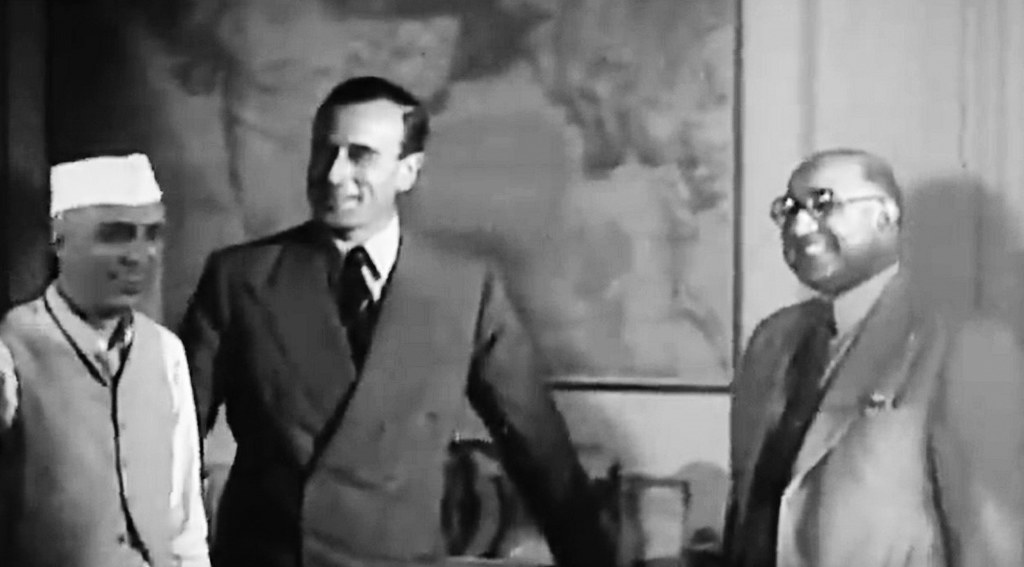
Compromising of Indian Interests in Delhi Pact, 1950
The Nehru-Liaquat Agreement, also known as the Delhi Pact of 1950, was a bilateral agreement between India and Pakistan, primarily aimed at safeguarding the rights of minority communities in both countries in the aftermath of the partition in 1947. Prime Minister Jawaharlal Nehru of India and Prime Minister Liaquat Ali Khan of Pakistan were the signatories.
Background:
The partition of Bharat and carving out of Pakistan was to provide a separate state to Muslims. Majority of Hindus and Sikhs and Buddhists in areas earmarked as Pakistan had been killed by Muslims. Most who were alive migrated as refugees to Bharat.
On the other hand Muslims in Bharat were safe and well protected barring a few cases of violence here and there. Pakistan attacked India soon after independence. Having such a pact with an enemy country who is not worthy of trust and the circumstances that existed was, itself, not rational. Here, we analyse the fallacies for India and Hindus:
1. Ineffective Implementation:
One of the major criticisms was the ineffective implementation of the agreement. Despite the pact, there were reports of continued persecution and migration of Hindus from Pakistan, suggesting that Pakistan did not fully adhere to the agreement’s stipulations. This is happening till date.
2. Lack of Reciprocity:
Critics argued that while India largely adhered to its obligations under the pact, ensuring rights and security to its Muslim population, Pakistan did not reciprocate to the same extent for its Hindu and Sikh minorities.
3. Political Unrest and Criticism:
The Nehru-Liaquat Agreement led to significant political unrest in India. It was criticized by several political leaders and parties who felt that the agreement failed to adequately protect the rights of Hindu minorities in Pakistan.
4. Increase in Communal Tensions:
The agreement inadvertently increased communal tensions in India. Many saw it as a capitulation to Pakistan and an inability to ensure justice for Hindu refugees who had suffered during the partition.
5. Question of Refugees:
The agreement did not comprehensively address the issue of the rehabilitation of refugees. Many Hindu refugees from Pakistan continued to face challenges in India, and their plight was not adequately resolved.
6. Diplomatic Limitations:
The pact was seen as a diplomatic failure by some, as it did not lead to a lasting improvement in India-Pakistan relations. The trust deficit and cross-border issues continued, undermining the pact’s effectiveness.
7. Security Concerns:
There were concerns that the agreement did not adequately address security issues, especially in the context of minority populations living near border areas.
8. Nationalist Critique:
Nationalist groups in India criticized the agreement for what they perceived as a failure to recognize and respond to the plight of Hindu minorities in Pakistan, arguing that it did not ensure their safety and dignity.
The Nehru-Liaquat Agreement was a meaningless effort as it happened with an untrusted enemy who believe in extremism.
Long-Term Institutional Consequences: What India Inherited
The final layer, which became crystal-clear during my New York reflections, is how every government for 70 years has had to work within the constraints created in the first 17 years.
The accumulated impact of Nehru’s policies shaped a nation with:
A Bureaucratic State That Distrusted Its Own Citizens
Licenses, inspections, quotas, permissions—this architecture survived for decades.
A Judiciary That Became Unquestionable but Not Accountable
Delays, backlog, and lack of reform became entrenched features.
A Two-Tier Society Framed by Language and Culture
English became power, Indian languages became barriers.
Economic Structures Hard to Dismantle
PSU dominance, weak private capital, and bureaucratic hurdles kept India a slow-moving economy.
Intellectual Monoculture
Universities dominated by a single ideological stream shaped three generations of policymakers.
Security Vulnerabilities Inherited by Successors
From the India-China border to Kashmir, from Tibet to nuclear posture—successive governments inherited situations created by early choices.
This deep, layered impact of Nehru’s policies explains why reforms in India often feel like swimming against the current.
These structural constraints form the backdrop against which every subsequent government has attempted reform.
Understanding these inherited constraints is essential before drawing together the broader lessons of how Nehru’s policies shaped India’s internal trajectory.

Assessment of Impact of Nehru’s Policies
India’s internal landscape—its economy, institutions, education system, social fabric, and cultural confidence—continues to carry the imprint of decisions made in the first years after Independence. This blog has traced how Nehru’s policies created enduring structural constraints that shaped governance, development, and national identity for generations. These internal faultlines connect directly to the external strategic choices explored earlier, revealing a single continuum of ideas and assumptions that defined the Nehruvian era.
The next piece will examine how later governments responded to this inherited architecture—what they dismantled, what they reinforced, and which Nehruvian legacies still mould India today.
If you want to understand why modern India often moves forward with resistance built into its foundations, the coming analysis will complete the picture.
Call to Action
If you found this analysis insightful, share it with others who follow India’s policy debates. Your engagement helps bring clarity to conversations shaped for decades by inherited narratives. Follow this series for the next chapter, where we examine how India can finally move beyond the Nehruvian framework.
Feature Image: Click here to view the image. [Credit: https://Flickr.com]
Glossary of Terms
- Nehru’s Policy Analysis: A critical re-examination of Jawaharlal Nehru’s major policy choices—defence, foreign policy, economy, education, and institutional design—and their long-term impact on independent India.
- License–Permit–Quota Raj: The regulatory regime of licenses and permissions that governed industrial activity in early independent India, limiting private-sector expansion.
- Panchsheel Agreement: The 1954 five principles of peaceful coexistence between India and China that later were criticised as strategic miscalculation.
- Henderson Brooks–Bhagat Report: A confidential Indian Army inquiry into strategic and operational failures during the 1962 Sino-Indian War.
- Nehru–Liaquat Pact (Delhi Pact, 1950): A bilateral agreement between India and Pakistan on minority protections and related post-Partition arrangements.
- Katchatheevu / Katchatheevu Issue: A small island in the Palk Strait whose cession/administration became a long-running maritime dispute between India and Sri Lanka.
- Treaty of Kalat (1875–76): A British-era arrangement recognising the semi-autonomous Khanate of Kalat (Baluchistan) under suzerainty, referenced in discussions about Kalat’s status at Partition.
- Licence–Permit–Quota regime: Synonym of License–Permit–Quota Raj; bureaucratic controls on industrial licensing and imports.
- Hindu Rate of Growth: A term describing India’s low GDP growth in the decades following independence, often linked to planning-era policies.
- Planning Commission: The central body that directed India’s planned economic development and allocation of resources in the Nehruvian era.
- Non-Alignment / NAM: Jawaharlal Nehru’s doctrine of not formally aligning with either Cold War bloc while claiming leadership among decolonised states.
- Article 370: Constitutional provision granting special status to Jammu & Kashmir (referenced here as a “special status experiment”).
- Operation Polo: The 1948 military action that integrated Hyderabad into India under Sardar Patel’s direction.
- Vijaya Lakshmi Pandit Correspondence: Archival letters involved in early UN/US diplomatic discussions about Security Council membership.
- Civil-Military Disconnect: A systemic gap between political leadership and military command structures evident in early defence failures.
#Nehru #PolicyAnalysis #IndiaHistory #Partition #HinduinfoPedia
Related Blogs
- https://hinduinfopedia.in/nathuram-godse-murderer-patriot-or-fractured-youth/
- https://hinduinfopedia.in/lahore-resolution-review-pakistans-islamic-path/
- https://hinduinfopedia.in/gandhi-revisited-a-critical-legacy/
- https://hinduinfopedia.org/jawaharlal-nehru-continued-british-raj-legacy-in-post-independence/
- https://hinduinfopedia.org/india-china-border-tensions-a-strategic-analysis/
- https://hinduinfopedia.org/india-pakistan-relations-under-i-k-gujral-impact-of-his-policies-on-dharma-and-national-security/
- https://hinduinfopedia.in/gandhis-controversial-leadership-in-the-indian-freedom-struggle/
- https://hinduinfopedia.in/nehrus-historical-narrative-how-he-shaped-indian-histography/
- https://hinduinfopedia.in/gandhis-murder-was-nehru-involved/
- https://hinduinfopedia.in/nehrus-policy-analysis-its-impact-on-independent-india/
Follow us:
- English YouTube: https://www.youtube.com/@Hinduofficialstation
- Hindi YouTube: https://www.youtube.com/@HinduinfopediaIn
- X: https://x.com/HinduInfopedia
- Instagram: https://www.instagram.com/hinduinfopedia/
- Facebook: https://www.facebook.com/Hinduinfopediaofficial
- Threads: https://www.threads.com/@hinduinfopedia