
Nehru’s Policy Analysis: Its Impact on Independent India
Nehru’s Policy Analysis: A Critical View
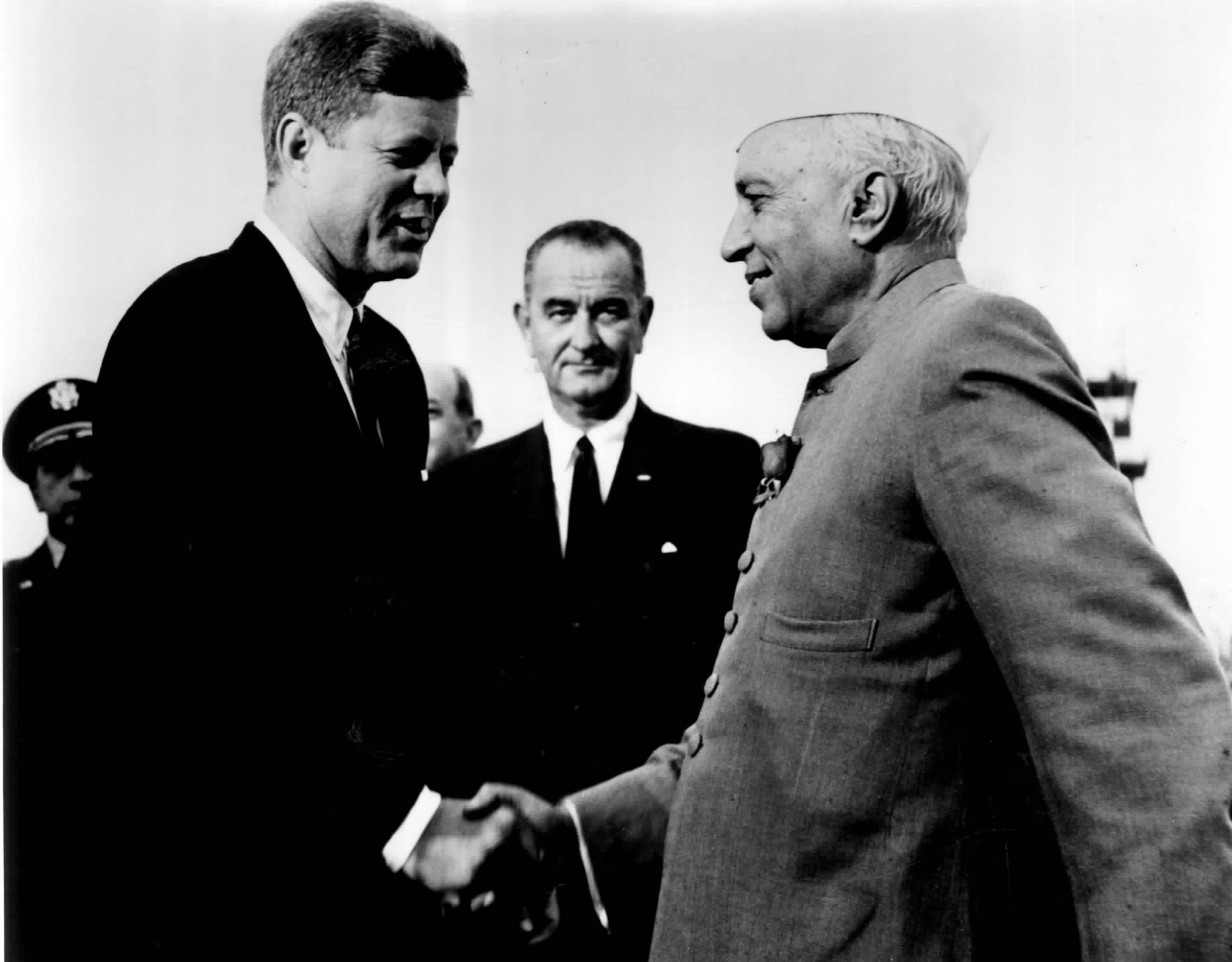
On this day, 5th November, let us recall Jawaharlal Nehru’s 1961 visit to New York, a moment symbolic of India’s early diplomatic positioning during the Cold War. Nehru’s policy analysis becomes especially important on this date, because his international engagements — including his high-profile appearances in New York — reflected the idealism, assumptions, and strategic worldview that shaped India’s formative decades.
Thank you for reading this post, don't forget to subscribe!As India reassesses the political, economic, and security architecture created after Independence, Nehru’s policy analysis reveals a recurring pattern: visionary intentions often paired with misjudgments of geopolitical reality; institution-building accompanied by centralisation of authority; diplomatic eloquence offset by strategic blind spots.
Understanding Nehru’s policy analysis requires beginning with an examination of his political rise, the governance model he entrenched, and the defence, foreign policy, and territorial decisions he made — many of which continue to shape India’s challenges today.
Nehru’s Policy Analysis and the Question of His Political Rise
A central thread in Nehru’s policy analysis concerns the manner in which he became India’s first Prime Minister. Historical records clearly indicate that in 1946, a majority of Congress provincial committees endorsed Vallabhbhai Patel as their preferred leader. Nehru’s name did not appear among the nominations. Gandhi’s intervention — requesting Patel to withdraw — produced the final outcome.
A fact-consistent framing for Nehru’s policy analysis is:
“Nehru’s elevation was driven more by Gandhi’s preference than by organisational consensus, a pattern that would influence the centralised leadership style of early independent India.”
This interpretation neither exaggerates nor softens the historical record. It remains consistent with contemporary scholarship: Patel enjoyed stronger organisational support; Nehru enjoyed Gandhi’s confidence.
Nehru’s policy analysis thus begins with a leadership model that was not organically validated by the Congress grassroots members. This tension between popular legitimacy and elite endorsement shaped several later decisions — from centralisation of power to management of dissent.
Governance Style of the Early Republic
Nehru’s governance approach combined intellectual conviction with a strong preference for centralised control. Nehru retained direct command over multiple ministries, particularly foreign affairs, and shaped policy through a close-knit circle of bureaucrats, diplomats, and advisers.
Nehru’s policy analysis shows three recurring themes:
Centralisation of Authority
Nehru believed the newly independent nation required a unified administrative direction. However, the effect was:
- Limited delegation of authority
- Limited space for alternative viewpoints of alternative viewpoints
- Reduced involvement of senior leaders such as Rajendra Prasad, P.D. Tandon, and Shyama Prasad Mukherjee
This centralisation became a hallmark of the Nehruvian system and influenced the long-term functioning of Indian democracy.
Nehru’s policy analysis repeatedly highlights the centralisation of authority, where key decisions were concentrated in the Prime Minister’s office, limiting institutional debate and reducing the space for senior leaders to influence national policy.
Controlled Party Dynamics
The Congress organisation increasingly operated as a top-down apparatus, where differing opinions were discouraged rather than incorporated into policy formation.
The way internal disagreements were handled — especially on issues like Kashmir, Tibet, and economic planning — became part of Nehru’s policy analysis of governance deficits.
Precedents for Dynastic Trajectory
The leadership model Nehru established inadvertently laid the foundations for hereditary political authority, normalising family-centric control over the party. Nehru’s policy analysis often notes that early grooming patterns and decision-making centrality created the scaffolding for dynastic politics.
Overall, Nehru’s governance was intellectually driven but procedurally narrow, relying on personal authority more than institutional pluralism.
Nehru’s Policy Analysis And Defence
Nehru’s defence policy was shaped by idealistic principles — non-violence, pacifism, and a belief in moral diplomacy — which did not always align with the geopolitical environment of post-colonial Asia. Nehru’s policy analysis highlights several structural weaknesses:
Underinvestment in Military Modernisation
In the early years, defence expenditure remained low despite:
- A militarily aggressive Pakistan
- Strategically assertive China
- Unsettled borders
- Insurgencies in multiple regions
As a result, the armed forces lacked modern equipment, adequate logistics, and institutional preparedness.
Misreading China’s Strategic Intentions
“Hindi-Chini Bhai-Bhai” became a diplomatic slogan but also an analytical blind spot.
Key misjudgments included:
- Underestimating China’s consolidation of Tibet
- Overlooking PLA road-building toward Aksai Chin
- Overlooking boundary claims that later contributed to the 1962 conflict
Nehru’s policy analysis repeatedly identifies this as one of his most consequential miscalculations.
Intelligence and Civil-Military Disconnect
The Henderson Brooks–Bhagat Report (still partly classified) documents:
- Flawed assessments
- Unclear leadership
- Weak command structures
- Breakdown of civil-military coordination
These weaknesses left India vulnerable at a decisive moment.
The 1962 War as a Policy Exposé
The India–China conflict exposed:
- Strategic idealism
- Defence neglect
- Diplomatic misjudgement
British Officers Retained Too Long After Independence
A commonly noted critique in Nehru’s policy analysis is that senior British officers continued to command the Indian Armed Forces for several years after independence, even during sensitive periods such as the Kashmir conflict. Critics argue that this slowed the development of an independent strategic doctrine and delayed the empowerment of Indian military leadership at a crucial moment in nation-building.
Nehru’s policy analysis considers this war the turning point when the limits of his worldview collided with geopolitical reality.
Nehru’s Foreign Policy Analysis
Nehru’s foreign policy aimed to position India as a moral power and a leader of the Non-Aligned Movement. However, Nehru’s policy analysis identifies several contradictions between objectives and outcomes.
Non-Alignment: Vision Without Strategic Anchoring
While non-alignment was rhetorically powerful:
- Implementation lacked clarity
- India often appeared closer to the Soviet camp
- Relations with the U.S. oscillated unpredictably
Nehru’s policy analysis reveals a foreign policy guided more by political philosophy than by strategic leverage.
Handling of the Kashmir Dispute
The decision to involve the United Nations remains one of the most debated aspects of Nehru’s foreign policy.
Policy critiques state:
India lost diplomatic control over an issue that was initially in its favour.
Nehru’s policy analysis highlights:
- Premature internationalisation
- Conditions imposed on a sovereign accession
- Diplomatic moves disconnected from the evolving military situation
Tibet and the Strategic Vacuum
Accepting China’s takeover of Tibet without securing India’s long-term interests remains a central concern in Nehru’s policy analysis.
This decision allowed:
- China to move to India’s doorstep
- Loss of a strategic buffer
- Increased border vulnerability
Missed Opportunity: UNSC Membership
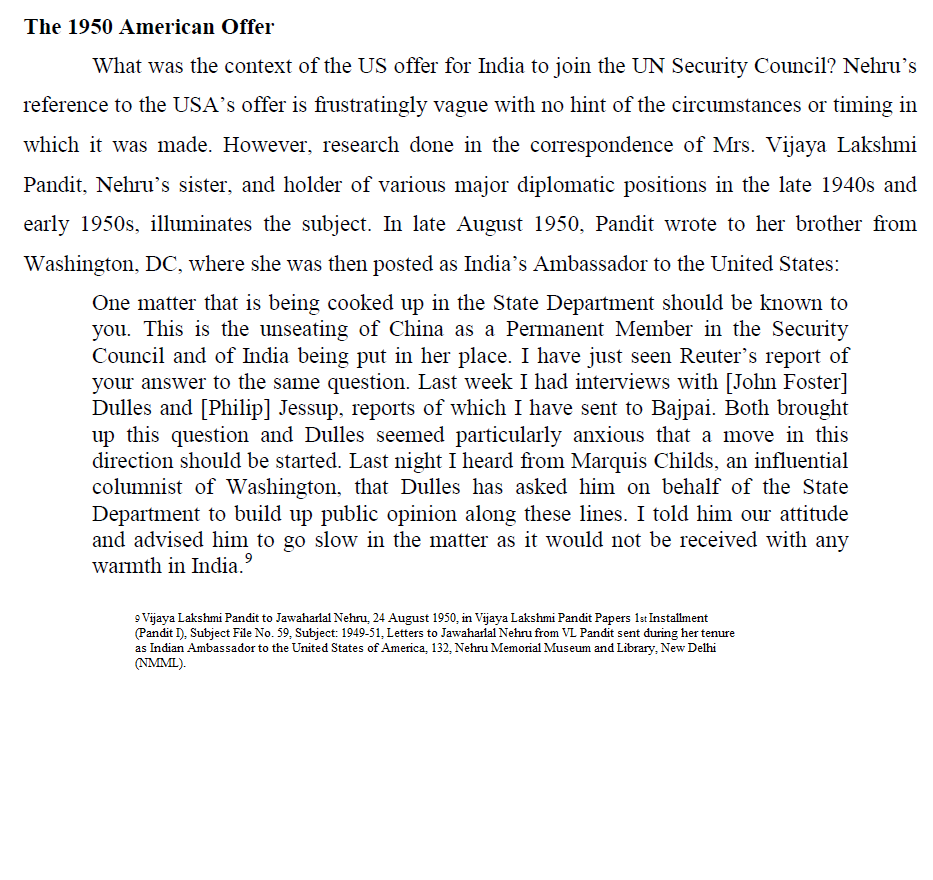
Archival records — including Vijaya Lakshmi Pandit’s correspondence — show that:
- The U.S. explored India replacing China as a permanent UNSC member
- Nehru rejected the opportunity to avoid antagonising China
Nehru’s policy analysis widely views this as a major strategic misstep.
This strategic misalignment becomes even more evident when Nehru’s policy analysis is applied to his handling of territorial questions, most notably the Kashmir issue.
Nehru’s Policy and Kashmir
The integration of more than 560 princely states was a monumental exercise, largely credited to Sardar Patel and V.P. Menon. Nehru’s policy analysis reveals sharp contrasts in approach, especially regarding Kashmir.
Kashmir: A Sequence of Policy Contradictions
Decisions on Kashmir were driven overwhelmingly by Nehru’s personal judgments rather than by collaborative institutional deliberation.
Key critiques cited in Nehru’s policy analysis include:
- Delay in accepting Kashmir’s accession at a decisive moment
- Commitments to plebiscite despite an unconditional accession
- Taking the issue to the UN and losing strategic initiative
- Excluding Patel, who had successfully integrated other states
Historians argue that earlier, firmer decisions could have prevented Pakistan’s occupation of significant territory.
Hyderabad: The Contrast With Patel
Operation Polo — the decisive integration of Hyderabad — reflects Patel’s strategic clarity and administrative firmness.
Nehru’s hesitation and preference for prolonged negotiation contrast sharply with Patel’s approach, strengthening the critique within Nehru’s policy analysis.
Baluchistan in Nehru’s Policy Analysis: A Strategic Opportunity Lost
The Baluchistan question represents one of the most under-discussed yet consequential episodes in Nehru’s policy analysis. Historical records show that the Khanate of Kalat possessed a distinct political identity since the mid-19th century. The Treaty of Kalat (1875–76), facilitated by British official Robert Groves Sandeman, acknowledged Kalat as a sovereign entity under British suzerainty, with its own internal administration and diplomatic structures.
At the time of Partition in 1947, the Khan of Kalat — Mir Ahmadyar Khan — explored accession to India. This offer, communicated through constitutional channels and later publicly acknowledged by V.P. Menon, represented a major geopolitical opportunity: it would have given India strategic access to the Arabian Sea, weakened Pakistan’s territorial cohesion, and prevented the subsequent militarised annexation of Baluchistan by Pakistan.
Nehru rejected the overture, insisting that Baluchistan did not qualify as a sovereign state eligible for accession. Nehru’s policy analysis shows that this decision was rooted in a legalistic interpretation rather than in strategic foresight. Patel reportedly disagreed with this stance, but by then, the diplomatic moment had closed.
Pakistan moved swiftly. By March 1948, under Jinnah’s direction, Pakistan used military action to integrate Baluchistan, reportedly with tacit support from elements of the departing British administration, ending Kalat’s historical autonomy.
As summarised by The Times of India, the consequences were profound:
- The British-engineered partition created deep territorial vulnerabilities.
- Baluchistan’s willingness to join India was a rare counter-movement, but India declined.
- Pakistan filled the vacuum with military force, altering the subcontinental balance.
Nehru’s policy analysis in this episode highlights a recurring pattern: moral or procedural reasoning taking precedence over long-term strategic interest. The Baluchistan decision deprived India of a significant geopolitical advantage and strengthened Pakistan’s western flank — a decision whose consequences still reverberate in South Asian security architecture.
Long-Term Consequences
Nehru’s handling of Kashmir created:
- A long-term unresolved conflict
- A UN-linked dispute
- Conditions for repeated wars
- Generational instability
These issues remain central to Nehru’s policy analysis of India’s territorial challenges.
Nehru’s Policy Analysis on Internal Security
Internal security is one of the least examined yet most influential components of Nehru’s policy analysis. The early republic faced communal tensions, refugee crises, border instability, and ideological conflicts. Nehru responded with a mixture of idealism and administrative caution, resulting in policies that were principled in intent but inconsistent in execution.
Communal Tensions and the Nehru–Liaquat Pact (1950)
The Nehru–Liaquat Agreement attempted to secure minority rights in both India and Pakistan.
However, Nehru’s policy analysis shows:
- India successfully implemented its obligations
- Pakistan did not ensure reciprocal protections
- Hindu and Sikh minorities continued to flee Pakistan in large numbers
- Enforcement mechanisms were weak or absent
While the pact aimed for moral diplomacy, critics argue it lacked strategic safeguards, a recurring theme in Nehru’s policy analysis.
Use of Preventive Detention and Constitutional Amendments
Although Nehru championed civil liberties, he also introduced:
- Preventive Detention Act (1950)
- First Amendment curbing free speech and property rights
Nehru’s responses to internal unrest often relied on concentrated executive power, revealing a gap between his liberal rhetoric and the operational tools he employed.
Northeast and Border Regions
Nehru took personal interest in the Northeast, yet policy outcomes were uneven:
- Infrastructure investments were slow
- Integration of tribal regions was incomplete
- Insurgencies arose amid administrative shortcomings and cultural differences
The Katchatheevu Issue and Maritime Security
Nehru’s policy analysis must also acknowledge the long-term consequences of India’s passive approach toward Katchatheevu, a tiny but strategically important island between India and Sri Lanka. Though the formal cession happened later under Indira Gandhi in 1974, the roots of the issue lie in Nehru’s reluctance to assert India’s maritime claims when the dispute first surfaced in the 1950s. His government treated the island as insignificant, overlooking fishing rights, security implications, and historical evidence of Indian jurisdiction. This early indifference created a precedent that weakened India’s negotiating position, resulting in an enduring conflict that continues to trouble Indian fishermen and coastal security policy even today.
Nehru’s policy analysis concludes that internal security strategies often lagged behind geopolitical developments, especially on frontiers later exploited by China and Pakistan.
Nehru’s Policy Analysis on Economic Vision and Development
India’s early development trajectory was defined by Nehru’s vision of a state-led, planned economy. Nehru’s policy analysis reveals both ambition and structural limitations in this model.
Centralised Planning and Bureaucratic Expansion
The Planning Commission became the central instrument for economic policy.
Nehru’s policy analysis identifies issues such as:
- Top-down economic decision-making
- Licence–permit–quota regime strangling entrepreneurship
- Slow industrial response to global technological change
- Inefficient public sector enterprises absorbing scarce capital
These early structural choices created long-term constraints that persisted for decades.
Agriculture and Rural Neglect
Although land reforms were announced, their implementation was partial and uneven.
Nehru’s policy analysis highlights:
- Limited progress in reducing feudal dominance
- Underinvestment in irrigation and rural infrastructure
- Limited technological innovation in agriculture
The result was recurrent food shortages until the Green Revolution — enabled by later policy shifts, not Nehruvian planning.
Industrialisation Outcomes
Nehru’s emphasis on heavy industries created iconic institutions but also lead to:
- High cost structures
- Low productivity
- Reliance on foreign technology
- Limited export competitiveness
Economists call the consequence the “Hindu rate of growth”, though Nehru’s policy analysis correctly attributes it to planning rigidity, not cultural factors.
Nehru’s Policy Analysis And Education
Education and culture were core to Nehru’s vision of a modern, scientific India. Yet Nehru’s policy analysis exposes fundamental imbalances in resource allocation and intellectual orientation.
Elite-Focused Higher Education
Nehru created institutions of global standing — IITs, AIIMS, scientific academies.
However, Nehru’s policy analysis notes:
- Primary education remained severely underfunded
- Literacy growth remained slow
- Rural schools lacked buildings, teachers, and materials
A nation with widespread illiteracy invested more in elite institutions than in universal schooling — a structural imbalance that shaped India’s long-term development.
Cultural and Historical Narratives
Under Nehru, academic institutions moved toward a secular-liberal, often left-leaning intellectual paradigm.
Nehru’s policy analysis observes:
- Indigenous knowledge systems received less institutional support
- Historical writing increasingly reflected selective interpretations
- Gave less emphasis to Sanskrit, regional traditions
- Cultural policy became centralised and homogenised
These choices shaped Indian academia for decades and remain subjects of debate today.
The same pattern—high ideals paired with strategic gaps—also defines Nehru’s international engagements, particularly his high-profile diplomacy in New York.
Language Policy and Centre–State Tensions
The three-language formula and promotion of Hindi led to resistance in the South, especially Tamil Nadu.
Nehru’s policy analysis shows that cultural sensitivity often lagged behind political objectives, leading to avoidable linguistic conflicts.
Nehru’s Policy Analysis and New York Diplomatic Engagements
Nehru’s repeated diplomatic engagements in New York — at the United Nations and in bilateral meetings — were central to defining India’s early international profile.
Nehru’s policy analysis interprets these visits through two lenses: aspirational diplomacy and strategic misalignment.
Projection of a Moral Power
Nehru sought to present India as:
- A leader of peace
- A voice for decolonised nations
- A champion of nuclear disarmament
- A bridge between East and West
These ideals gained respect internationally, and Nehru’s speeches in New York became symbolic markers of India’s early diplomatic presence.
Disconnect Between Vision and Capability
However, Nehru’s policy analysis notes tensions:
- India lacked the economic or military strength to match its diplomatic ambitions
- Overemphasis on moral diplomacy diluted strategic bargaining power
- The U.S.–India relationship oscillated due to India’s perceived closeness to the USSR
Nehru’s New York engagements reflected brilliance in articulation but inconsistency in strategic outcomes.
The UNSC Opportunity Overlooked
Archival evidence related to Vijaya Lakshmi Pandit and other documents show that the U.S. an USSR explored India joining the UNSC as a permanent member.
Nehru declined — prioritising China’s position over India’s.
Offer by USA in 1950
There is enough evidence on record to show that American Administration offered Bharat to be a member of UN Security Council in 1950 when the membership of China was fluid and U.S. did not want China to be permanent member because of her tilt towards Communist philosophy.
This is evident from the correspondance between the then High Commission to U.S. and sister of Nehru, Vijaylakshmi Pandit. The reasons for rejection of offer were: A) Not to anger China, B) To keep friendly relation with its neighbours, China, C) To display high moral ground that Bharat is a peace loving country who doesnot run behind power, little knowing how the world diplomacy works.
For more details visit: https://www.wilsoncenter.org/publication/not-the-cost-china-india-and-the-united-nations-security-council-1950
To download PDF visit: https://www.wilsoncenter.org/sites/default/files/media/documents/publication/cwihp_working_paper_76_not_at_the_cost_of_china.pdf
Offer by Soviet Union in 1955
Soviet Union had offered Bharat to be the sixth permanent member of UN Security Council as per the records available in Selected Works of Jawaharlal Nehru second series, Volume 29 Page 302-303. This is detailed at https://www.wilsoncenter.org/publication/not-the-cost-china-india-and-the-united-nations-security-council-1950.
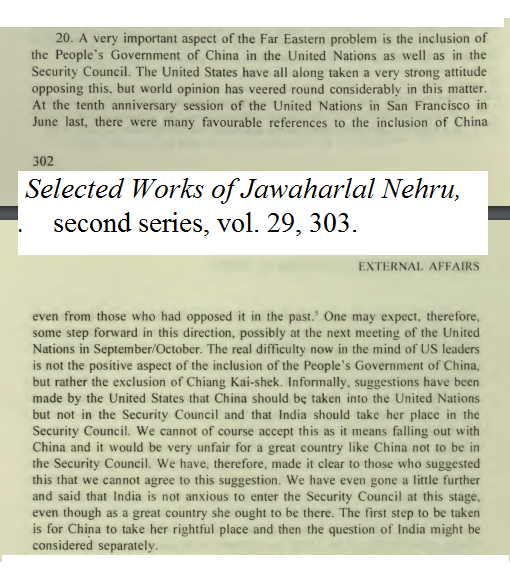
Download the reference in Selected Works of Jawaharlal Nehru, second series, vol. 29.
Nehru’s policy analysis widely interprets this as a missed geopolitical turning point.
Baluchistan in Nehru’s Policy Analysis: A Strategic Opportunity Lost
The Baluchistan question represents one of the most under-discussed yet consequential episodes in Nehru’s policy analysis. Historical records show that the Khanate of Kalat possessed a distinct political identity since the mid-19th century. The Treaty of Kalat (1875–76), facilitated by British official Robert Groves Sandeman, acknowledged Kalat as a sovereign entity under British suzerainty, with its own internal administration and diplomatic structures.
At the time of Partition in 1947, the Khan of Kalat — Mir Ahmadyar Khan — explored accession to India. This offer, communicated through constitutional channels and later publicly acknowledged by V.P. Menon, represented a major geopolitical opportunity: it would have given India strategic access to the Arabian Sea, weakened Pakistan’s territorial cohesion, and prevented the subsequent militarised annexation of Baluchistan by Pakistan.
Nehru rejected the overture, insisting that Baluchistan did not qualify as a sovereign state eligible for accession. Nehru’s policy analysis shows that this decision was rooted in a legalistic interpretation rather than in strategic foresight. Patel reportedly disagreed with this stance, but by then, the diplomatic moment had closed.
Pakistan moved swiftly. By March 1948, under Jinnah’s direction, Baluchistan was forcibly absorbed into Pakistan, ending Kalat’s historical autonomy.
As summarised by The Times of India, the consequences were profound:
- The British-engineered partition created deep territorial vulnerabilities.
- Baluchistan’s willingness to join India was a rare counter-movement, but India declined.
- Pakistan filled the vacuum with military force, altering the subcontinental balance.
Nehru’s policy analysis in this episode highlights a recurring pattern: moral or procedural reasoning taking precedence over long-term strategic interest. The Baluchistan decision deprived India of a significant geopolitical advantage and strengthened Pakistan’s western flank — a decision whose consequences still reverberate in South Asian security architecture.
Summary and Expanded Conclusion: The Long Arc of Nehru’s Policy Analysis
Nehru’s policies were framed with lofty intent but executed with limited strategic realism, weak operational discipline, and insufficient grounding in India’s civilisational and geopolitical context. Nehru’s policy analysis shows a leadership approach that consistently misread adversaries, overestimated the power of moral diplomacy, and centralised authority in ways that constrained institutional evolution. Whatever limited positives are attributed to his tenure pale before the long-term structural burdens his decisions imposed on defence, foreign policy, territorial consolidation, economic planning, education, and cultural orientation. Nehru’s legacy, therefore, is best understood not as a balanced ledger of gains and losses, but as a set of early choices that restricted India’s possibilities far more than they advanced them.
Nehru’s policy analysis, therefore, is indispensable not to debate the past, but to prevent its mistakes from binding the future.
Call to Action
If we want a clearer India tomorrow, we must first clear the historical fog of yesterday.
Nehru’s policy analysis is not merely an academic exercise — it is a necessary audit of decisions that shaped India’s vulnerabilities, borders, institutions, and internal fractures.
Read, question, and share.
An informed nation is better equipped to prevent.
Feature Image: Click here to view the image.
GLOSSARY OF TERMS
- Nehru’s Policy Analysis: A retrospective examination of Jawaharlal Nehru’s decisions across defence, foreign policy, economy, culture, and governance, assessing their long-term impact on India.
- Congress Provincial Committees (1946): Regional bodies of the Indian National Congress that formally nominated Vallabhbhai Patel—not Nehru—for leadership in 1946.
- Centralisation of Authority: A governance pattern in which major decisions remain concentrated in the Prime Minister’s Office with limited institutional consultation.
- Non-Alignment: Nehru’s Cold War doctrine of maintaining distance from both the U.S. and Soviet blocs while claiming moral leadership among decolonised nations.
- Henderson Brooks–Bhagat Report: A confidential Indian Army report analysing failures during the 1962 Sino-Indian War, highlighting intelligence and leadership breakdowns.
- Hindi-Chini Bhai-Bhai: A slogan used by Nehru to symbolise brotherhood with China, later criticised as a naïve strategic assumption.
- Internationalisation of Kashmir: Nehru’s decision to refer the Kashmir conflict to the United Nations, shifting a favourable territorial situation into a globalised dispute.
- UNSC Membership Question (1950): A diplomatic episode in which the U.S. signalled willingness to support India for permanent membership, which Nehru declined.
- Katchatheevu: A small island between India and Sri Lanka whose unresolved status from the Nehru era evolved into a long-running maritime and fishing dispute.
- Licence–Permit–Quota Raj: A bureaucratic economic system created during the Nehruvian era that required extensive permissions for industrial and commercial activity.
- Hindu Rate of Growth: A term describing India’s low economic growth under rigid planning structures of the Nehru era, unrelated to religion.
- Nehru–Liaquat Pact (1950): An agreement meant to protect minorities in India and Pakistan but criticised for inadequate enforcement and weak strategic safeguards.
- Treaty of Kalat (1876): A British-brokered agreement recognising the semi-sovereign Khanate of Kalat (Balochistan), whose later offer to accede to India was rejected during Nehru’s tenure.
- Operation Polo: The 1948 Indian military action led under Sardar Patel to integrate Hyderabad, contrasting sharply with Nehru’s slower diplomatic approach.
- Non-Aligned Movement (NAM): A global grouping of states founded during Nehru’s tenure, claiming independence from Cold War blocs but criticised for lack of strategic gains.
- Panchsheel Agreement (1954): Five principles of peaceful coexistence between India and China, later viewed as a diplomatic miscalculation after the 1962 war.
- Civil-Military Disconnect: A structural gap identified in Nehru’s defence management where political leadership sidelined military expertise.
- Vijaya Lakshmi Pandit Correspondence: Letters referencing early U.S. discussions on India’s possible UNSC seat, key evidence in evaluating Nehru’s diplomatic choices.
- Dynastic Trajectory: The institutional pattern originating in Nehru’s era that normalised political power passing through family lineage.
- Aspirational Diplomacy: Nehru’s practice of projecting India as a moral and intellectual leader internationally, often without corresponding economic or military capability.
#Nehru #IndiaHistory #ColdWarIndia #PolicyAnalysis #HinduinfoPedia
Related Blogs
- https://hinduinfopedia.in/nathuram-godse-murderer-patriot-or-fractured-youth/
- https://hinduinfopedia.in/lahore-resolution-review-pakistans-islamic-path/
- https://hinduinfopedia.in/gandhi-revisited-a-critical-legacy/
- https://hinduinfopedia.org/jawaharlal-nehru-continued-british-raj-legacy-in-post-independence/
- https://hinduinfopedia.org/india-china-border-tensions-a-strategic-analysis/
- https://hinduinfopedia.org/india-pakistan-relations-under-i-k-gujral-impact-of-his-policies-on-dharma-and-national-security/
- https://hinduinfopedia.in/gandhis-controversial-leadership-in-the-indian-freedom-struggle/
- https://hinduinfopedia.in/nehrus-historical-narrative-how-he-shaped-indian-histography/
- https://hinduinfopedia.in/gandhis-murder-was-nehru-involved/
Follow us:
- English YouTube: https://www.youtube.com/@Hinduofficialstation
- Hindi YouTube: https://www.youtube.com/@HinduinfopediaIn
- X: https://x.com/HinduInfopedia
- Instagram: https://www.instagram.com/hinduinfopedia/
- Facebook: https://www.facebook.com/Hinduinfopediaofficial
- Threads: https://www.threads.com/@hinduinfopedia
Update in November 2025
Nishikant Dubey’s Parliamentary Statement
In his parliamentary address, Nishikant Dubey delivered a wide-ranging critique of Jawaharlal Nehru’s decisions in defence, foreign policy, and national security. He argued that Nehru’s idealism repeatedly overshadowed strategic judgement, especially in dealing with China. Dubey cited early warnings from senior Congress leaders and military officials that, according to him, Nehru ignored, leading to inadequate military preparedness before the 1962 war.
He further stated that Nehru’s handling of the Kashmir dispute — particularly the referral to the United Nations — weakened India’s position and created long-term security complications. Dubey also referenced economic decisions such as delayed industrial modernisation, over-dependence on imports, and policy choices that, in his view, limited India’s early growth potential.
While political in tone, Dubey’s speech reflects several themes commonly discussed in historical critiques of Nehru’s policy framework: strategic misjudgment, weak defence readiness, over-centralisation of authority, and inconsistent foreign policy alignment.
Refer: https://youtu.be/8Mr86v6FdCs?si=jnoUzhqW0-DwrVqH