

Nehru’s Intentional Omissions: Mathura Massacre And Appreciation
GB/भारत
Part 2: Nehru’s view on Islamic invaders
The Art of Historical Erasure Through Selective Quotation
Jawaharlal Nehru, the political son of Mohandas K Gandhi, also called Mahatma Gandhi, product of political nepotism became the first prime minister owing to the political lineage with Gandhi. Like Gandhi (Read Gandhi Revisited) Nehru also carried forward the interests of British Raj and British legacy as is analyzed in our various presentations. In the previous post, we explored how Nehru’s historical narrative was part of a larger Congress pattern of suppressing alternative voices—from Subhas Chandra Bose in politics to Hindu civilizational perspectives in history. Now we examine a specific, devastating example of this suppression: how Nehru transformed one of medieval India’s greatest tragedies into a celebration of Indian artistry.
Thank you for reading this post, don't forget to subscribe!The case of Mahmud of Ghazni’s sack of Mathura reveals Nehru’s technique of intentional omission—where historical truth isn’t denied outright but is carefully dismantled through strategic editing, selective quotation, and narrative reframing. What emerges is not history but propaganda masquerading as scholarship.
The Historical Reality: Mathura, December 1018
The devastation at Mathura was not an isolated incident—it was part of a systematic pattern of temple destruction that would continue for centuries, leaving scars on India’s civilizational consciousness that Nehru would later continue to ignore as part of his British Raj legacy.
The physical evidence confirms the textual accounts. Archaeological excavations at Mathura, conducted by the Archaeological Survey of India, reveal layers of deliberate destruction dating to the 11th-13th centuries. Temple foundations show evidence of systematic demolition—not earthquake or natural decay, but intentional destruction. Sculptural remains recovered from later Islamic structures prove temples were dismantled and their materials repurposed. The famous Krishna Janmabhoomi site shows continuous habitation with a sudden architectural rupture in the early Islamic period—Hindu structures replaced by Islamic ones, built literally upon their ruins. These are not interpretations; they are material facts that Nehru chose to ignore.
To understand what Nehru omitted, we must first establish what actually happened. On December 2, 1018 CE, Sultan Mahmud of Ghazni descended upon Mathura, advancing further into India than any Muslim ruler before him. The invasion was neither accidental nor economically motivated alone—it was deliberate, systematic, and devastating.
The Contemporary Accounts
Al-Utbi, Mahmud’s own secretary, wrote in Tarikh-e-Yamini that the city of Mathura was “ruthlessly sacked, ravaged, desecrated and destroyed,” noting that Mahmud destroyed “a great and magnificent temple” in the city. But Al-Utbi’s account goes further than Nehru would ever acknowledge.
According to the contemporary chroniclers traveling with Mahmud:
“The Sultan gave orders that temples be burned with naphtha and fire and leveled to the ground,” after seizing five gold and two hundred silver idols, as recorded by Al-Utbi in Tarikh-e-Yamini. Persian court chronicles accompanying Mahmud describe temple destruction on an enormous scale across fortified settlements along the Ganga, expressed in the chronicles as numbering in the thousands — a standard idiom used to convey total and systematic devastation rather than a modern census figure.
The scale of human suffering was apocalyptic. Persian court historians writing in the aftermath of the sack record mass killings running into the tens of thousands, along with widespread destruction of temples across the region. These accounts describe prolonged violence, idol burning, smelting of gold and silver for booty, and destruction continuing for weeks after the sack, as the city was systematically looted and burned.
The Religious Motivation
Was this merely plunder, as many of his supporters suggest? The invaders’ own words tell us otherwise. When Mahmud reached Thanesar earlier, his secretary Utbi wrote: “The blood of the infidels flowed so copiously… Praise be to Allah for the honor he bestows on Islam and Muslims”.
In 1013 AD, court histories record that the Sultan “plundered much wealth in that valley, and reconciled many people to the Musalman faith.” In the context of medieval conquest narratives, such language commonly denotes conversion under coercive conditions following military defeat, temple destruction, and loss of social autonomy rather than voluntary theological exchange.
The Long-Term Devastation
The Art of Mathura fell into decline thereafter—a monumental understatement for a civilization center that never fully recovered. For many years after the invasion, contemporary observers and later Persian historians noted that Ghazni appeared like a “mini Hindustan” due to the overwhelming presence of Indian slaves — so numerous that slave prices collapsed, and individuals of high status in India were reduced to servitude, a point recorded with triumphal approval in Islamic chronicles.
Persian historian Jabadkani captured the triumphalist mood: “Slaves were so plentiful that they became very cheap, and men of respectability in their native land were degraded by becoming slaves of common shopkeepers. But this is the goodness of God, who bestows honours on his own religion and degrades infidelity”.
The devastation at Mathura was not an isolated incident—it was part of a systematic pattern of temple destruction that would continue for centuries, leaving scars on India’s civilizational consciousness that Nehru would later continue to ignore as part of his British Raj legacy.
What Nehru Wrote: The Master Class in Omission
Now let us examine how Nehru presented this catastrophe in The Discovery of India.
When discussing Mahmud of Ghazni in *The Discovery of India*, Nehru writes:
“Mahmud’s raids were bloody and ruthless… But Mahmud was far more a warrior than a man of faith, and like many other conquerors he used and exploited the name of religion for his conquests.”
Notice the structure: acknowledgment of violence in one breath, immediate deflection in the next. The word “But” does all the work—erasing religious motivation with a single conjunction.
Nehru continues:
“The city of Mathura, near Delhi, with its great temples, was sacked. The temples were destroyed and vast quantities of treasure were taken away.”
He ignored the brute facts that Mahmud had caused deaths and destructions of Hindus and Hindu cultural heritage.
What follows this brief acknowledgment? Not the tens of thousands killed, not the forced conversions, not the decades of civilizational trauma. Instead, Nehru immediately pivots to Al-Biruni’s descriptions of Indian scientific achievements and architectural brilliance.
This is the first technique: immediate reframing. Acknowledge violence minimally, then redirect attention to Indian achievement or universal patterns. The destruction becomes merely the unfortunate context for revealing India’s greatness.
The Architectural Admiration
Here’s where Nehru’s technique becomes truly sophisticated. Instead of dwelling on the destruction, he shifts focus entirely to what the destruction revealed—the magnificence of what was destroyed.
When describing Mathura’s temples, Nehru essentially writes: Even Mahmud’s own chroniclers were forced to admit the temples’ splendor. They described structures of marble and stone, adorned with jewels, of such architectural brilliance that they impressed even hostile invaders.
The implication is clear: Look how great our architecture was! Even the destroyers had to acknowledge it!
The Critical Omission
What does Nehru omit? Everything that matters.
He omits:
- Estimated 50,000 killed as claimed by some accounts
- The mass killings recorded by contemporary Persian chronicles, described as running into the tens of thousands
- The widespread temple destruction across Mathura and its surrounding districts, described in the chronicles as numbering in the hundreds and thousands
- The forced conversions
- The mass enslavement
- The religious motivation explicitly stated by the invaders themselves
- The decades of decline that followed
- The trauma inflicted on the civilization
Most crucially, he omits the purpose of the chroniclers’ admiration. They weren’t writing travelogues or architectural reviews. They catalogued the magnificence to emphasize what was looted and destroyed. Their descriptions were inventories of plunder, not tributes to Indian culture.
This pattern of omission echoes throughout India’s modern history—just as India’s independence was decided seven seas away without adequate consultation, and just as the Lahore Resolution paved Pakistan’s Islamic path while Nehru minimized its religious dimensions.
The Technique Revealed: Praise Through Selective Context
Nehru’s method can be broken down into precise steps:
Step 1: Brief Acknowledgment
Mention the violence in passing, using passive or neutral language: “raids were bloody and ruthless.”
Step 2: Immediate Reframe
Quickly shift from the violence to universal patterns: “like many other conquerors” or “all invasions are destructive.”
Step 3: Extract Admiration from Hostile Sources
Quote or paraphrase descriptions of Indian magnificence from the invaders’ own chroniclers—but strip away the context that they were documenting what they destroyed.
Step 4: Redirect to Indian Achievement
Make the story about Indian cultural greatness rather than Indian suffering. The narrative becomes: “Even our enemies had to admire us.”
Step 5: Omit All Specifics That Create Emotional Impact
- No body counts
- No descriptions of violence
- No mention of religious motivation
- No discussion of long-term consequences
- No acknowledgment of the psychological and civilizational trauma
The result? A paragraph about Mahmud of Ghazni that mentions destruction but leaves readers impressed by Indian architecture rather than horrified by the genocide.
This technique would have profound consequences—much like how Gandhi’s controversial leadership shaped India’s trajectory, or how Article 370’s insertion was achieved through similar strategic omissions.
📚 FEATURED READ: Understanding Temple Destruction
 Aurangzeb’s Tyrannical Monuments: A Legacy of Despotism
Nehru’s omissions about Mahmud weren’t isolated. Discover how temple demolition continued under Aurangzeb, and why these patterns were systematically erased from official history. The demolition of temples symbolized suppression of religious diversity—a truth Nehru chose to minimize.
 Architectural Wonder of India: The Kailasa Temple
In 1682, Aurangzeb tried to destroy this monolithic marvel carved from a single mountain. The basalt held firm. Today it stands as testimony to what survived despite centuries of attempts at erasure—both physical and historical.
Comparing Nehru’s Treatment: Hindu Society vs. Islamic Invaders
The contrast becomes even sharper when we compare how Nehru treated Hindu society versus how he treated Mahmud.
On Hindu Society:
Nehru quoted Al-Biruni describing Indians as “haughty, foolishly vain, self-contained, and stolid,” adding that this was “probably a correct enough description of the temper of the people”.
He wrote that Hinduism had become “static,” “rigid,” “caste-ridden,” and had “lost vitality”—harsh, unforgiving language that invites the reader to see Hindu society as deserving of its fate.
On Mahmud:
“Bloodthirsty, but…” “Destructive, but far more a warrior than a man of faith…” “Impressed by Indian architecture…”
The contrast is stark and systematic: Hindus are described in their worst light; invaders are humanized, contextualized, and their violence is minimized or explained away.
🎯 RECOMMENDED: Hindu Resistance Through History
 Sinhagad Battle: Maratha Valor Unveiled
While Nehru portrayed invasions as bringing “vitality,” the Marathas fought back against Mughal oppression and harsh religious policies. Discover the resistance that official history downplayed—the story of those who refused to accept conquest as synthesis.
 Maratha Empire: The Legacy of Nanasaheb Peshwa
How regional powers challenged Mughal dominance and fought for Hindu sovereignty. The full story that Nehruvian historiography systematically marginalized.
The Defense: Was Nehru Right to Minimize?
Defenders of Nehru’s historiographical approach make several arguments worth addressing:
Argument 1: “Post-Partition nation-building required downplaying communal violence.”
Response: This confuses **suppression of truth** with **promotion of peace**. Germany built post-war unity by confronting Holocaust truth, not erasing it. South Africa used truth commissions, not historical amnesia. Sustainable peace requires acknowledging what happened, then choosing to move forward together—not pretending it didn’t happen.
Argument 2: “Dwelling on medieval violence inflames communal tensions.”
Response: The opposite is true. When historical trauma is denied official acknowledgment, it festers in collective memory as unresolved grievance. The Ram Janmabhoomi movement’s power came precisely from decades of official silence about Babri Masjid’s origins. When mainstream history won’t address legitimate questions, alternative narratives fill the void—often more extreme than the truth would have been.
Argument 3: “All invasions are violent; why single out Islamic ones?”
Response: This was Nehru’s own argument, and it’s precisely the false equivalence we’re critiquing. Islamic invasions of India were distinctive in their religious motivation, systematic temple destruction, and explicit theological justification. This isn’t about demonizing Muslims—it’s about accurately describing what historical sources themselves state clearly.
The real question isn’t whether Nehru’s intentions were good—they likely were. The question is whether **good intentions justify historical erasure**. Seventy years later, we can see that they don’t. Truth-telling, however uncomfortable, is the only foundation for genuine reconciliation.
Why This Matters: The Nehruvian Project
This wasn’t careless history. Nehru was an educated man, well-read in multiple traditions. He had access to the same sources we’re citing here. His omissions were deliberate choices shaped by his political project.
As we established in our examination of Mahatma Gandhi’s life and legacy, Nehru saw himself as building a secular, socialist, modern India. For this vision to succeed, he believed:
- Muslims needed to feel pride in their historical contribution to India, even if that “contribution” involved conquest and destruction
- Hindu “communalism” had to be discouraged, which meant downplaying Hindu grievances
- Synthesis had to be emphasized over conflict, even if that synthesis came at sword-point
- The narrative of continuous Indian civilization had to survive, which meant minimizing ruptures
This approach paralleled the pattern we saw during the freedom struggle, where Gandhi prioritized Hindu-Muslim unity above all else—even at the cost of Hindu lives, as seen in the Kohat riots and forgotten exodus and the Direct Action Day massacre.
Contemporary Critics: Voices Drowned Out
Nehru’s narrative didn’t go unchallenged—it was simply that the challengers were systematically marginalized.
R.C. Majumdar, one of India’s most distinguished historians and general editor of The History and Culture of the Indian People, sharply criticized Nehru’s approach. In his 1960 work, Majumdar noted that the tendency to “gloss over the unpleasant aspects of Muslim rule” and present it as a period of “synthesis and harmony” was not supported by historical evidence. He documented extensively that temple destruction was systematic, religiously motivated, and celebrated by the perpetrators themselves.
K.M. Munshi, himself a Congress member and Cabinet minister, broke ranks with Nehru on historical interpretation. In his novel Jaya Somnath and later writings, Munshi emphasized that the destruction of temples like Somnath was not merely political but represented a civilizational assault. His insistence on rebuilding Somnath as a national project directly challenged Nehru’s synthesis narrative—and Nehru opposed the project, calling it “Hindu revivalism.”
Sita Ram Goel and Ram Swarup, though writing primarily in the 1970s-80s, built upon earlier critical voices. Their documentation of temple destructions and forced conversions—using Islamic sources themselves—provided forensic counter-evidence to the Nehruvian narrative. Their work was dismissed by mainstream academia as “communal historiography,” a label that effectively ended scholarly careers.
These critics shared a common concern: that omission in the service of national unity was ultimately corrosive, because it denied one community’s historical experience while protecting another’s self-image. They argued that genuine reconciliation required acknowledging truth, not suppressing it.
Nehru’s institutional power—control over education policy, the Indian Council of Historical Research, and university appointments—ensured that these dissenting voices remained marginal. The synthesis narrative became official history not because it was more accurate, but because it was more politically convenient.
Al-Biruni’s Lament: The Voice Nehru Ignored
Here’s the deepest irony: Al-Biruni himself, Mahmud’s court scholar, recorded that Mahmud “utterly ruined the prosperity of the country,” created “hatred of Muslims among the locals,” and caused Hindu sciences to retreat “far away from those parts of the country conquered by us” to places “where our hands cannot yet reach”.
Even the invader’s own scholar acknowledged the devastation and its long-term consequences. Yet Nehru chose to highlight Al-Biruni’s admiration of Indian knowledge while omitting his lament for what Mahmud destroyed.
This selective quotation is the essence of Nehru’s intentional omissions: not lying, exactly, but carefully constructing truth in such a way that readers come away with the opposite impression of what the sources actually convey.
The same pattern would repeat in modern conflicts—from India-China border tensions where Nehru’s naivety cost India dearly, to questions about Gandhi’s murder and potential involvement where certain facts remain conspicuously absent from mainstream discourse.
📖 MUST READ: The Pattern Continues
 Direct Action Day 1946 and Partition of India
Nehru’s omissions weren’t limited to medieval history. See how the same technique—acknowledging violence briefly, then pivoting to synthesis narratives—shaped the telling of Partition. The Great Calcutta Killings revealed patterns Nehru chose to minimize.
 India’s Freedom Struggle and Quit India Movement
Gandhi’s authoritative command limited space for alternative strategies, much like how Nehruvian historiography later suppressed alternative historical narratives. The parallels are striking.
From Nehru’s Text to Student Textbooks
The continuity of Nehruvian narrative can be traced directly through NCERT textbooks that shaped generations of Indian students. In NCERT’s Medieval India (editions from 1960s-2000s), Mahmud of Ghazni is presented as “a great patron of learning” who “patronized scholars like Al-Biruni and Ferdowsi.” The destruction of Mathura merits a single sentence: “He raided Indian cities and destroyed temples.” The tens of thousands killed, the systematic devastation, the religious motivation—all absent.
Post-2014, there have been marginal changes. Current NCERT texts (Class 11, Themes in Indian History) acknowledge that “Mahmud destroyed temples and broke idols,” but the scale remains unspecified, and the religious dimension is still downplayed with phrases like “temples were repositories of wealth.” The architectural achievements of pre-Islamic India receive more emphasis, but the trauma of their destruction remains unexplored.
The comparison is instructive: Holocaust education in Germany names victims, documents atrocities, preserves memory institutionally. Indian textbooks still debate whether mentioning temple destruction is “communal.” This is Nehru’s legacy—the internalization of silence as secularism.
The Cost of Omission: 70 Years of Distorted Understanding
When Nehru’s narrative became the official version—taught in schools, defended in universities, enforced through accusations of “communalism” against dissenters—it had profound consequences:
- Generations of Indians grew up not knowing the scale of medieval violence against their civilization
- Hindu trauma was delegitimized as “living in the past” or “communal hatred”
- Islamic invasions were normalized as merely political, with no religious dimension
- Synthesis was glorified without acknowledging it emerged from conquest, not choice
- Alternative historical narratives were suppressed as aggressively as Bose was suppressed in Congress
The result was a peculiar form of cultural amnesia where the majority civilization was denied its own historical memory—a legacy that continues to shape debates today.
DEEP DIVE: Temple Heritage That Survived
 Oldest Indian Temples: Timeless Treasures of Spiritual Brilliance
Despite systematic destruction documented in invasion chronicles, thousands of ancient temples survived. Explore India’s temple heritage from the 2nd century BCE onward—structures that testify to civilizational continuity that invaders tried to break.
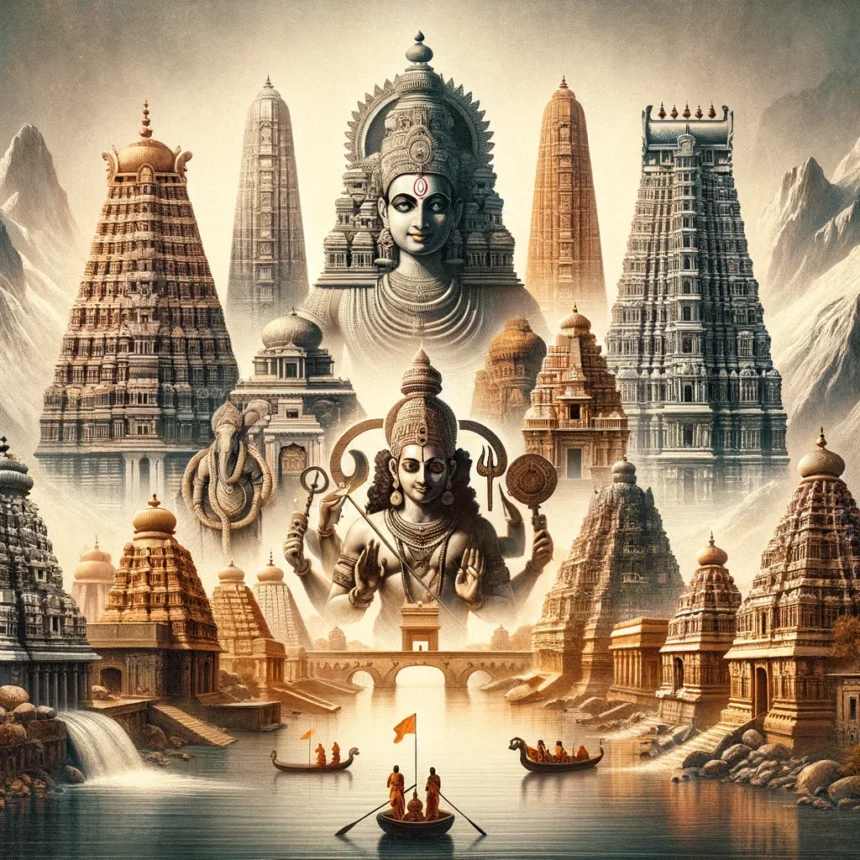 Top Five Ram Temples: Exploring Sacred Abodes
From Ayodhya to Bhadrachalam—temples that endured centuries of invasions and remained centers of devotion. The spiritual significance Nehru’s narrative couldn’t erase.
Why Honest History Matters
Mahmud of Ghazni conducted seventeen highly destructive campaigns into India, driven by religious zeal and the desire for plunder. Each campaign left devastation in its wake. He had no desire to conquer India permanently; his aim was to increase his war chest for expansion westward toward Baghdad.
Yet through Nehru’s intentional omissions, these seventeen highly destructive campaigns — marked by mass killings, enslavement, and systematic temple destruction — are reduced to footnotes beneath narratives of architectural appreciation.
The consequences of this erasure are profound:
History shapes identity. When a civilization doesn’t know what was done to it, it cannot fully understand itself.
Omission is a form of violence. To erase the suffering of millions is to kill them a second time.
Truth is the foundation of justice. Without honest reckoning, genuine reconciliation is impossible.
Cultural confidence requires historical clarity. A people who don’t know their past cannot confidently shape their future.
⚔️ RELATED: Resistance Against Colonial Oppression
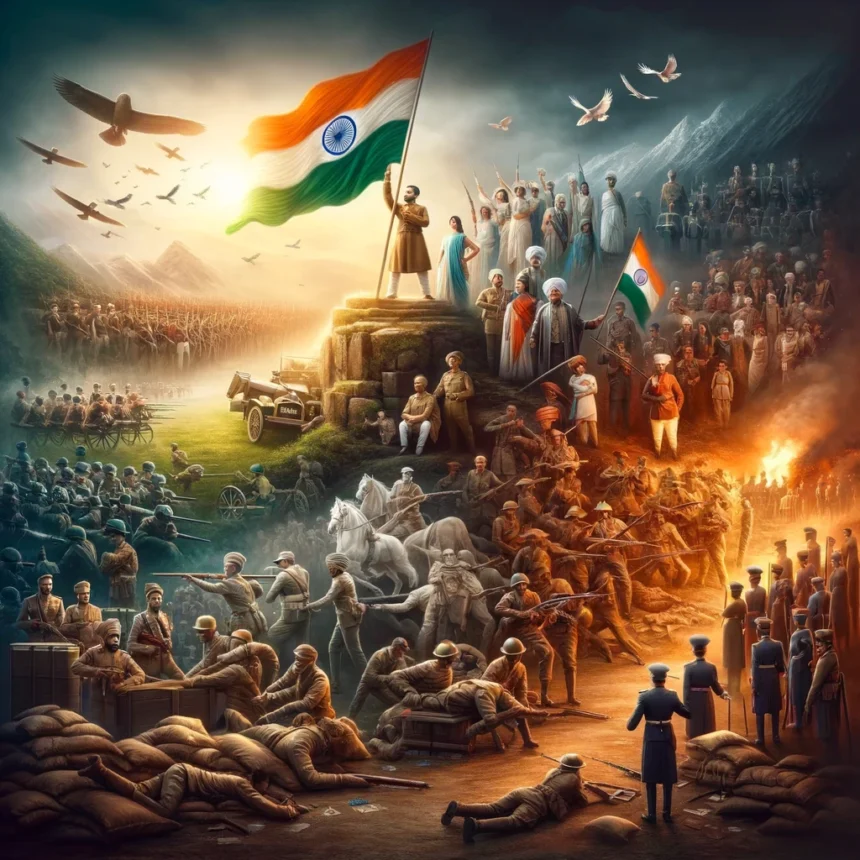 Indian Rebellion of 1857: Key Battles and Heroes
The first major uprising against British rule—where sepoys refused religious offense and sparked a revolution. See how resistance against oppression manifested across centuries, from Mahmud’s invasions to British colonialism.
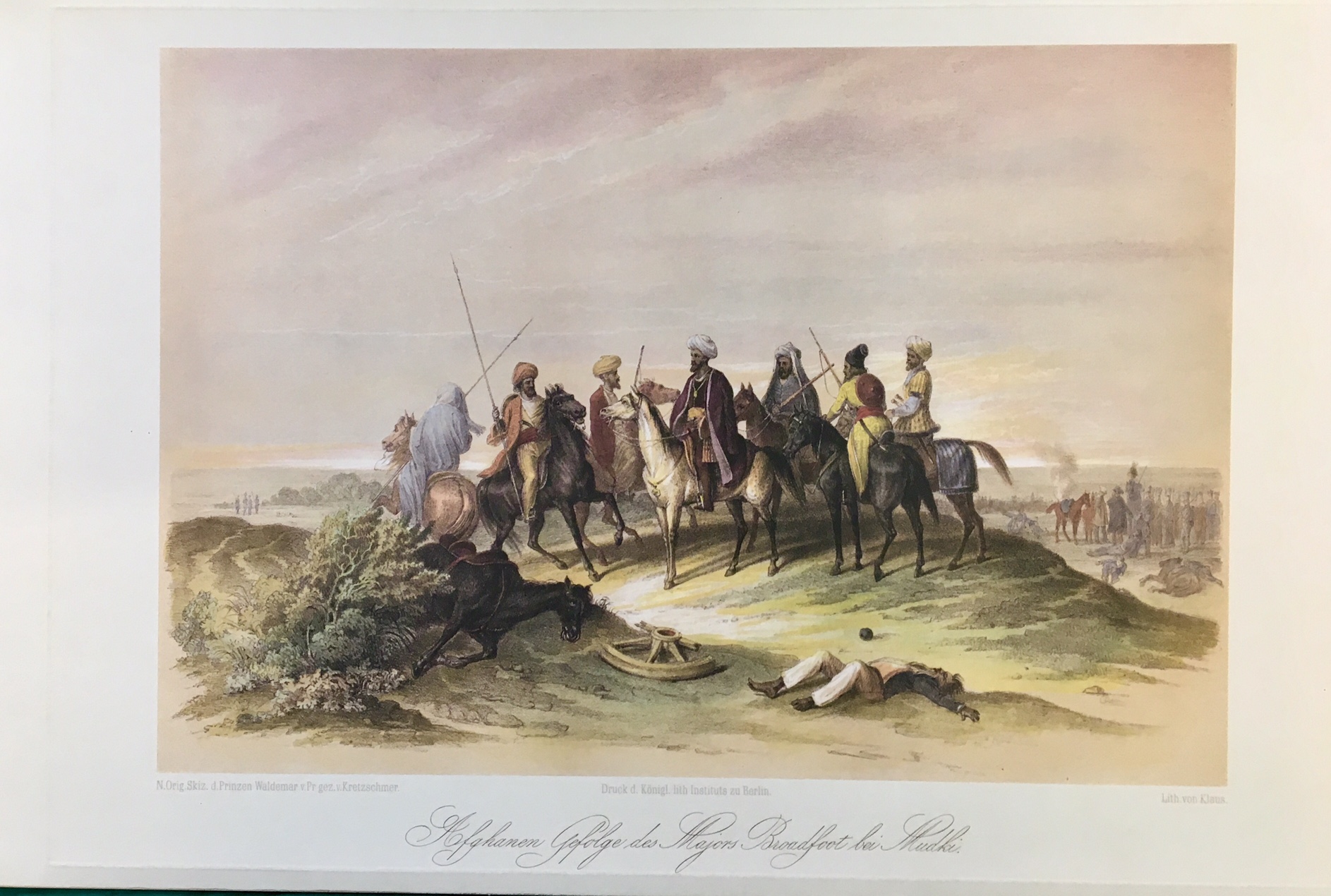 Battle of Mudki: A Fateful Clash in the First Anglo-Sikh War
The Sikh community’s valor in resisting colonizers—a tradition of fighting for justice that echoes earlier resistance to Mughal oppression. The warrior spirit that official history marginalized.
Explore More: Related Historical Perspectives
Temple Heritage and Resistance:
- Oldest Indian Temples: Timeless Treasures of Spiritual Brilliance – Discover India’s ancient temple heritage, many structures that survived despite centuries of invasions
- Architectural Wonder of India: The Kailasa Temple Ellora – How Aurangzeb tried to destroy this monolithic marvel in 1682, but the basalt held firm
- Top Five Ram Temples: Exploring Sacred Abodes of Lord Rama – Understanding the spiritual significance of temples that endured through centuries
Mughal Period and Hindu Resistance:
- Aurangzeb’s Tyrannical Monuments: A Legacy of Despotism – How temple demolition symbolized suppression of religious diversity
- Sinhagad Battle: Maratha Valor Unveiled – Hindu kingdoms resisting Mughal expansion and oppressive policies
- Chhatrapati Sambhaji Maharaj’s Attack on Burhanpur – Maratha resistance against Mughal authority
Freedom Struggle Context:
- Direct Action Day 1946 and Partition of India – How religious violence shaped partition, echoing medieval patterns
- India’s Freedom Struggle and Quit India Movement – Gandhi’s leadership and suppression of alternative strategies
- Indian Rebellion of 1857: Key Battles and Heroes – First major resistance against colonial oppression
What’s Next?
In our next post, we’ll examine how Nehru treated the Delhi Sultanate and Muhammad Ghori—the invader who opened India’s gates to centuries of Islamic rule. We’ll see the same pattern of intentional omissions, but with an additional twist: the transformation of brutal conquerors into bringers of “new vitality” to Indian civilization.
The technique of omission continues, but now we can recognize it for what it is: not history, but political narrative dressed in scholarly robes.
The question for us today: How many other “Mathuras” have been erased from our collective memory? And what would it mean to remember them honestly?
Join the discussion: Were you taught about Mahmud of Ghazni’s raids in school? If so, how were they presented? Share your educational experience in the comments.
Previous: Nehru’s Historical Narrative: How One Man’s Vision Shaped 70 Years of Indian Historiography
Next in Series: Muhammad Ghori and Delhi Sultanate: Nehru’s ‘Vigorous and Virile’ Invaders
Feature Image: Click here to view the image.
Videos
Glossary of Terms
- Jawaharlal Nehru: India’s first Prime Minister and author of The Discovery of India, whose historical interpretations shaped post-independence Indian historiography.
- Intentional Omission: A historiographical technique where facts are selectively excluded or minimized to shape a preferred narrative without outright denial.
- Mahmud of Ghazni: An 11th-century Turkic ruler who conducted multiple military campaigns into India, including the sack of Mathura in 1018 CE.
- Mathura Massacre (1018 CE): The large-scale destruction, killing, enslavement, and temple demolition during Mahmud of Ghazni’s sack of Mathura, as recorded in Persian chronicles.
- Tarikh-e-Yamini: A Persian court chronicle written by Al-Utbi, Mahmud of Ghazni’s secretary, documenting his campaigns with triumphalist religious framing.
- Al-Utbi: Court historian and secretary to Mahmud of Ghazni, whose writings provide primary contemporary accounts of the Ghaznavid invasions of India.
- Al-Biruni: A polymath and scholar at Mahmud’s court who documented Indian sciences and society while also lamenting the devastation caused by Ghaznavid conquests.
- Selective Quotation: The practice of extracting favorable statements from sources while excluding surrounding context that alters their meaning.
- The Discovery of India: Jawaharlal Nehru’s influential 1946 work that framed Indian history through a secular-nationalist lens.
- Persian Court Chronicles: Medieval Islamic historical records written to glorify rulers, often using large numerical expressions to convey scale and totality of conquest.
- Temple Destruction: The systematic demolition of Hindu temples during several medieval Islamic invasions, frequently celebrated in contemporary conquest narratives.
- Forced Conversion: Religious conversion occurring under coercive conditions following military defeat, loss of autonomy, and destruction of religious institutions.
- Civilizational Trauma: Long-term psychological, cultural, and social damage inflicted on a civilization through repeated violence and historical erasure.
- British Raj Legacy: Administrative and ideological continuities from colonial governance that persisted in independent India’s institutions and narratives.
- Nehruvian Historiography: A school of historical interpretation emphasizing secularism, synthesis, and minimization of religious conflict in Indian history.
- Archaeological Survey of India (ASI): India’s premier archaeological body whose excavations provide material evidence of historical destruction and reconstruction.
- Krishna Janmabhoomi: A sacred Hindu site in Mathura associated with Lord Krishna’s birth, showing archaeological layers of temple destruction and rebuilding.
- Synthesis Narrative: The portrayal of conquest-driven historical periods as harmonious cultural blending rather than conflict and domination.
- NCERT Textbooks: Government-prescribed educational texts in India that have historically reflected Nehruvian interpretations of medieval history.
- Civilizational Continuity: The survival of cultural, religious, and social traditions despite repeated invasions and systemic destruction.
#Nehru #Mathura #IndianHistory #TempleDestruction #HinduinfoPedia #NehrusviewonIslamicinvaders
Previous Blog of the Series:
Further Research:
- Al-Biruni’s Tarikh Al-Hind (complete translation)
- Al-Utbi’s Tarikh-e-Yamini
- Contemporary accounts of Mahmud’s raids
- Archaeological evidence of temple destruction in Mathura
Related Reading:
- Gandhi’s Controversial Leadership in the Indian Freedom Struggle
- How Nehru Continued British Raj Legacy in Post-Independence India
- Direct Action Day 1946 and the Partition of India
- Subhash Chandra Bose: Contrasting Strategies with Gandhi
- The Radcliffe Line: Elusive Boundary That Crafted Chaos
- Nehru’s Policy Analysis: Its Impact on Independent India
- Impact of Nehru’s Policies: The Faultlines and The Impact
Follow us:
- English YouTube: https://www.youtube.com/@Hinduofficialstation
- Hindi YouTube: https://www.youtube.com/@HinduinfopediaIn
- X: https://x.com/HinduInfopedia
- Instagram: https://www.instagram.com/hinduinfopedia/
- Facebook: https://www.facebook.com/Hinduinfopediaofficial
- Threads: https://www.threads.com/@hinduinfopedia