
Haq Movie Raises Question: Hindu Haq Is the Answer
Part 1 : The Hindu Haq Movie Analysis Series
The film everyone’s talking about asked the question. This series provides the evidence.
The Haq Movie Question Everyone’s Asking
Have you watched the Haq movie?
Thank you for reading this post, don't forget to subscribe!Released on November 7, 2025, this courtroom drama follows Shazia Bano—a Muslim woman in 1980s India abandoned by her lawyer husband after he takes a second wife. When he stops paying child maintenance, she approaches the court under Section 125 of the Criminal Procedure Code. He responds by pronouncing triple talaq. What begins as one woman’s legal battle transforms into a national debate that has dominated social media, sparked conversations in living rooms, and ignited heated debates on college campuses across India.
The movie’s storyline focuses on one specific demand:
the right of Muslim women to seek enquiry, justice, and accountability.
But in raising their question — Whose Haq? — the film unintentionally opens a far bigger one. A question no one has dared to articulate in public discourse.
Because once a society begins asking “Whose right matters?”, it cannot stop at one community. The question inevitably rebounds.
What about Hindu Haq?
Shazia’s courtroom declaration—”I am not just a Muslim woman, but an Indian Muslim woman, born and brought up in this soil. The law must look at me in the same way it does other Indian women”—was meant to assert Muslim women’s constitutional rights. But audiences across India heard something deeper: If one community can publicly demand rights, accountability, and equal treatment under law, why has another community’s parallel demands remained unspoken?
The movie never says this explicitly — but the silence around Hindu rights becomes louder because of the movie’s very premise.
The film asked a question about one community’s Haq.
India heard something deeper:
Hindu Haq Is.
The right to exist.
The right to dignity.
The right to equality.
The right that’s been silent too long.
The Haq movie has touched something raw. Something millions of Hindus have felt but never articulated — that uncomfortable truth no one acknowledges:
that in their own land, after centuries of persecution, Hindus still find themselves justifying their existence.
The film may not have intended it, but it ends up asking the civilizational question:
Whose Haq truly matters in India?
And for the first time in independent India’s history, a mainstream cultural moment allows the answer to surface:
Yours. Hindu Haq Is.
What the Haq Movie Reveals: When Silence Becomes Complicity
The Haq movie’s power lies not in what it shows, but in what it inadvertently exposes through audience reaction.
Consider the film’s reception pattern:
When Shazia confronts the local maulvi (played by Danish Husain) about her rights under Islamic law, the scene receives applause. Critics call it “brave” and “necessary”—one reviewer noted it as “a mic-drop moment without losing the intricacy of the topic.” Social media celebrates the questioning of religious authority when it involves Muslim women’s rights.
In the marketplace scene, when Shazia encourages other women to pick up the Quran and challenge patriarchal interpretations themselves, audiences stood and clapped. The film’s portrayal of her reading the Quran in an empty room—silently reclaiming her right to interpret her own faith—was praised as “controlled emotion” and “masterclass” acting.
But swap the context:
When Hindus question government control of temple revenues while mosques remain autonomous—silence or accusations of “majoritarianism.”
When Hindus demand investigation into systematic festival disruptions like the Ganesh Festival in Vadodara where eggs were hurled at devotees—labeled “communal agenda.”
When Hindus seek accountability for selective judicial urgency—dismissed as “persecution complex.”
The movie’s powerful narrative arc—Shazia moving from silence to voice, from accepting injustice to demanding her constitutional rights—resonates because it names what has been unnamed. For decades—since independence—Hindus have watched a peculiar double standard play out:
When others assert their rights: It’s called minority protection.
When Hindus assert theirs: It’s called majoritarianism.
When others demand equality: It’s called social justice.
When Hindus demand equality: It’s called fascism.
When others preserve their culture: It’s called identity protection.
When Hindus preserve theirs: It’s called extremism.
The Haq movie protagonist’s journey from silence to voice—beautifully portrayed through Yami Gautam’s “controlled emotion” and “rage and dignity with a glance”—mirrors what millions of Hindus recognize. Except Hindus haven’t received the cultural permission to make that same journey. Not yet.
Hindu Haq Is doesn’t emerge from anger alone—it comes from exhaustion. The exhaustion reviewers described in Shazia’s character—the “small humiliations” the director “lingered on”: silently serving tea to the new wife, watching a new bed being delivered, enduring how “community gossip moves like wildfire”—is the same exhaustion Hindus feel watching:
– Their temples controlled by the government while mosques and churches remain autonomous
– Their festivals disrupted while others proceed unimpeded
– A democracy that treats equal protection under law as optional when Hindus are involved—a pattern documented across multiple Supreme Court decisions
Hindu Haq Is doesn’t emerge from anger alone—it comes from exhaustion. From watching your temples controlled by the government while mosques and churches remain autonomous. From seeing your festivals disrupted while others proceed unimpeded, as happened at the Ganesh Festival in Vadodara where eggs were hurled at devotees. From living in a democracy that treats equal protection under law as optional when Hindus are involved, a pattern we’ve documented across multiple Supreme Court decisions.
 Theological Roots of Hindu Discrimination
The discrimination Hindus face isn’t accidental—it’s doctrinal. Understanding why requires examining how Islamic theology classifies Hindus not as “People of the Book” deserving limited respect, but as “kafir”—polytheists marked for conversion or subjugation, a distinction explored in detail through Nazia’s theological analysis of this classification crisis.
Deep Dive: Nazia’s Classification Crisis: Why Hindus Are ‘Kafir,’ Not ‘People of the Book’
This classification shapes everything from daily religious practices that normalize Hindu othering to educational systems that manufacture contempt for Hindu civilization. The Surah Tawbah verses that target polytheists specifically aren’t historical artifacts—they’re recited daily by millions, amplified through technology and electoral mathematics.
The Haq Movie’s Revolution: Naming the Unnameable
The Haq Movie’s Revolution: Naming the Unnameable
The Haq movie’s most powerful moment isn’t dialogue—it’s transformation.
The film’s structure follows Shazia from complete voicelessness to public assertion. In early scenes, director Suparn S Varma shows her silently serving tea, accepting humiliation, living the “small indignities” without protest. Critics noted how the film “allows the silences to be more impactful”—scenes of Shazia picking up broken bangles, reading the Quran alone in an empty room.
Then comes the shift.
By the Supreme Court sequence, she stands before India’s highest judicial authority and declares her right to equal treatment. The camera holds on her face—that silence transformed into power. Reviewers described it as watching “history being discussed right before my eyes.”
That transformation is the film’s revolution.
Because the movie does something the creators may not have intended: it makes absence visible.
By highlighting one community’s journey from silence to voice, from accepting injustice to demanding constitutional rights, the film exposes the silence around another community’s identical needs—the Hindu right to equality, dignity, and protection in their own homeland.
The film’s three-act structure reinforces this accidentally:
Act 1: Shazia accepts her voicelessness as normal
Act 2: She realizes silence enables injustice
Act 3: She publicly demands her rights in India’s Supreme Court
Hindus watching this recognize the arc—because they’re still stuck in Act 1.
Still being told that questioning systematic discrimination makes them “extremist.”
Still gathering courage that’s labeled “communal” before it’s even expressed.
Still waiting for cultural permission to complete the journey the movie depicts.
The movie never utters the words “Hindu Haq Is.”
But the audience hears it anyway.
Because the contrast is impossible to ignore.
When Shazia stands before Islamic religious authorities and challenges their interpretation of Sharia law—demanding they actually read the Quran themselves rather than imposing patriarchal traditions—the theater applauds. Critics called it “piercing and unforgettable dialogue” and “truth spoken for generations of women who were never heard.”
When Hindus make parallel demands about temple autonomy—they’re accused of divisiveness.
When the movie shows Shazia being ostracized by her community for refusing to accept the maulvis’ verdict, facing social boycott while fighting for her constitutional rights, critics praised it as “brave storytelling” and “handling a sensitive subject with maturity.”
When Hindus document parallel ostracization for asserting equal rights—they’re dismissed as “playing victim.”
The refusal to question Hindu rights, the insistence that Hindus “prove” their secularism, the expectation that Hindus surrender their claims while others amplify theirs—this hypocrisy becomes visible because the movie puts Haq at the center of national conversation.
What the movie does—unintentionally but unmistakably—is break the dam.
It shows that if one group’s Haq can be discussed openly, dramatized in cinema with a ₹10+ crore budget, celebrated in reviews, and debated on national television, then Hindu Haq must also be acknowledged.
Not “someday.”
Not “in theory.”
But now.
The film becomes a cultural moment not because it names Hindu Haq—but because it makes its absence impossible to hide.
It cracks the silence.
And once that silence cracks, the words emerge on their own:
Hindu Haq Is.
Beyond the Haq Movie: Why This Series Matters
If the Haq movie opened the door, this series steps through it.
In the coming weeks, we will explore the questions the film only hints at — the deeper structures that shape how rights are granted, denied, manipulated, or silenced in India.
We will look at how belief systems classify people, how institutions shape narratives, how history is remembered or erased, how laws create asymmetry, how money and power flow, how global networks influence local outcomes, and ultimately what it actually means to assert Hindu Haq in the modern world.
Not through a fixed number of parts.
Not through rigid promises.
But through a living inquiry that expands as new facts, events, and perspectives emerge.
The details will unfold as the conversation deepens.
The themes will sharpen as the truth becomes impossible to ignore.
What matters is simple:
Hindu Haq Is — and this series will follow every path needed to understand why.
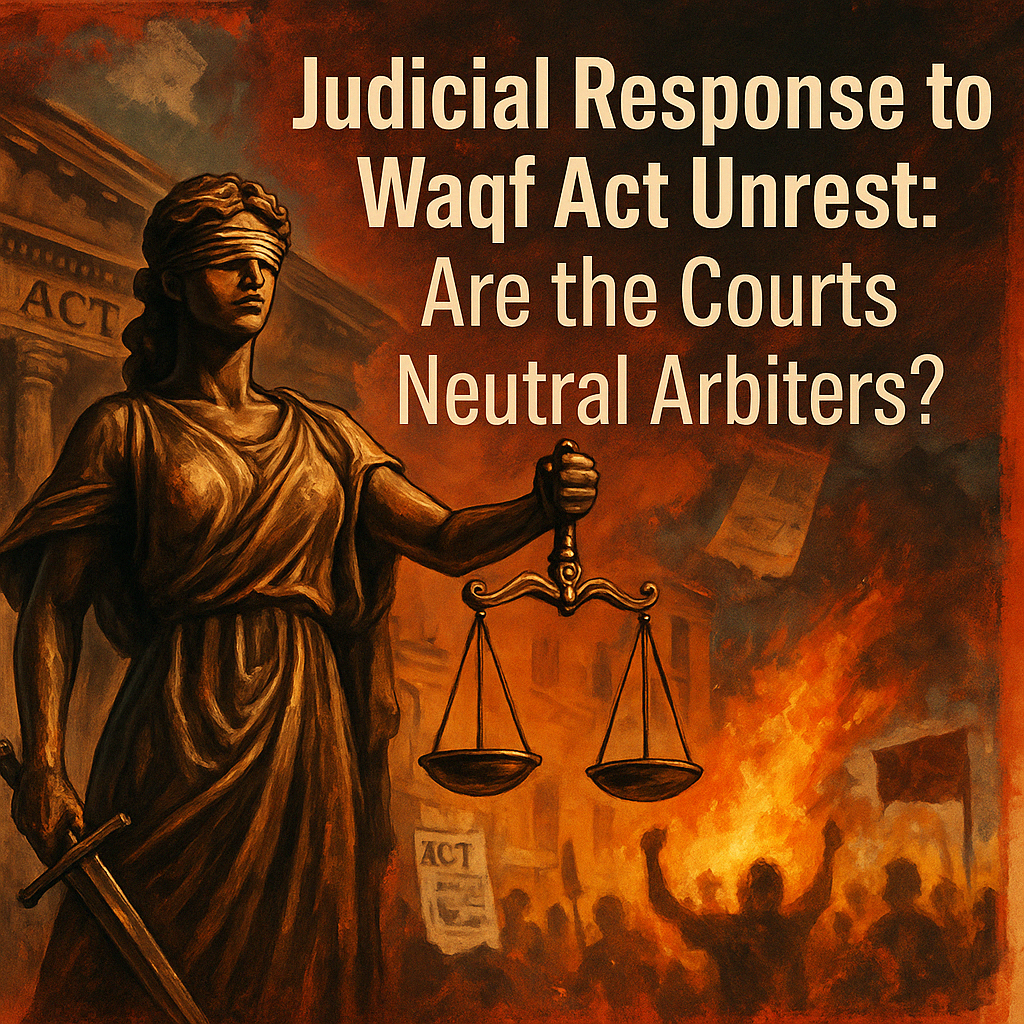 How Indian Law Institutionalizes Hindu Disadvantage
Hindu Haq Is undermined not through informal discrimination but through constitutional provisions that treat Hindus differently. While Wakf Act gives Muslims unprecedented property claiming powers, Hindu temples face government control that no other religious institution endures.
Legal Analysis: Judicial Response to Wakf Act Unrest: Are Courts Neutral Arbiters?
The pattern extends to selective judicial urgency—instant relief for some communities, decades-long delays for Hindus. Even basic infrastructure decisions like vendor identification at Kanwar Yatra become “communal” when Hindus are involved, while similar practices elsewhere pass without comment.
The Haq Movie’s Uncomfortable Truths
The Haq movie’s protagonist never speaks about Hindu rights—Shazia Bano’s focus lies elsewhere, on Muslim women’s autonomy within Islamic structures and constitutional equality under Indian law. But the film’s narrative architecture creates an unintended framework that exposes systematic asymmetry.
Scene parallels that reveal the pattern:
State Control of Religious Institutions:
Movie shows: Abbas (as lawyer and religious authority) controlling Shazia’s access to Islamic justice, with maulvis deciding her rights
Hindu reality: 4 lakh Hindu temples under government control while mosques and churches self-govern
Hindu Haq Is means religious autonomy—currently denied.
Legal Discrimination:
Movie shows: Shazia denied justice under Muslim personal law, having to fight all the way to Supreme Court for basic maintenance rights that secular law already guaranteed
Hindu reality: Wakf Board claims property without proof while Hindus fight decades for archaeological evidence of their own temples
Hindu Haq Is means equal legal standing—currently absent.
Religious Text Interpretation:
Movie shows: In the powerful marketplace scene, Shazia encourages women to pick up the Quran themselves and read—challenging the monopoly of male religious authorities. Critics called this moment where she says “the Triple Talaq is a misinterpretation of the Quran” and asks the court to note that “Ahmad has not read the scriptures himself” as pivotal.
Hindu reality: Hindu children taught shame about their festivals and gods in NCERT textbooks while Islamic texts receive reverent treatment
Hindu Haq Is means dignity in education—currently lacking.
Cultural Practice Under Pressure:
Movie depicts: Shazia being ostracized by her entire community for fighting for her rights—her parents suffering, gossip spreading “like wildfire,” social boycott intensifying
Hindu reality: Ganesh processions targeted with eggs (Vadodara), Durga immersions blocked, Diwali called “pollution” while other celebrations proceed unquestioned
Hindu Haq Is means safe cultural practice—currently compromised.
Historical Narrative Control:
Movie addresses: How the 1985 Shah Bano Supreme Court judgment—which ruled in favor of Muslim women’s maintenance rights—was immediately overturned by the Rajiv Gandhi government passing the Muslim Women (Protection of Rights on Divorce) Act, 1986, restricting maintenance to just the 90-day iddat period
Hindu reality: Kashmir’s ethnic cleansing downplayed, temple destruction minimized, forced conversions erased from curriculum
Hindu Haq Is means honest history—currently censored.
The film’s emotional core—captured in the scene where Shazia picks up her broken bangles, symbolizing shattered dignity—resonates because Hindus recognize the pattern at a cellular level.
When Shazia refuses to consult with Islamic leaders after the court suggests it, choosing instead to continue her legal fight despite community ostracization, audiences understood her choice. One reviewer noted: “Every word feels like truth spoken for generations of women who were never heard.”
Hindu audiences heard that truth differently.
Because they’ve been living that denial—but without the cultural permission to speak it that the Haq movie gave to Shazia’s character.
These aren’t isolated incidents. They form a systematic pattern that has remained unaddressed for decades. The movie may not speak of Hindu Haq, but by making Haq itself a national question through compelling storytelling (rated 8.7/10 on IMDB, praised as “one of the most powerful films of 2025”), it exposes the silence around Hindu rights—a silence this series now breaks openly.
From Haq Movie to Reality: What Hindu Haq Is Means
Equal Protection Under Law
When courts show selective urgency based on community identity, Hindu Haq Is demands equal access to justice.
When Wakf Act gives property superpowers to one community, Hindu Haq Is requires equal legal treatment.
Temple Autonomy
If churches and mosques self-govern, Hindu Haq Is means ending state control of temple revenues. If other faiths manage their institutions, Hindu Haq Is requires the same freedom.
Historical Justice
If archaeological evidence proves Krishna Janmabhoomi existed before the mosque, Hindu Haq Is means reclamation isn’t extremism—it’s restoration. If documentation confirms temple destruction, Hindu Haq Is requires acknowledgment, not denial.
Educational Honesty
If classroom curricula manufacture contempt for Hindu civilization, Hindu Haq Is demands truthful history.
If textbooks lionize invaders while erasing defenders, Hindu Haq Is requires balanced accounts.
Safe Cultural Practice
If festivals face systematic disruption, Hindu Haq Is means security for cultural expression.
If Maha Kumbha Mela attracts millions despite obstacles, Hindu Haq Is celebrates resilience while demanding better conditions.
 Why Hindu Haq Is Part of Global Pattern
The discrimination Hindus face isn’t unique to India—it follows a documented global template. From Lebanon’s transformation into Hezbollah state to France’s surrender to demographic pressure, the playbook repeats.
International Context: Regime Change Playbook: A Manual for Color Revolution Operations
Understanding that demographic reality drives policy changes helps explain why Hindu Haq Is faces resistance—because its assertion disrupts strategic plans that rely on Hindu passivity. The UN’s institutional bias and media manipulation patterns show this isn’t paranoia—it’s documented reality.
Why the Haq Movie Now? Why This Moment?
Timing matters. The Haq movie released on November 7, 2025—and the film’s reception reveals why this moment was inevitable.
The movie is based on the 1985 Supreme Court judgment in the Shah Bano case (Mohd. Ahmed Khan vs Shah Bano Begum), but it arrives exactly 40 years later at an inflection point. The film connects the 1980s legal battle to current debates about the Uniform Civil Code (Article 44), triple talaq abolition, and women’s rights versus religious personal law.
This isn’t coincidence.
The movie resonates now because audiences have reached saturation point. The film itself depicts this exhaustion: in one powerful scene, Shazia silently serves tea to her husband’s new wife while community members watch—the director “lingering on the small humiliations.” Critics noted this showed how “silence wasn’t peace—it was slow erasure.”
After decades of:
– Watching Delhi Riots blamed on CAA rather than systematic violence (much like the movie shows how Shazia’s fight for constitutional rights gets reframed as “betraying Islam”)
-Seeing the Mumbai attacks commemorated year after year without confronting the ideology that drove them—namely Pakistani state-sponsored terrorism—an omission reinforced by how even mainstream films deliberately avoid addressing this reality, mirroring the film’s portrayal of Abbas deliberately losing the High Court case in order to escalate Shazia’s suffering into a Supreme Court spectacle.
-Observing Kashmir’s ethnic cleansing reduced to an “exodus” rather than genocide, despite the fact that India’s National Human Rights Commission described it as “akin to genocide” as early as 1999, while the state continues to classify the victims as “migrants” instead of refugees—a framing similar to how the film presents social ostracization as a natural outcome rather than a coordinated act of punishment.
– Experiencing Assam’s Khoirabari Massacre forgotten while other tragedies receive eternal remembrance
– Witnessing caste used as weapon Hindu society while unity is called supremacism
Hindu Haq Is becomes not just a statement but a necessity.
The movie captures this exhaustion viscerally. The scene where Shazia reads the Quran alone in an empty room—critics called it showing “emotion without overshadowing the story”—articulates that bone-deep tiredness. The exhaustion of explaining, justifying, defending your right to simply exist with dignity.
The film’s Supreme Court climax—where Shazia presents her interpretation of Sharia law versus Abbas’s arguments about independence movement promises regarding Muslim personal law—shows what happens when that exhaustion transforms into assertion. Reviewers noted they felt they were “watching history being discussed right before my eyes.”
The audience reaction in theaters—standing ovations during the marketplace scene where Shazia encourages women to read the Quran themselves—reveals that millions were waiting for cultural permission to move from silence to voice.
The Haq movie says through cinema what this series documents through evidence: Enough.
Enough justifying equality as if it’s extremism.
Enough proving you deserve rights others claim automatically.
Enough silence mistaken for consent.
Because silence wasn’t peace—it was slow erasure.
And the Haq movie, inspired by a case from 1985 that the Rajiv Gandhi government immediately overturned with the 1986 Muslim Women Act, gave form to that realization 40 years later—showing that some silences can only stay buried so long.
From Victimhood to Voice: The Haq Movie Effect
The Haq movie matters because it reframes the conversation—and Hindu audiences immediately recognized the framework they’ve been denied.
The movie’s narrative arc:
– Setup (First Half): Shazia accepts her voicelessness as normal, silently enduring humiliation
– Conflict (Second Half): She realizes silence enables injustice, approaches the courts
– Resolution (Supreme Court): She publicly asserts her constitutional rights before India’s highest judicial authority
Critics noted the pacing: “The story takes nearly half the film’s duration to reveal the relationship between Shazia and Abbas, prior to arriving at the court.” This deliberate choice shows the journey from acceptance to assertion—the transformation that makes the eventual courtroom confrontation powerful.
What Hindus watching this see:
They’re still in the “Setup” phase—still being told acceptance equals maturity, that assertion equals extremism.
The movie’s transformative power lies in showing that journey as legitimate, necessary, and heroic when Shazia takes it. Yami Gautam’s performance—described as “controlled emotion,” “rage and dignity with a glance,” “masterclass in restraint”—validates the move from silence to voice.
But that same journey remains delegitimized when Hindus attempt it.
Framework shift the movie demonstrates:
Old Framework: Shazia must prove she’s not betraying Islam by challenging maulvis
Movie Framework: Her silence betrays herself—Abbas’s advocate says “If you were a true Muslim, and a true and faithful wife, you would never have said such things,” but the film frames this as manipulation, not truth
Hindu Application: Hindus must prove they’re not extremists vs. Hindu Haq Is—others must prove their claims
Old Framework: Shazia’s assertion risks “creating division” in the Muslim community
Movie Framework: Division already exists—naming it enables healing (the film shows community ostracization happening regardless)
Hindu Application: Hindu assertion equals communalism vs. Hindu Haq Is—equality isn’t extremism
Old Framework: Shazia should earn rights through patient compliance
Movie Framework: Rights exist inherently under Constitution—claiming them is dignity (her entire argument rests on Section 125 already existing)
Hindu Application: Hindus must earn rights through good behavior vs. Hindu Haq Is—rights aren’t conditional
The movie’s Supreme Court sequence crystallizes this shift. When Shazia challenges Abbas’s legal arguments—when she presents her own interpretation of the Quran against patriarchal readings—she’s not asking permission. She’s not seeking validation.
She’s stating reality: My Haq Is.
And the Haq movie challenges viewers: If you disagree, the burden is yours to prove why this assertion somehow threatens anyone.
Hindu audiences applying this framework to their own situation immediately see the asymmetry:
When the movie shows this assertion: Box office opening, critical acclaim (“powerful film,” “thought-provoking,” “award-worthy performances”), Netflix streaming rights
When Hindus make parallel assertion: Accusations of communalism, boycott calls, “dangerous extremism” labels
This contrast—made visceral through cinema rated 8.7/10 on IMDB—is the Haq movie’s unintended gift to Hindu consciousness.
It shows the formula for moving from defensiveness to declaration.
It demonstrates cultural permission for assertion without apology.
It proves that demanding equality doesn’t require violence—just voice.
Hindu Haq Is.
And the Haq movie, by showing one community’s journey to that declaration through the 1985 Shah Bano case—a case whose Supreme Court victory was immediately overturned by the 1986 Muslim Women Act yet still gets celebrated in 2025 cinema—accidentally revealed that another community has been denied even the starting point.
 Why Hindu Haq Is Faces Coordinated Opposition
The resistance to Hindu Haq Is isn’t organic—it’s organized. From academic credentials used to manufacture authority to NGO-funded legal opposition, the infrastructure opposing Hindu equality is vast and well-funded.
Follow the Networks: Abrahamic Religions Alliance: How Global Networks Target India’s Democracy
When Christianity and Islam unite despite theological differences, it reveals that Hindu Haq Is threatens a system built on Hindu disadvantage. When international law gets weaponized against the world’s oldest continuous civilization, it shows the stakes involved.
What This Series Will Do for Haq Movie Viewers
If you watched the Haq movie and felt something stir inside—validation, anger, relief, hope—this series is for you. If the Haq movie made you realize you’ve been told demanding equality makes you extremist—this series is for you. If after watching the Haq movie you’ve carried the quiet burden of defending your existence in your own homeland—this series is for you.
Over the next 10 parts, we will:
Document the discrimination with data, not just anecdotes
Explain the mechanisms through which Hindu Haq Is gets denied
Expose the networks, funding, and coordination behind the denial
Connect Indian patterns to global template of civilizational warfare
Defend Hindu Haq Is using both ancient dharma and modern jurisprudence
Define what Hindu Haq Is actually requires in practical terms
Demand recognition without apology, assertion without violence
This isn’t revenge literature. This isn’t hate speech. This is documentation of systematic discrimination and assertion of equal rights. Hindu Haq Is.
The Question the Haq Movie Poses
The Haq movie ends with an open question: Whose Haq?
The Haq movie shows competing claims. One community demands rights while denying them to others. Another community grants rights it’s never received. A third watches, waiting to see if anyone will name the obvious.
And then the Haq movie answers its own question. Not through dialogue. Not through speeches. But through the audience’s reaction. Through the fact that millions watching felt something they’d suppressed: recognition.
Recognition that Hindu Haq Is isn’t a new demand. It’s an old reality finally spoken aloud—first by the Haq movie, now by this series.
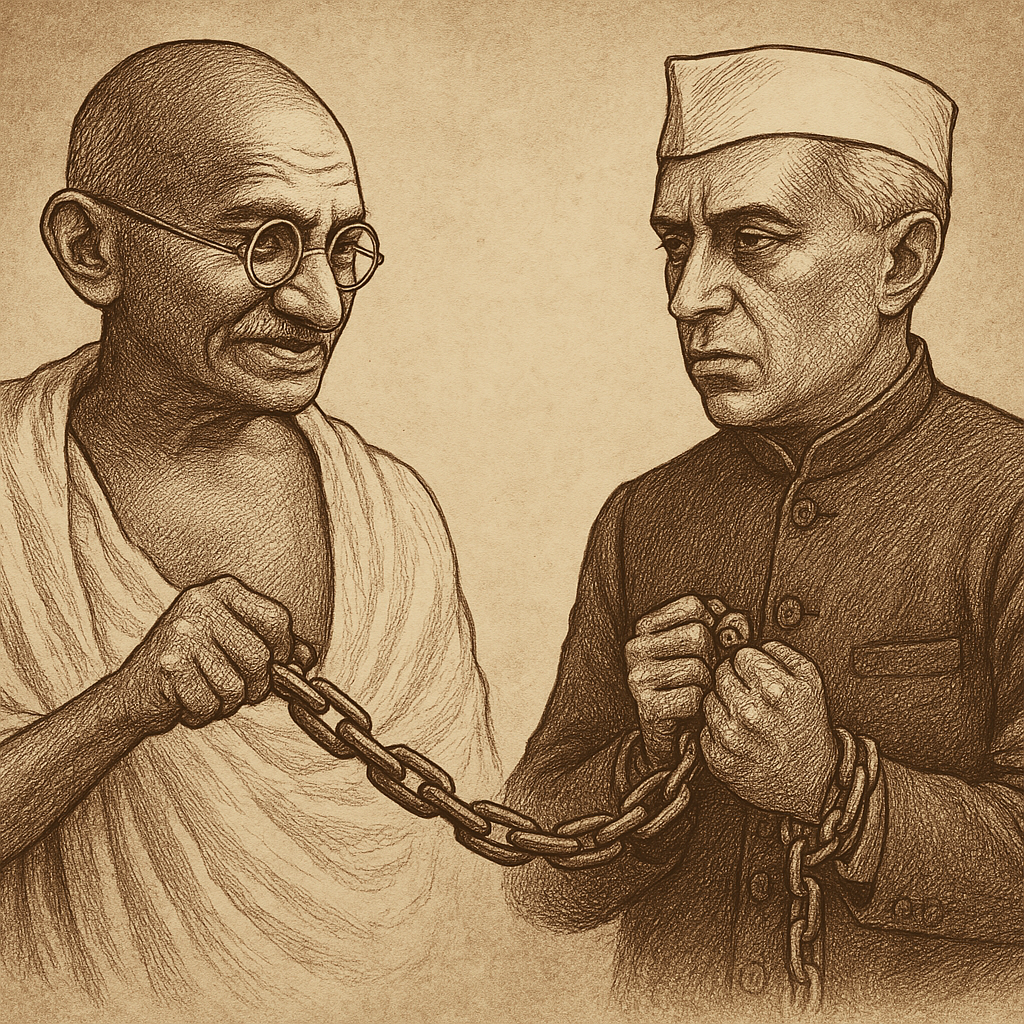 The History They Don’t Teach
Hindu Haq Is requires honest history—which means confronting the destruction that shaped India. When Gandhi’s murder gets sanitized and Nathuram Godse gets demonized without context, it shows how history serves power, not truth.
Reclaiming Narrative: Understanding figures like Guru Ram Das Ji and movements like Satyamurti’s freedom struggle shows Hindu Haq Is has always existed—it was systematically erased.
Even positive Hindu expressions like Rooted in Dharma: Mahavir Pahad revival get minimal coverage, while minority assertions receive amplification. This asymmetry isn’t accidental—it’s strategic.
The Conversation Begins: After the Haq Movie
The Haq movie started a conversation. This series continues it.
The movie is called “Haq.”
The question the Haq movie poses: Whose Haq?
The answer this series provides: Hindu Haq Is.
Not was. Not should be. Not will be.
Is. Present tense. Current reality. Existing right.
And after watching the Haq movie, silence is no longer an option.
Welcome to the Post-Haq Movie Analysis
Welcome to the conversation the Haq movie started.
Welcome to the truth the Haq movie pointed toward.
Welcome to the evidence behind what the Haq movie showed.
Welcome to Hindu Haq Is—the unspoken right that the Haq movie made impossible to ignore.
Because if the Haq movie can say it on screen, we can document it with evidence.
If the Haq movie can ask the question in cinema halls, we can provide the answer in data.
If the Haq movie sparked the conversation, this series completes it.
Hindu Haq Is.
And this series proves what the Haq movie showed—with evidence, history, law, and truth.
 From Recognition to Action
Understanding Hindu Haq Is means moving beyond complaint to strategy. While Sharia implementation in Muslim-majority areas shows how parallel systems develop, Hindu Haq Is requires defending constitutional equality against such encroachment.
Strategic Thinking: Rights-Based Solutions: Breaking Free from Strategic Deception Frameworks
The great deception operates through rights language to advance anti-democratic goals. Hindu Haq Is must be asserted through democratic means while understanding the civilizational warfare being waged. This series will show how.
Feature Image: Click here to view the image.
Videos
#HaqMovie #HinduHaqIs #HaqFilm #HinduRights #EqualityNotSupremacy #BreakTheSilence #CivilizationalDefense #TheHinduHaqMovieAnalysisSeries
Related Reading Across Our Network
Understanding Legal Discrimination (.IN):
- Selective Judgement of Waqf Act: Socio-Judicial Bias?
- Waqf Act and Judging Justice: Selectivity or Silence?
- Judicial Response to Waqf Act Unrest
- Ganesh Festival in Vadodara: Eggs Hurled, Peace Tested
Understanding Theological Roots
- Nazia’s Classification Crisis: Why Hindus Are ‘Kafir’
- Nazia’s Bombshell: Decoding Surah Tawbah’s 26 Verses
- Nazia’s Daily Doctrine: How Azaan Normalizes Hindu Othering
- Quran Quote That Sparked Firestorm: Nazia and the Fear of Facts
Understanding Historical Context
- Delhi Riots 2020: Unmasking Real Causes Beyond CAA
- Assam Agitation: Khoirabari Massacre and Its Legacy
- Article 370: Path to Insertion and Revocation
- Mumbai Attacks: Reflections on November 26’s Impact
Understanding Global Patterns
- Lebanon Civil War: From Paris of Middle East to Hezbollah State
- Muslim Brotherhood France: Intelligence Report Media Ignored
- Regime Change Playbook: Manual for Color Revolution Operations
- Abrahamic Religions Alliance: How Global Networks Target India
Follow us:
- English YouTube: https://www.youtube.com/@Hinduofficialstation
- Hindi YouTube: https://www.youtube.com/@HinduinfopediaIn
- X: https://x.com/HinduInfopedia
- Instagram: https://www.instagram.com/hinduinfopedia/
- Facebook: https://www.facebook.com/Hinduinfopediaofficial
- Threads: https://www.threads.com/@hinduinfopedia