
RSS Scale and Ecosystem: 1 Lakh Shakhas Manufacturing Character
भारत/GB
Part 8/Part B Begins: Human Manufacturing Crisis Series
PART B: THE ORGANIZATION – RSS’s Massive Ecosystem
Series: Building Without Plumb and Line | भाग 8: शाखा: मानव निर्माण का कारखाना (Shakha: The Human Construction Factory)
Understanding RSS Scale and Ecosystem: Shakhas As Manufacturing Character
Continuing with discussion started with the viral KBC moment – that brilliant child on Amitabh Bachchan’s quiz show who could answer complex questions yet showed zero respect for one of India’s most accomplished humans sitting across from him that reflected the human manufacturing defect we present the next part of our analysis. The RSS scale and ecosystem shatters every assumption about what’s possible in character manufacturing. That child is the product of credential manufacturing. Cambridge, Harvard, Oxford, IIM, IIT operate on the same principle – measuring success by placements, starting salaries, Fortune 500 CEOs. They process millions through credential factories while producing brilliant fools who collapse under minor setbacks, who disrespect authority while demanding rights, who accumulate knowledge without building character. The KBC child with a degree will still be the KBC child. RSS produces something entirely different.
Thank you for reading this post, don't forget to subscribe!RSS measures success differently. By character. By service capacity. By civilizational impact. And by those metrics, the RSS scale and ecosystem produces results that make elite universities look tiny: 1 President, 1 Prime Minister, 1 Home Minister, 1 Vice President, 1 Lok Sabha Speaker, 18 Chief Ministers, 29 Governors, and 15 crore (150 million) disciplined, duty-bound, sacrifice-ready citizens – the same swayamsevaks who fed flood victims in Kerala and delivered rations door-to-door during Covid19 without asking for religion, and serve without favor even to those who oppose the RSS philosophy.
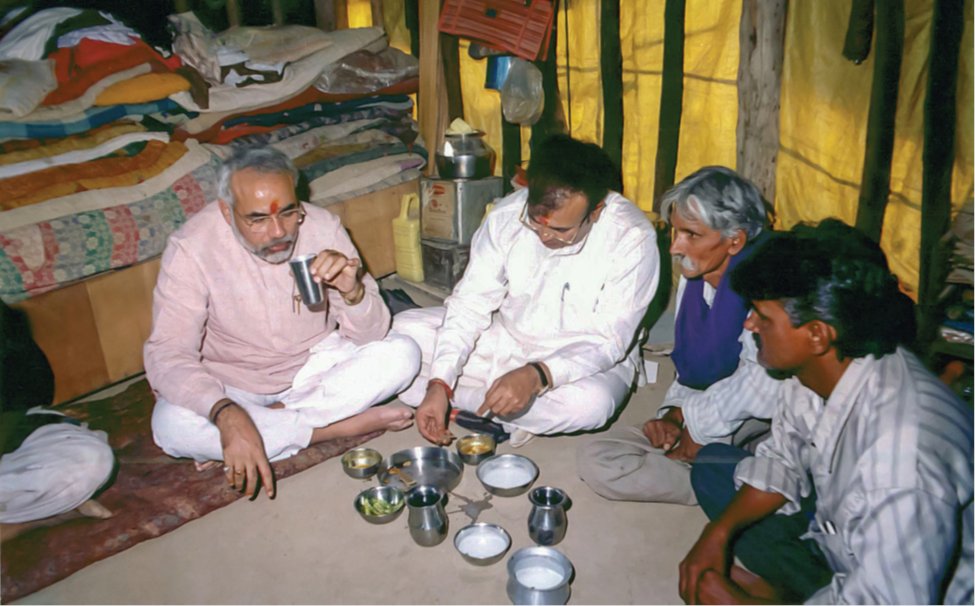
No entrance exams. No tuition fees. No formal degrees. No campus recruitment. Just daily shakha attendance for years, systematic character formation through ancient principles applied with modern rigor, and the unglamorous work of human manufacturing done the old way – with discipline, pressure, and patience.
Part A of this series (Articles 1-7) documented the human manufacturing crisis and how RSS preserved solutions the West abandoned. Part B examines the proof: RSS’s organizational scale and structure demonstrate that proper human manufacturing works not just theoretically but practically at civilizational scale.
Welcome to the RSS scale and ecosystem – the world’s largest character manufacturing network, operating successfully for a century while “experts” declared it impossible.
RSS at 100: The Vision Behind the Scale
From a handful of swayamsevaks in Nagpur to a global network across 40+ countries, discover the philosophical engine behind RSS expansion — not marketing, not funding, but character replication.
The Numbers That Shatter Assumptions
Microsoft has 221,000 employees worldwide managing $3 trillion market cap. Google’s parent Alphabet employs 190,000. Amazon’s workforce reaches 1.5 million. These numbers impress business analysts and inspire MBA case studies.
Now consider the RSS scale and ecosystem:
Core RSS Infrastructure
1,00,000 shakhas (100,000 daily character manufacturing centers)
Every morning before sunrise, across India and in 40+ countries globally, shakhas gather. Not in fancy buildings with modern facilities, but often under trees, in rented halls, in open grounds. No impressive infrastructure. No high-tech equipment. No certified degrees at the end. Just systematic character formation through daily discipline and hierarchical structure.
According to RSS’s own documentation, these 100,000 shakhas operate in every Indian state, from metropolitan Delhi to remote Arunachal Pradesh villages, from Rajasthan deserts to Kerala backwaters. Each follows identical structure: physical drill, intellectual discussion (bauddhik), prayers, and character formation through peer modeling and mentor guidance.
15,00,00,000 swayamsevaks (150 million individuals transformed through shakha)
This isn’t membership on paper. This is 150 million people who have passed through RSS’s character manufacturing process. Not as customers purchasing services. Not as students earning credentials. As swayamsevaks undergoing transformation through disciplined daily practice.
For perspective: the United States has 330 million total population. RSS has processed nearly half that number through its character formation system. Germany’s entire population is 83 million. The RSS scale and ecosystem has manufactured character for nearly twice Germany’s population – without government mandates, without billion-dollar budgets, without corporate marketing campaigns.
7,00,000 purv sainik parishad members (700,000 ex-military with RSS training)
India’s veteran community numbers approximately 3.2 million. RSS’s Purv Sainik Parishad organizes nearly 700,000 – roughly 22% of all Indian veterans. These are men who served in armed forces AND received RSS character formation, combining military discipline with civilizational purpose.
This dual training – military precision plus dharmic values – creates a unique cadre capable of both protecting borders and building society. When disasters strike, when communities face crisis, when nation needs service without recognition, these 700,000 provide backbone of response.
9,000 full-time pracharaks (living on minimal stipends for civilizational service)
Here’s where the RSS scale and ecosystem reveals its deepest difference from corporate or governmental organizations. Nine thousand full-time workers who receive no salary. No health insurance. No retirement benefits. No stock options. No performance bonuses.
Pracharaks take vows of celibacy, simplicity, and lifelong service – many walking away from fancy high-paying jobs, prestigious careers, and comfortable family lives that their education and capability could easily have secured. They live on minimal stipends barely covering basic needs. They own virtually nothing. They accumulate no wealth. Yet they work harder, longer, and more effectively than executives earning millions.
Pracharaks take vows of celibacy, simplicity, and lifelong service. They live on minimal stipends barely covering basic needs. They own virtually nothing. They accumulate no wealth. Yet they work harder, longer, and more effectively than executives earning millions.
Why? Because the RSS scale and ecosystem operates on guru-dakshina principles, not salary extraction. Service is the compensation. Civilizational impact is the reward. This inverts everything modern management science claims about human motivation – and it works at massive scale.
How Do 100,000 Shakhas Stay Aligned?
Corporations struggle with consistency across 100 offices. RSS maintains coherence across 100,000 shakhas. This analysis breaks down the values-based organizational architecture that prevents drift, fragmentation, and decay.
Educational Network: Where Character Outranks Credentials
Modern education’s answer to the human manufacturing crisis: more degrees, more tests, more credentials. The predictable result: brilliant test-takers who lack basic character.
RSS took a different approach through the RSS scale and ecosystem in education:
2,00,000 Saraswati Vidya Mandir schools (200,000 character manufacturing centers disguised as schools)
Two hundred thousand schools. Let that number sink in. India’s total government school count is approximately 1.5 million. RSS-affiliated Saraswati Vidya Mandirs represent roughly 13% of that number – operated without government funding, without corporate sponsorship, purely through community support and volunteer effort. This number excludes the thousands of additional schools whose principals, trustees, and management committees are RSS swayamsevaks or community members aligned with RSS values – schools that coordinate with RSS functionaries, follow RSS character formation principles, and effectively extend the ecosystem’s educational reach far beyond the formal Saraswati Vidya Mandir network.
These aren’t just schools producing test-takers. They’re character manufacturing plants producing humans who understand duty alongside rights, service alongside success, discipline alongside knowledge. The curriculum includes sixteen sanskaras alongside mathematics, Sanskrit prayers alongside science, character formation alongside academic achievement.
5,00,000 acharyas (500,000 teachers operating as gurus, not employees)
Half a million teachers. Not employees collecting salaries and teaching curriculum to meet standards. Acharyas viewing their role as sacred, their students as disciples, their work as civilizational service rather than career.
The RSS scale and ecosystem in education maintains guru-shishya relationships that modern education abandoned. These 500,000 acharyas have authority to discipline, responsibility to shape character, commitment to transformation rather than mere information transfer. They embody the principles we explored in Articles 1-7 of this series.
1,00,00,000 students (10 million children receiving daily sanskar alongside academics)
Ten million students currently enrolled in Saraswati Vidya Mandirs. Compare this to IIT’s total enrollment of approximately 70,000 across all 23 campuses. RSS educates 143 times more students than India’s most prestigious technical institutions.
But the comparison misses the point. IIT produces engineers who often leave India for Silicon Valley. Saraswati Vidya Mandirs produce doctors who serve tribal areas, engineers who build rural infrastructure, teachers who go to remote villages. Different manufacturing goals. Different results. One system addresses the human manufacturing crisis. The other perpetuates it while claiming academic excellence – and in doing so, keeps growing the suffering: of humans stripped of character and purpose, of communities abandoned by their brightest minds, and of an environment exploited by technically brilliant but ethically hollow professionals chasing profit over responsibility.
1,50,000 Ekal Vidyalayas (150,000 one-room character factories in remote areas)
One hundred fifty thousand single-teacher schools operating where government schools don’t exist, where missionaries target for conversion, where India’s most vulnerable populations live isolated from mainstream society.
Ekal Vidyalaya’s model is brilliantly simple: one teacher, one room, 25-30 students, education plus cultural preservation plus character formation. Total operating cost per school: approximately ₹30,000 annually (roughly $360). No government funding. No corporate CSR. Pure community support mobilized through RSS network.
The RSS scale and ecosystem in tribal and remote education fills gaps that India’s government education system cannot or will not address. And it does so while maintaining character formation that prevents cultural erosion and ideological capture.
Political Reach: From Shakha to Secretariat
The RSS scale and ecosystem’s political impact demonstrates character manufacturing’s civilizational effects. This isn’t about RSS directly controlling politics – pracharaks famously avoid electoral office. It’s about what happens when character-manufactured individuals enter governance.
National Leadership Pipeline
Current Government (2024):
- President: Droupadi Murmu (RSS-backed tribal leader)
- Prime Minister: Narendra Modi (lifelong RSS pracharak, 40+ years in organization)
- Home Minister: Amit Shah (RSS background from childhood)
- Vice President: Shri C. P. Radhakrishnan (RSS-affiliated through VHP connections)
- Lok Sabha Speaker: Om Birla (RSS-backed)
This isn’t coincidence. This is the RSS scale and ecosystem producing leaders who view governance as seva (service) rather than career. When Modi says “nation first,” it’s not campaign rhetoric – it’s four decades of shakha conditioning where collective good supersedes individual ambition.
Demographics Decide Civilizations
When societies abandon character formation, fertility collapses. This report examines how high-cohesion communities reshape democracies — and why demographic stability is inseparable from cultural discipline.
State Governments: 18 Chief Ministers
BJP currently governs 18 states with RSS-background Chief Ministers including:
- Yogi Adityanath (Uttar Pradesh) – RSS from childhood, maintains daily shakha-style discipline in governance
- Mohan Yadav (Madhya Pradesh) – Former RSS pracharak who entered politics at organizational request
- Devendra Fadnavis (Maharashtra) – RSS swayamsevak who prioritizes character over political expediency
- Pushkar Singh Dhami (Uttarakhand) – RSS-trained youth leader
- Dr. Pramod Sawant (Goa) – RSS background, Ayurveda doctor turned administrator
The pattern repeats: RSS doesn’t seek power but produces leaders who, when they enter governance, bring character-based decision-making, long-term vision over electoral cycles, service mentality over power accumulation.
Who Has Legitimacy to Judge Civilizations?
International institutions critique value-based organizations while facing their own legitimacy crises. This analysis contrasts bureaucratic global governance with character-rooted civic systems.
Governors: 29 Constitutional Positions
Twenty-nine state Governors with RSS connections or backgrounds. These aren’t partisan appointments – Governors serve constitutional roles requiring impartiality. But character matters. RSS training instills values that translate to principled governance: duty over popularity, dharma over politics, service over self-interest.
The RSS scale and ecosystem doesn’t create rubber-stamp loyalists. It manufactures humans with sufficient character to resist political pressure, sufficient discipline to uphold constitutional principles, sufficient service orientation to prioritize national interest.
Parliamentary Presence
- 240 Lok Sabha MPs (Lower House of Parliament)
- 100 Rajya Sabha MPs (Upper House)
- 1,400 MLAs (State Assembly Members)
These aren’t all direct RSS members. Many are BJP politicians who received RSS character formation in youth, others align with RSS values without formal association. But the civilizational impact is clear: character-manufactured individuals create fundamentally different political culture than career politicians lacking such formation.
Compare India’s parliamentary debates under RSS-influenced leadership versus previous eras. Notice: focus on development over populism, long-term projects over short-term optics, national interest over vote-bank politics. This reflects character manufacturing’s political translation.
Social Organizations: 50+ Crore Combined Reach
The RSS scale and ecosystem extends far beyond shakhas into affiliated organizations addressing every sector of society. This “Sangh Parivar” (RSS family) collectively touches 50+ crore (500+ million) people – roughly 35% of India’s population.
Bharatiya Mazdoor Sangh (BMS): 2 Crore Workers
BMS organizes 2 crore (20 million) workers – making it India’s largest non-political labor organization. Compare to communist unions that create perpetual conflict, or corporate HR that manages “human resources” as commodities.
BMS operates on dharmic economic principles we explored in Article 7B: workers as stakeholders, not commodities. Strikes only when dharma demands, not when politics dictates. Service orientation alongside rights advocacy.
The difference? Communist unions maximize conflict. Corporate HR minimizes cost. BMS builds character. A BMS worker understands duty alongside rights, collective good alongside individual benefit, national interest alongside labor demands. This is labor organization based on manufacturing proper workers, not just organizing discontent.
Akhil Bharatiya Vidyarthi Parishad (ABVP): 1 Crore Student Activists
ABVP with 1 crore (10 million) activists is the world’s largest student organization. Not just student politics – character development during college years. Continuation of shakha sanskar in university. Training ground for future national leaders.
The RSS scale and ecosystem in higher education provides alternative to leftist ideology dominance documented throughout Indian universities. ABVP doesn’t just counter bad ideas with better ideas – it manufactures students with character to implement those ideas.
Campus impact is measurable: universities with strong ABVP presence show higher student discipline, lower political violence, more service activities, better academic focus. Not because ABVP suppresses opposition but because character-manufactured students naturally create healthier campus culture.
Vishva Hindu Parishad (VHP): 1 Crore Members Worldwide
VHP’s global membership of 1 crore (10 million) spans 40+ countries, organizing Hindu diaspora while maintaining character formation principles. VHP isn’t just cultural preservation – it’s systematic character manufacturing in foreign lands where Hindu children face identity erosion.
VHP-organized events introduce second-generation diaspora Hindus to their civilization while building character through service projects, cultural programs, and community activities. A Hindu child in New Jersey learns the same values as a child in Nagpur – civilizational continuity across continents through the RSS scale and ecosystem’s global reach.
Bajrang Dal: 50 Lakh Activists
Bajrang Dal’s 50 lakh (5 million) activists receive intense scrutiny from media while their actual work – protecting Hindu communities, preventing forced conversions, organizing youth for service – goes underreported.
The organization operates on RSS principles: physical discipline, hierarchical structure, service mentality, character formation through action. Critics call it militant. Supporters call it necessary protection in areas where Hindu safety cannot be assumed.
Regardless of controversy, Bajrang Dal demonstrates the RSS scale and ecosystem’s ability to mobilize youth for civilizational defense – something comfortable middle-class organizations cannot or will not do.
Media and Publications: Manufacturing Narrative
The RSS scale and ecosystem includes 1,200 publication groups producing content in every major Indian language plus English. This isn’t propaganda machinery – it’s civilizational narrative construction countering institutional capture of mainstream media.
Major Publications
Organiser (English weekly): RSS’s English-language voice providing Hindu civilizational perspective on current events. Not neutral journalism – explicit value advocacy based on dharmic principles.
Panchjanya (Hindi weekly): Reaching Hindi-speaking majority with cultural commentary, policy analysis, organizational news. Circulation modest by mainstream standards but influence disproportionate among opinion-makers.
Hindustan Samachar: News agency providing RSS perspective to smaller publications lacking independent reporting capacity. Alternative to Western news agency monopoly (Reuters, AFP, AP) that frames all Indian news through Western lens.
Vishwa Samvad Kendra: International communication arm countering anti-Hindu narrative globally. When Western media portrays RSS as “Hindu nationalist” or “far-right,” VSK provides actual context, actual numbers, actual impact.
Regional Publications
The RSS scale and ecosystem’s media strength lies in 1,200+ regional publications – local language newspapers, magazines, bulletins reaching communities that mainstream English media ignores. This creates communication network resistant to institutional capture because it’s too decentralized, too diverse, too locally embedded.
Reuters manufactures news. BBC manufactures perspective. RSS media manufactures awareness. Different goals, different methods. One seeks profit, one seeks power, one seeks civilizational preservation and universal harmony.
The Comparison That Reveals Everything
Let’s return to where we began: comparing the RSS scale and ecosystem to global corporations and institutions.
Microsoft: 221,000 employees, $3 trillion market cap, produces software RSS: 15 crore swayamsevaks, unmeasurable civilizational value, produces humans
Google: 190,000 employees, organizes world’s information RSS: 5 lakh acharyas teaching 1 crore students, organizes civilization’s character
Amazon: 1.5 million employees, delivers packages globally RSS: Affiliated organizations reaching 50+ crore people, delivers civilizational continuity
Harvard: 200,000 living alumni, produces credentials RSS: 15 crore swayamsevaks past and present, produces character
This isn’t an organization competing with corporations. It’s a parallel civilization operating on fundamentally different principles. Microsoft optimizes for profit. Google optimizes for information. Amazon optimizes for delivery. Harvard optimizes for credentials.
The RSS scale and ecosystem optimizes for character – and by that metric, it has no peer globally.
Why This Scale Proves the Model
Numbers alone don’t validate. Cult organizations achieve massive scale through manipulation. Totalitarian states achieve coordination through force. The RSS scale and ecosystem’s significance lies in HOW it achieved scale:
No government mandates. Unlike China’s Communist Party membership or mandatory schooling, RSS participation is entirely voluntary. One hundred thousand shakhas operate because people choose to attend, not because law compels.
No financial incentives. Swayamsevaks pay nothing as membership fees yet every member – rich or poor – contributes equitably toward expenses incurred in meetings, gatherings, and organizational functions. No one is exempted, no one is privileged. Pracharaks earn minimal stipends. Shakhas own no property. The entire operation runs on service mentality, guru-dakshina principles, and voluntary contribution where collective ownership replaces individual accumulation.
No credential bribes. Shakha attendance doesn’t improve college admissions or job prospects. No resume value. No networking advantage. Just character formation for its own sake.
No marketing machinery. RSS doesn’t advertise. Doesn’t do public relations. Doesn’t hire brand consultants. Growth happens through demonstration: one well-manufactured swayamsevak inspiring others through visible character difference.
Sustained across generations. This isn’t sudden viral growth that collapses when trends change. The RSS scale and ecosystem has grown steadily for 99 years, surviving British repression, Nehru’s hostility, Emergency, communist violence, Islamist terror, liberal defamation.
Organizations achieving scale through manipulation collapse when manipulation is exposed. Organizations achieving scale through coercion collapse when coercion ends. Organizations achieving scale through incentives collapse when incentives are removed.
The RSS scale and ecosystem achieved scale through character manufacturing – and it’s self-sustaining precisely because properly manufactured humans naturally want to manufacture more properly formed humans.
Conclusion: Scale Validates Philosophy
Part A of this series (Articles 1-7) established the philosophy: humans must be manufactured, not just educated. Manufacturing requires pressure, authority, and master craftsmen. The West abandoned these principles and created crisis. RSS preserved them and created character.
Part B begins with proof: the RSS scale and ecosystem demonstrates that proper human manufacturing works not just theoretically but practically at civilization scale. One hundred thousand shakhas. Fifteen crore swayamsevaks. Two lakh schools. Five lakh acharyas. One crore students. Organizations totaling 50+ crore reach.
This isn’t impressive management. This isn’t effective marketing. This isn’t clever organizing. This is civilizational wisdom applied systematically across a century, producing measurable results that dwarf supposedly superior Western systems.
When the world finally acknowledges that Western education has failed, when human manufacturing crisis threatens civilization, when necessity overrides ideology – they’ll discover what we’ve documented: the solution exists, it’s been tested at massive scale, and it works.
The RSS scale and ecosystem is that solution, operating quietly while critics denounce it, growing steadily while alternatives collapse, manufacturing proper humans while credential factories produce brilliant fools.
The question isn’t whether the model works. The scale proves it. The question is whether the world has the humility to learn from it.
Series Progress: 8 of 20 Complete | Part B: 1 of 13 articles
Next Article: Political Manufacturing – From Shakha to Secretariat
Related Reading
On RSS Foundations:
- Gurukul: Truths of Hindu Wisdom
- Sixteen Sanskaras: Life’s Spiritual Journey
- Social Transformation Through RSS
On Civilizational Impact:
On Competing Systems: