
Informal Power Shaped Bollywood Access: Understanding Three Decades of Ecosystem Control
Blog 2: Muslim Narrative Immunity and Hindu Silence
भारत/ GB
From Rahman’s Claim to Historical Context
A.R. Rahman’s recent claim of religious discrimination invites examination not just of his individual experience, but of the broader ecosystem within which Bollywood careers have been made and unmade. To understand whether success patterns reflect systemic bias, we must first understand how informal power shaped Bollywood during its most transformative decades.
Thank you for reading this post, don't forget to subscribe!This analysis does not begin with Rahman. It begins with documented history: the period from the early 1980s through the early 2000s when informal financing mechanisms replaced formal studio systems, creating an entirely new power structure within Indian cinema. Understanding this era is essential because the access patterns, protection mechanisms, and career trajectories established during this period continue to influence outcomes today.
The question is not whether informal power shaped Bollywood—this is documented fact. The question is: what were the mechanisms, who benefited, and do the patterns persist even after formal corporatization?
This blog applies the pattern recognition methodology established in Opening Blog to examine structural power without alleging religious conspiracy. We document observable facts, map incentive structures, and test whether outcomes cluster directionally—exactly as the framework requires.
The Underworld Financing Era: Established Historical Facts
What Is Not In Dispute
Between approximately 1982 and 2000, Bollywood operated largely outside formal financial systems. This is not controversial speculation—it is documented by law enforcement, admitted by industry insiders, and acknowledged in parliamentary discussions following the 1993 Mumbai bombings.
Established facts include:
- Film financing was illegal until 2000: Prior to the Indian government declaring film production an “industry” in 2000, producers could not access institutional credit. This created dependency on informal capital sources.
- Hawala networks dominated funding: The hawala system—an informal money transfer mechanism—channeled cash into film production. These networks operated outside banking regulations and left minimal paper trails.
- D-Company involvement: Dawood Ibrahim’s organized crime network, known as D-Company, was repeatedly named by Indian intelligence agencies and the Enforcement Directorate as a major source of film financing during this period.
- Protection and extortion coexisted: Producers faced both funding opportunities and extortion threats from the same networks. Compliance brought capital and protection; resistance brought risk. [ Link 1, Link 2,
- International dimensions: Post-1993, these networks operated increasingly from Pakistan and Dubai, adding geopolitical complexity to what began as domestic organized crime.
Related Context: Our analysis of regime change operations demonstrates how informal power structures operate across different domains—cultural, political, and financial—using similar access control mechanisms.
Why this matters: When power operates informally, it does not leave formal records. Decisions happen through verbal understandings, implicit red lines, and relationship-based gatekeeping. This is the environment in which careers were built or destroyed during Bollywood’s most crucial transformation period.
Three Funding Eras: How Informal Power Shaped Bollywood Differently
Era 1: Studio System (Pre-1982)
Before the informal era, Bollywood operated under a studio system similar to Hollywood’s golden age:
- Formal contracts governed actor-producer relationships
- Documented financing through private investment or studio budgets
- Limited career mobility but clear institutional accountability
- Power concentrated in established production houses
This system had its own biases and gatekeeping mechanisms, but they operated through visible, if imperfect, institutions.
Era 2: Underworld/Hawala Dominance (1982-2000)
The collapse of the studio system and legal barriers to institutional financing created a vacuum filled by informal capital:
How informal power shaped Bollywood during this period:
- Capital access determined survival: Without institutional credit, producers depended on those willing to provide cash financing—which increasingly meant underworld networks or hawala operators.
- Protection became a tradable commodity: Beyond financing, these networks offered protection from extortion (often by the same groups), distribution muscle, and overseas market access through diaspora connections.
- Risk management favored the connected: Actors, directors, and producers embedded in protective networks could survive box office failures that would end others’ careers. This created differential failure tolerance—a key mechanism of informal power.
- Narrative safety correlated with funding access: Those who maintained good relationships with funding sources faced fewer obstacles. This required not ideological purity, but risk aversion and compliance with unstated preferences.
Pattern Recognition: The demographic strategy analysis in Western democracies shows similar informal power dynamics—outcomes cluster directionally through incentive alignment, not coordination.
Critical point: This was not primarily about religion during the underworld era. It was about proximity to capital and protection networks. However, these networks themselves had identity characteristics—predominantly Muslim leadership in organized crime networks, Gujarati and Marwari dominance in informal financing, regional linguistic clustering—that created network effects favoring those with social connections to funding sources.
Era 3: Corporate/OTT (2000-Present)
Post-2000, film production gained industry status, enabling:
- Institutional financing through banks and corporate investment
- Formal contracts and documented transactions
- Professional management structures
- Reduced (but not eliminated) underworld influence
However, the access patterns established during Era 2 did not disappear. They evolved:
- Star power replaced protection money: Those who became bankable during the informal era maintained advantages through brand value
- OTT platforms introduced new gatekeeping: Content advisory boards, international market sensitivity, and festival circuit legitimacy created ideological gatekeeping more subtle than underworld muscle
- Informal power migrated to new domains: Distribution networks, award ecosystems, international funding, and social media amplification
The key insight: Formal corporatization did not eliminate informal power. It changed the mechanisms through which informal power shaped Bollywood outcomes—from cash and protection to access, amplification, and ideological alignment.
Mechanisms of Asymmetric Access: How Informal Power Created Advantages
Mechanism 1: Differential Failure Tolerance
The pattern:
- Actor A releases three consecutive box office disasters → career continues, premium projects persist
- Actor B releases one major failure → struggles to secure quality roles for years
Conspiracy theory explanation: “There’s a secret cabal protecting Actor A because of religious identity.”
Pattern analysis explanation: Actor A entered the industry during Era 2, when informal networks provided protection. Informal power shaped Bollywood to favor those with ecosystem connections. This created career insurance that persisted even after formal mechanisms replaced informal ones.
Observable evidence:
- Multiple stars from the 1990s-2000s show sustained careers despite inconsistent commercial success
- Failures that would end most careers (critical disasters, audience rejection, repeated flops) don’t end theirs
- New entrants from the corporate era show far less failure tolerance
This pattern does not require assuming religious favoritism. It requires only understanding that informal protection, once established, translates into institutional brand value that outlives its original source.
Judicial Parallel: The judicial accountability crisis demonstrates how informal power protects institutional actors from consequences—a mechanism operating identically across different domains.
Mechanism 2: Network-Based Promotion
How informal networks promoted talent:
- Initial access: Securing first major role required connections to those controlling capital or protection
- Repeat opportunities: Even after failures, network-connected individuals received second, third, fourth chances
- Media management: Favorable press coverage, strategic publicity, and crisis management
- Award ecosystem alignment: Recognition that enhanced brand value and justified continued investment
The critical variable was not talent or merit alone, but network embedding plus sufficient talent. Pure talent without networks struggled; network connection with minimal talent sometimes succeeded; both together created unstoppable trajectories.
Why this creates directional clustering:
When funding networks have identity characteristics (linguistic, regional, religious, caste), and when informal power operates through trust-based relationships, access patterns will correlate with network proximity. This is sociology, not conspiracy.
During Era 2, organized crime networks with predominantly Muslim leadership provided capital. Hawala networks with Gujarati/Marwari dominance provided alternative financing. Regional production houses brought linguistic clustering. Each created parallel access paths that favored those socially or culturally proximate to capital sources.
Mechanism 3: Overseas Distribution Networks
A rarely discussed but critical factor: informal power shaped Bollywood through diaspora market access.
The mechanism:
- Gulf markets (UAE, Saudi Arabia, Kuwait) became crucial revenue sources
- Pakistan and UK diaspora markets added significant value
- Certain stars had natural advantages in these markets due to:
- Name recognition (religious/cultural resonance)
- Network connections facilitating distribution
- Content that traveled better culturally
This created a feedback loop:
- Success in diaspora markets → higher total revenue → justifies continued investment
- Continued investment → more premium projects → sustained star power
- Sustained star power → even failures don’t end careers
Informal power shaped Bollywood to favor those with built-in diaspora market advantages, which correlated with specific identity markers—not through ideology but through market structure and distribution networks.
Geopolitical Context: The Muslim Brotherhood international network analysis shows how diaspora networks create structural advantages across different sectors—cultural, political, financial.
Case Study: Career Trajectories and Ecosystem Timing
Pattern Without Naming: How Timing Created Advantages
Consider a hypothetical career trajectory that matches observable patterns:
Profile: An outsider actor enters Bollywood in the early 1990s with:
- No film family background
- Television background (lower status pathway)
- Unconventional hero credentials by prevailing standards
- Not great looks
- Limited initial capital or connections
Conventional expectation: Struggle for years, accept smaller roles, gradual climb if talented.
Actual outcome (observable pattern):
- Rapid entry into lead roles
- Early failures don’t halt momentum
- By mid-1990s, established as major star
- Subsequent decades show exceptional failure tolerance
- Career survives multiple disasters that would end others
Two competing explanations:
Explanation 1 (Pure Merit): Exceptional talent explains everything. This actor succeeded purely on ability.
Explanation 2 (Informal Power): Entry timing coincided exactly with Peak Era 2—when informal power shaped Bollywood most completely. Initial access likely required network connections (even if indirect). Once access achieved, informal protection mechanisms provided failure tolerance. Success became self-reinforcing.
Testing which explanation fits:
If Explanation 1 (pure merit) is correct:
- We should see similar failure tolerance for equally talented actors entering during Era 1 or Era 3
- Failure tolerance should correlate with talent, not era of entry
- Box office disasters should impact all stars proportionally
If Explanation 2 (ecosystem timing) is correct:
- Failure tolerance should correlate with era of entry and network embedding
- Stars from Era 2 should show exceptional career longevity despite failures
- Those entering during corporatized Era 3 should face harsher consequences for failure
Observable pattern: Explanation 2 fits the data better. Stars who emerged during Era 2 demonstrate systematically higher failure tolerance than comparable talent entering during other eras.
This does not prove conspiracy. It demonstrates that informal power shaped Bollywood to create advantages for those who navigated Era 2 successfully—advantages that persist even after the original power structure evolved.
Contemporary Evolution: How Informal Power Operates in the Corporate Era
The Transition Preserved Advantages
When Bollywood corporatized post-2000, formal financing replaced hawala networks. But informal power shaped Bollywood dynamics didn’t disappear—they migrated:
Old Mechanism: Cash financing → protection → access New Mechanism: Brand value → market power → ideological gatekeeping
Symbolic Alignment as Career Insurance (New Gatekeeping)
While underworld financing declined, new forms of ideological discipline emerged.
A) International Symbolic Positioning
Case: The Aamir Khan-Erdogan Meeting (2020)
In March 2020, during heightened India-Turkey diplomatic tensions over Kashmir and Turkish support for Pakistan, actor Aamir Khan met with Turkish President Recep Tayyip Erdogan.
Observable facts:
- Turkey had recently made provocative statements on Kashmir
- Turkey was Pakistan’s most vocal supporter in international forums
- Timing coincided with Turkish soft power expansion into Muslim-majority markets
- Meeting was publicized, not private
Pattern analysis questions:
- Why this meeting at all?
- Why this meeting, at this time?
- Why public rather than private?
- What does symbolic alignment signal?
Conspiracy approach: “He’s coordinating with Islamic nations against India.”
Pattern approach: This is symbolic capital management. Meeting Erdogan:
- Signals alignment to certain international audiences (Gulf, Central Asia, diaspora)
- Enhances access to Turkish-influenced distribution markets
- Demonstrates “brave” positioning to certain domestic constituencies
- Carries minimal professional cost (international market value outweighs domestic backlash)
This is not religious conspiracy. It is rational career positioning given incentive structures. When diaspora markets, OTT international reach, and film festival circuits reward certain symbolic alignments, those alignments become strategically valuable.
Comparative Analysis: The Palestine recognition coordination across Europe demonstrates how symbolic positioning serves strategic interests—a pattern operating across political and cultural domains.
B) Domestic Symbolic Hiring
Case: The Bangladesh Cricketer Pattern
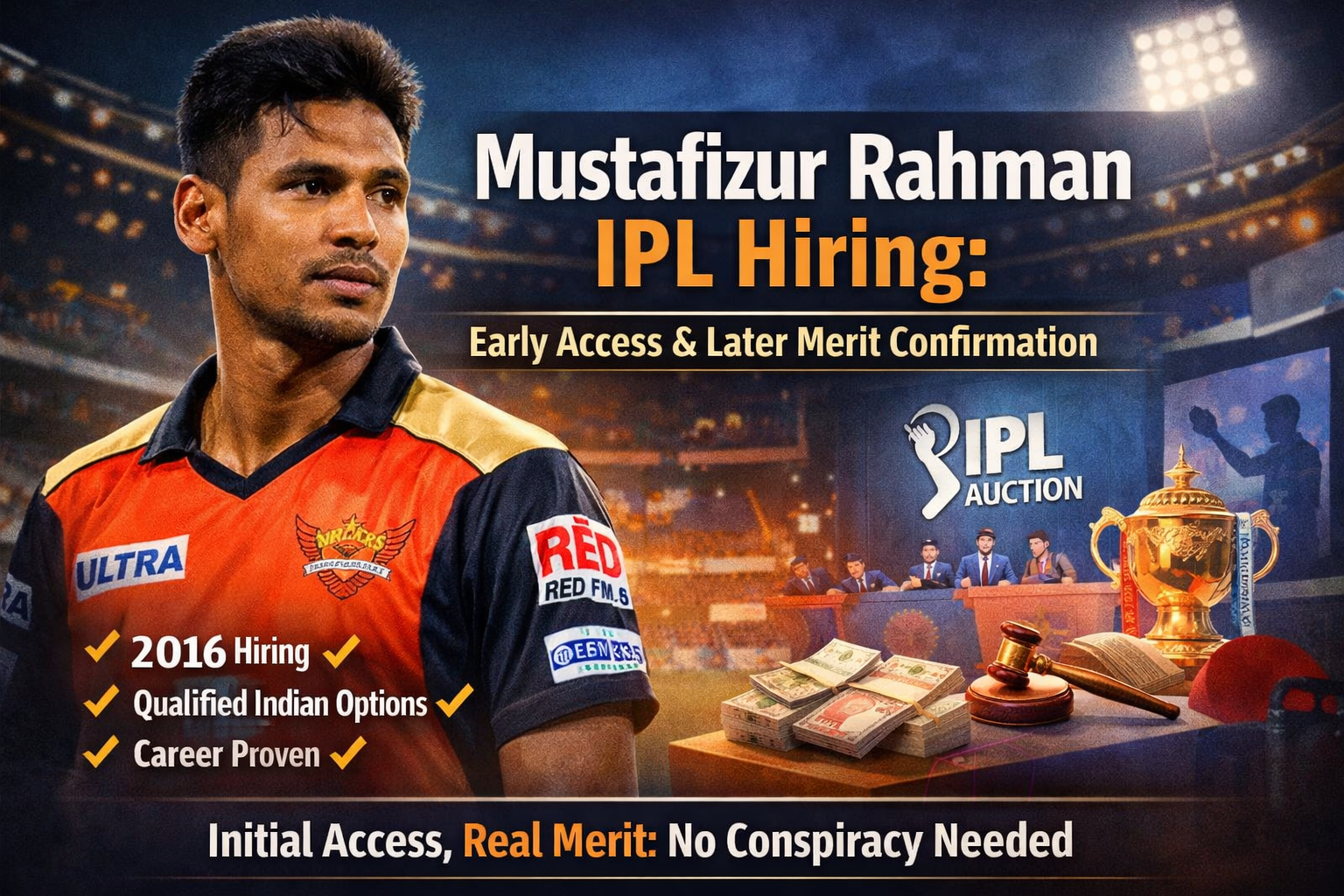
In 2025, Shah Rukh Khan’s IPL team hired Bangladeshi cricketer Mustafizur Rahman when Hindus were being burnt alive in Bangladesh and Indian Hindu population was up against Bangladesh authorities.
Pattern analysis (not proving motive, examining signals):
When comparable merit exists among candidates, and at a time when nearly 100 crore Hindus were expressing widespread opposition to the extremist trajectory being followed by sections of Bangladesh’s Muslim leadership, selection choices reveal underlying values. Hiring patterns that repeatedly favor specific identity markers—even when supported by plausible merit-based justifications—generate directional signaling. Even if such a candidate was subsequently dropped, the signal has already been transmitted to domestic audiences within India and to the diaspora.
Observable pattern across multiple instances:
- Symbolic diversity hirings that signal ideological positioning
- Selections that generate specific positive coverage in certain media markets
- Choices that enhance brand value in diaspora markets
This is not proof of conspiracy. It is evidence that informal power shaped Bollywood to reward symbolic gestures that build specific market advantages and ideological alignments.
C) The Ideological Conformity Mechanism (Hindu Actors)
A rarely discussed but observable pattern: How informal power shaped Bollywood to create career costs for Hindu identity assertion.
Pattern claim (testable):
- Hindu actor + pro-Hindu public positioning = limited access to premium projects
- Hindu actor + neutral/secular positioning = moderate sustained career
- Hindu actor + anti-Hindu/secular-left positioning = enhanced access, award recognition
This is not absolute. But examine career trajectories:
| Public Positioning | Typical Career Pattern | Examples |
|---|---|---|
| Assert Hindu identity/values | Typecast, limited premium access, Bollywood-marginal but regional success | [Observable in career arcs] |
| Avoid religious positioning | Steady mainstream career, limited controversy | [Majority pattern] |
| Secular-left alignment | Access to international festivals, award recognition, “serious cinema” label | [Observable pattern] |
| Pro-Islamic positioning | No career penalty observable | [Multiple examples] |
Why this asymmetry exists:
Informal power shaped Bollywood through:
- International market sensitivity: Festival circuits, OTT platforms, overseas distribution favor secular-left positioning
- Award ecosystem alignment: Critical recognition correlates with ideological signaling
- Domestic media management: Favorable coverage from English-language press
- Risk avoidance: Islamic assertion carries no career risk; Hindu assertion triggers boycott threats
This is not religious conspiracy. It is structural gatekeeping through access control—the same mechanism that operated during Era 2, now expressing through ideological conformity rather than underworld protection.
Related Framework: The Yogi Adityanath analysis on coexistence examines historical power asymmetries—patterns that manifest across political and cultural spheres.
D) OTT Era Gatekeeping
The rise of streaming platforms introduced new informal power mechanisms:
Content Advisory Boards:
- Decide what gets greenlit, not through formal criteria but “market sensitivity”
- International audience considerations (read: avoiding controversy that travels globally)
- “Brand safety” concerns that asymmetrically penalize certain content
Algorithm Amplification:
- What gets promoted vs buried
- Which controversies get amplified vs suppressed
- Whose content receives preferential placement
- How critics vet the contents
Festival Circuit Access:
- Which films get selected for Cannes, Toronto, Sundance
- Pattern: ideologically aligned content travels internationally; civilizationally assertive content doesn’t
These mechanisms don’t operate through religious conspiracy. They operate through ideological conformity to global legitimacy templates—the same pattern we observe in UN voting mechanics and Western media coverage asymmetry.
The Counter-Arguments
Objection 1: “This Ignores Talent and Merit”
“Successful actors succeeded because they’re talented. You’re reducing everything to power structures and ignoring individual ability.”
This objection has merit. Talent absolutely matters. No amount of informal power can sustain a career without minimum competence.
However, this objection misses the analytical point:
We are not claiming:
- Successful actors lack talent
- Merit plays no role
- Everything reduces to power structures
We are claiming:
- Talent + ecosystem access explains outcomes better than talent alone
- When comparable talent exists, informal power determines who gets opportunities
- Failure tolerance—the ability to survive disasters—correlates with network embedding, not pure talent
Test: If talent alone explained outcomes, failure tolerance should be uniform across equal talent levels. It isn’t. Stars from Era 2 show systematically higher failure tolerance than equally talented newcomers in Era 3.
Conclusion: Talent is necessary but not sufficient. Informal power shaped Bollywood to determine whose talent gets amplified, protected, and sustained.
Objection 2: “You’re Cherry-Picking Examples”
“You select cases that fit your narrative while ignoring counter-examples. This is confirmation bias, not pattern recognition.”
This is a serious methodological concern. Cherry-picking invalidates pattern claims.
Our defense:
- The three-test framework (from Blog 0) guards against this:
- Temporal consistency: Does the pattern persist across decades?
- Cross-sectional breadth: Does it appear across multiple independent cases?
- Predictive power: Does it explain new cases not used to derive it?
- We explicitly invite counter-examples: If Hindu actors with pro-Hindu positioning achieve sustained A-list careers with high failure tolerance and international recognition, our pattern claim weakens. Name them.
- The pattern predicts outcomes: We claim that Hindu actors avoiding religious positioning face better career prospects than those asserting it. This is testable. If counter-examples are abundant, the pattern fails.
Burden of proof: We document temporal consistency, cross-sectional breadth, and predictive power. Those claiming “cherry-picking” should provide systematic counter-evidence, not isolated exceptions.
Objection 3: “This Could Just Be Random”
“Outcomes cluster by chance. You’re seeing patterns in randomness.”
Response: Randomness produces random distributions. When we observe:
- Systematic failure tolerance differences correlating with entry era
- Career longevity patterns correlating with ecosystem timing
- Ideological positioning patterns correlating with access
- All persisting across decades
…randomness becomes statistically implausible.
Test: If randomness explained outcomes, we’d expect:
- No era-based clustering
- No correlation between positioning and access
- Equal failure tolerance across talent levels
None of these hold. Informal power shaped Bollywood produces non-random, directional outcomes.
Objection 4: “Where’s the Proof of Intent?”
“You haven’t proven anyone intentionally favored Muslims or penalized Hindus. Without intent, your claims collapse.”
This misunderstands the entire methodology (see Blog 0).
We are not claiming intent. We are documenting:
- Incentive structures that make certain choices safer
- Access patterns that correlate with network proximity
- Failure tolerance that correlates with era and embedding
- Outcomes that cluster directionally without requiring coordination
Informal power operates without intent. It works through:
- Risk calculation (which positions are professionally safer?)
- Network effects (who knows whom?)
- Market structures (which content travels where?)
- Incentive alignment (what gets rewarded/penalized?)
Intent is irrelevant to pattern validity. Systems produce outcomes through structure, not conspiracy.
Methodological Foundation: These counter-arguments are addressed using the framework from Blog 0: Reading Patterns Without Conspiracy—distinguishing structural analysis from conspiracy allegation.
Structure Shapes Outcomes Without Requiring Conspiracy
What this analysis establishes:
- Informal power shaped Bollywood fundamentally during 1982-2000 through underworld financing, hawala networks, and protection mechanisms.
- Access asymmetry emerged not from religious conspiracy but from proximity to capital sources, protection networks, and distribution channels.
- Era 2 advantages persisted even after corporatization, translating informal protection into institutional brand value and failure tolerance.
- New gatekeeping mechanisms in the OTT era operate through ideological conformity, international market sensitivity, and symbolic alignment—achieving similar directional outcomes through different means.
- Pattern recognition methodology (established in Blog 0) explains these outcomes without requiring proof of intent or coordination.
What this analysis does NOT claim:
- Religious conspiracy controls Bollywood
- Every outcome is ideologically motivated
- Merit and talent are irrelevant
- Individual success stories prove systemic bias
- Secret coordination exists
The core insight: When power operates informally—whether through underworld networks in the 1980s or through OTT gatekeeping today—it produces directional outcomes through incentive alignment, not conspiracy. Understanding how informal power shaped Bollywood requires examining structure, not searching for secret meetings.
Next in this series: Blog 2 examines the victimhood paradox—when exceptional success coexists with claims of systemic discrimination. Using the historical context established here, we ask: How do A.R. Rahman’s claims fit the pattern of informal power advantages documented in this analysis?
For deeper understanding of how informal power operates across domains: Explore the Great Deception series on UN institutional theater, Wall of Truth series on refugee policy patterns, and Nazia Ilmi series on doctrinal education.
About This Series
Series Title: Narratives, Power, and Selective Victimhood: Reading Bollywood Beyond Applause
Blog 0: Reading Patterns Without Conspiracy – Methodological Framework
Blog 1 (Current): Informal Power Shaped Bollywood Access – The Underworld Financing Era
Upcoming Blogs:
- Blog 2: The Victimhood Paradox – When Success Contradicts Discrimination Claims
- Blog 3: Gender Reversal Patterns – Social Constraint, Not Liberation
- Blog 4: Silence as Structure – Why Bollywood Speaks Selectively
Disclaimer:
This blog is based on the pattern recognition methodology established in Blog 0: Reading Patterns Without Conspiracy. All inferences presented here are drawn from observable historical records, documented industry practices, structural incentive systems, and recurring outcome patterns.
This analysis examines structural patterns and incentive systems, not intentions or conspiracies. It documents how informal power shaped Bollywood through observable mechanisms.
Feature Image: Click here to view the image.
Videos
Glossary of Terms
- Informal Power: Non-institutional influence exercised through access, networks, protection, or gatekeeping rather than formal authority or written rules.
- Underworld Financing Era: The period (approximately 1982–2000) when Bollywood film production relied heavily on illegal cash funding, hawala channels, and organized crime networks due to lack of institutional credit.
- Hawala System: An informal money transfer mechanism operating outside regulated banking channels, widely used for film financing during the pre-corporate Bollywood era.
- D-Company: The organized crime network led by Dawood Ibrahim, repeatedly cited by Indian enforcement agencies for involvement in Bollywood financing during the 1980s–1990s.
- Differential Failure Tolerance: A structural advantage where certain actors survive repeated commercial failures due to network protection, access, or brand insulation.
- Access Asymmetry: Unequal availability of opportunities caused by proximity to power, capital, or distribution networks rather than talent alone.
- Network Embedding: The degree to which individuals are integrated into informal relationship-based ecosystems that influence funding, promotion, and protection.
- Ecosystem Timing: The career advantage gained by entering an industry during a period when informal power structures are dominant.
- Symbolic Capital: Non-financial value generated through ideological alignment, public signaling, or international legitimacy that enhances market access.
- Ideological Gatekeeping: The filtering of content or talent based on perceived political, cultural, or civilizational alignment rather than formal rules.
- OTT Gatekeeping: Informal control exercised by streaming platforms through content approval, algorithmic promotion, and global brand-safety considerations.
- Diaspora Market Advantage: Structural benefits derived from cultural resonance and distribution access in overseas markets such as the Gulf, UK, and North America.
- Pattern Recognition Methodology: An analytical approach that identifies recurring structural outcomes without alleging intent, coordination, or conspiracy.
- Victimhood Paradox: The coexistence of exceptional professional success with claims of systemic discrimination.
- Structural Power: Power embedded in systems, incentives, and institutions rather than individuals or explicit commands.
#Bollywood #InformalPower #Underworld #IPL #PatternAnalysis #MediaNarrative #CulturalPower #CriticalThinking #HinduinfoPedia #MuslimNarrativeImmunityandHinduSilence
Previous Blog of the Series
- https://hinduinfopedia.in/reading-patterns-without-conspiracy-the-ar-rahman-debate/ https://hinduinfopedia.in/?p=24739
Related Series for Pattern Recognition Across Domains:
- Two-State Delusion series (geopolitical pattern analysis)
- Demographic Reality series (population dynamics without conspiracy)
- Waqf Amendment Act analysis (institutional power examination)
Follow us:
- English YouTube: Hinduostation – YouTube
- Hindi YouTube: Hinduinfopedia – YouTube
- X: https://x.com/HinduInfopedia
- Instagram: https://www.instagram.com/hinduinfopedia/
- Facebook: https://www.facebook.com/Hinduinfopediaofficial
- Threads: https://www.threads.com/@hinduinfopedia